Choosing between leasing and owning a solar system shapes your upfront costs in CAD, your monthly payments, your access to incentives, your maintenance duties and your long-term savings. Cash purchases, solar loans, leases and power purchase agreements each handle these points differently under Ontario rules, and so do net metering, grid connection, contract exits and battery storage.
Which solar financing arrangement fits your situation?
You can choose from four structures, and they differ on one question: who owns the equipment? A purchase or loan gives you the asset. A lease or PPA leaves it with someone else. Before you decide whether to buy or lease solar, you need to know what each payment actually buys.
Buying outright or using a loan
When you pay cash for solar panels outright, the equipment is yours from day one. Solar loans usually give you ownership too, but you repay a lender over time. That borrowing has a cost, and early loan payments can be higher than your early savings on electricity bills. Ask every lender to state in writing the rate and whether it is fixed or variable, the total of all scheduled payments, any security, early-repayment charges and what happens if you sell the property.
Leasing or purchasing the electricity
With solar panel leasing, a third-party company owns the system and you pay for the contractual right to use it. Maintenance duties are only what the agreement says they are. A power purchase agreement (PPA) is different: you pay for the electricity the panels produce, and you never pay for the equipment itself.
In Ontario, a PPA can come with a separate associated equipment agreement. That means one contract covers the electricity and another covers the hardware. Review each one on its own, because the obligations in one may not match the other.
| Structure | Who owns the equipment | What you pay for |
| Cash purchase | You | The full system, upfront |
| Solar loan | Generally you | Loan principal plus borrowing costs |
| Equipment lease | A third party | Contractual use of the system |
| PPA | A third party | The electricity generated, plus any separate equipment-agreement charges |
Choosing for your property and budget
Ownership tends to give you more long-term control and financial upside, as long as you can fund the system and plan to stay in the property. A lease or PPA can ease the upfront capital barrier, provided its complete contract remains acceptable. Which one is right depends on how much you can spend up front and how long you expect to stay.
A homeowner should look at roof condition, annual consumption and resale plans. Commercial clients also need to look at daytime demand, demand charges and roof warranties. Institutional clients have procurement and capital-budget rules to follow. At New Dawn Energy Solutions, we tailor system design and solar financing guidance to residential, commercial and institutional needs.
What will each option cost over time?
Upfront costs are only part of the picture. A fair comparison counts every dollar paid over the same period, then subtracts the electricity you avoid buying. The figures below give you a CAD baseline to test each proposal against.
Estimating an Ontario purchase price
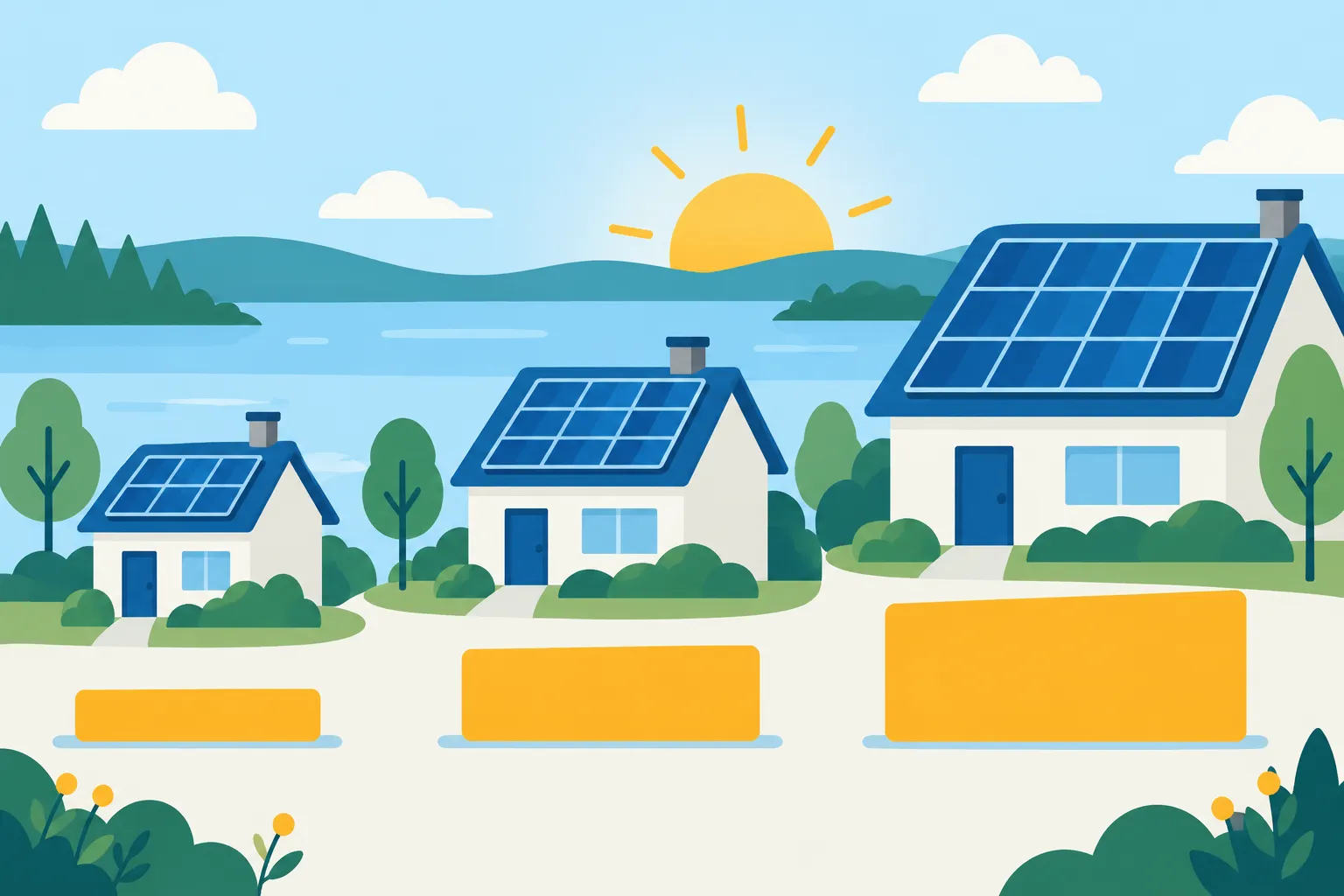
A published Ontario residential guide puts installed prices at about CAD $2.40–$3.50 per watt, before tax, financing and incentives. This is an indicative range, not a quote and not an established provincial average.
- 5 kW system: CAD $12,000–$17,500 gross system cost.
- 8 kW system: CAD $19,200–$28,000.
- 10 kW system: CAD $24,000–$35,000.
- Quote variables: roof complexity, equipment, electrical upgrades, permitting, labour and project scale can all change the price.
Ontario’s general HST rate has been 13% since July 1, 2010. How it applies to purchase, lease or PPA charges depends on what exactly is being supplied. In one Ontario municipal example, a 5 kW system produces about 5,750 kWh a year and saves about CAD $900. Against the price range above, the system pays for itself in roughly 10-15 years. That simple estimate leaves out financing, maintenance, incentives, panel degradation and rate changes.
Comparing complete contract costs
Comparing the cost of leasing vs. owning a solar system means adding up every payment in each contract, not only the first monthly figure.
- Ownership: the cash price or the loan principal and interest, plus maintenance and any inverter or battery replacements over the period you choose.
- Lease: the deposit, all scheduled payments, your remaining utility charges, fees, and any transfer, buyout or removal costs.
- PPA: charges for the electricity generated, plus any charges under a separate equipment agreement.
Annual escalators compound. If the first monthly lease payment is P, the yearly increase is g and the lease term is n years, scheduled payments total 12P × Σ(1+g)^t for t = 0 through n−1, before utility bills. Any comparison calculator should use the same design, electricity use, production estimate and evaluation period for every option. To find the net benefit, add avoided purchases and usable credits, then subtract all costs. Never count on-site use a second time as exports.
Checking incentives without assuming eligibility
Federal programs have changed. According to Natural Resources Canada, the Canada Greener Homes Grant is closed, and December 31, 2025, was the last day for existing participants to submit documents. It used to offer up to CAD $5,000 for retrofits and CAD $600 for EnerGuide evaluations. The Canada Greener Homes Loan stopped taking applications on October 1, 2025. Its former CAD $40,000 interest-free limit over 10 years is no longer available to new applicants.
Ontario’s Home Renovation Savings Program and Save on Energy incentives may apply to eligible projects. Check the applicant, equipment and ownership rules before you count on any rebate. Under a lease, the leasing company may receive the rebate, and you benefit only if the program and your contract pass it on.
According to the Canada Revenue Agency, the Clean Technology Investment Tax Credit can reach 30% for qualifying property acquired and available for use from March 28, 2023, through December 31, 2033. The rate drops in 2034 and the credit ends after that year. If you do not elect to meet the labour requirements, the rate falls by 10 percentage points. Certain taxable Canadian corporations and qualifying trusts can claim it, but a homeowner cannot. A separate Clean Electricity Investment Tax Credit generally pays 15% for eligible property acquired from April 16, 2024, and in use by December 31, 2034. Who can claim it depends on the type of entity.
How do Ontario billing and connection rules compare?
Owned or leased, every grid-tied system in Ontario follows the same net-metering and connection rules. Knowing those rules helps you size the system correctly and avoid paying for capacity that earns credits you never use.
Using solar power and net-metering credits
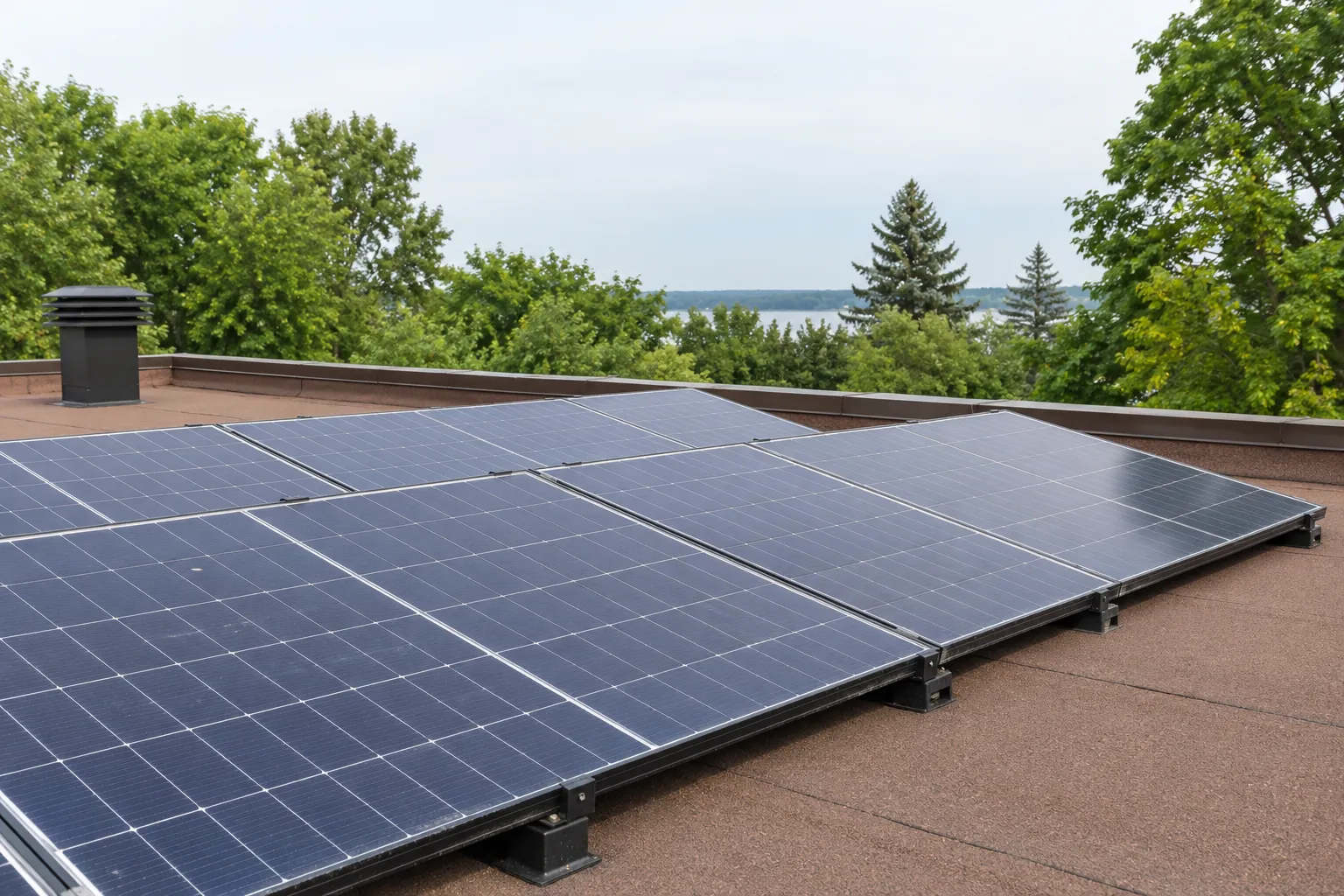
According to the Ontario Energy Board, net metering lets an eligible customer use the solar energy produced on site and earn bill credits for surplus power sent to the grid. Distributor approval and program rules apply. Here is how the credits work:
- Self-consumption: power you use as it is produced reduces what you buy from the grid at that moment.
- Exports: surplus power earns credits that offset eligible consumption charges. Fixed charges on your utility bill remain.
- Expiry: under Ontario Regulation 541/05, unused credits carry forward for up to 12 months, then any remaining balance is reset to zero.
Because credits expire, a larger system does not always deliver more bill savings. What counts is how much of your output you can actually use or offset within the year.
Eligibility and the right system size
Since amendments took effect on July 1, 2022, qualifying third-party-owned systems in Ontario, Canada, can net meter. That means leasing vs. owning a solar system no longer decides net-metering access by itself. You, as the electricity customer, still need an agreement with your distributor. Third-party ownership does not guarantee eligibility. There is also no universal Ontario “20% rule” for residential solar. Your distributor’s requirements set the allowed capacity and export configuration.
The City of Toronto advises sizing a system to your actual annual use plus expected changes. In its example, charging an electric vehicle for 25,000 km a year, mostly at home, adds about 4,000 kWh. Planning for that kind of change makes sense. Oversizing for seasonal exports does not.
Securing permission to connect
A suitable roof does not guarantee grid approval. A distributor may find capacity, voltage, protection, transformer or metering constraints. Hydro One advises applicants not to spend money on the project until the connection is approved. For residential solar of 12 kW or less, Toronto Hydro’s published steps are:
- Apply.
- Sign the connection agreement.
- Build the system.
- Obtain Electrical Safety Authority certification.
- Pass the utility inspection.
- Complete the connection.
Projects above 12 kW need a Connection Impact Assessment and a connection offer or cost agreement before construction starts.
Finishing the installation does not give you permission to export power. The Electrical Safety Authority inspection and the distributor’s permission to operate are two separate steps. The 29th edition of the Ontario Electrical Safety Code took effect on May 1, 2025. Its plan-review threshold rises from 10 kW to 12 kW on July 6, 2026. That is a threshold for plan review, not a size limit for any solar panel system.
What obligations remain after installation?
Commissioning is not the end of your obligations. Repairs, cancellation rights, a home sale and the end of the lease term all depend on the contract. Read those clauses before you compare savings.

Maintenance and performance responsibilities
With ownership, you pay for servicing and repairs that fall outside the warranty. A solar lease transfers only the maintenance duties the contract spells out. That gap matters: the leasing company may be responsible for less than you expect.
Check that the lease covers response times, inverter replacement, exclusions for workmanship and water damage, and compensation for lost generation. A production guarantee should state the guaranteed kWh, how output is measured and how you are compensated. It is not a promise of lower bills.
Monitoring data can show unexpected drops in output. Finding the cause may mean ruling out shading, inverter or wiring faults, panel degradation and monitoring errors. Also check what the warranty covers: a parts warranty may not pay for labour, shipping or taking panels off the roof.
Cancellation and contract protections
For qualifying Ontario retail PPAs, the Ontario Energy Board’s standard terms let you cancel without a PPA penalty within 10 days of signing. You can also cancel within 30 days after your second PPA bill, though that bill remains payable. The retailer must contact you to verify the agreement 10–45 days after you sign. Cancelling a PPA does not necessarily cancel a separate equipment agreement without a fee.
Cancelling your net-metering agreement with the distributor takes 90 days’ written notice. It does not end a private lease or PPA, and it generally prevents a return to net-metered billing for 12 months, with some regulatory exceptions. Ontario’s Consumer Protection Act, 2002, gives a general 10-day cooling-off period for qualifying direct agreements. Since March 1, 2018, Ontario has also restricted unsolicited door-to-door sales of prescribed products and services, with some exceptions.
Selling the property or reaching lease expiry
Selling the home is more complicated with a lease, because transfer is not automatic. The sale may need the buyer’s approval and assumption of the lease, a buyout, removal of the system or another arrangement. Your contract should say what you owe if the buyer refuses the lease or fails approval. When the lease ends, ownership does not pass to you automatically. The written terms should cover renewal, how a purchase price is set, continued rent, or removal, including roof restoration, electrical disconnection and disposal.
A roof replacement may require removing and reinstalling the panels, so confirm who pays for that work. Insurance, property damage, security registrations by the provider and lender requirements can also affect a sale or refinancing. If you own the system, there is no lease to transfer, but any outstanding solar loan still has to be dealt with.
Where does battery storage fit?
A battery changes what your solar system can do, but it does not change who owns the equipment. Ownership, the contract and your goals should guide the design.
Designing storage for ownership or a lease
If your panels are leased, adding storage may require the system owner’s approval. It may also affect the warranty, monitoring, export controls, insurance and the contract. When you own the system, the decision is yours, and the proposal still needs to state clearly:
- Usable energy capacity: how much stored energy your loads can actually draw.
- Power output and supported loads: which appliances can run at the same time.
- Inverter compatibility and controls: how the battery works with the existing equipment.
- Location: where the unit will be installed in the building.
New Dawn Energy Solutions designs and installs custom solar-battery systems for Ontario homes and businesses, sized around your electricity use, backup needs and budget.
Our systems use lithium iron phosphate (LFP) batteries. Smart monitoring shows solar production, battery status and consumption in real time.
Keeping selected loads powered
A standard grid-connected array does not keep your power on during an outage. Backup requires islanding, transfer and control equipment, which lets the system run separately from the grid.
We can configure backup for selected essentials, such as internet equipment, sump pumps and heating controls. We can also design a larger system that supports whole-property loads.
In a residential setup, you choose which devices the storage system will support when the power goes out.
Weighing savings against backup value
A battery can save solar energy for later use or for higher-rate periods. To judge its value, weigh its installed cost, efficiency and degradation against the export credits you give up. Storage does not automatically shorten your payback.
Backup resilience has value of its own, separate from bill savings, and that can justify the investment. Our solar battery storage systems offer financing for purchased solar-plus-storage systems and app-selectable operating modes for each of these goals.
Frequently Asked Questions
Which is better for a Canadian household: owning or leasing solar panels?
Owning usually gives you more long-term control and financial upside, as long as you can fund the system and plan to stay in the home. A lease or PPA can lower the upfront capital barrier. If you might move before the contract ends, transfer, buyout and termination costs can outweigh the projected lifetime savings.
Do lease payments continue if a leased solar system underperforms?
They can. Whether you still owe payments depends on the performance and remedy clauses in your agreement. Before anyone removes the system, gather production records and get a fault diagnosis and a written repair-versus-replacement estimate to understand the cause and your options.
What can you do if the utility refuses to connect your proposed solar system?
Ask the distributor for its technical reasons in writing. Then ask whether it would accept a smaller system, a revised inverter or protection design, a different export setup or utility upgrades. Your solar contract should also state who pays for required upgrades and what happens if approval is delayed or refused, or if export capacity is limited.