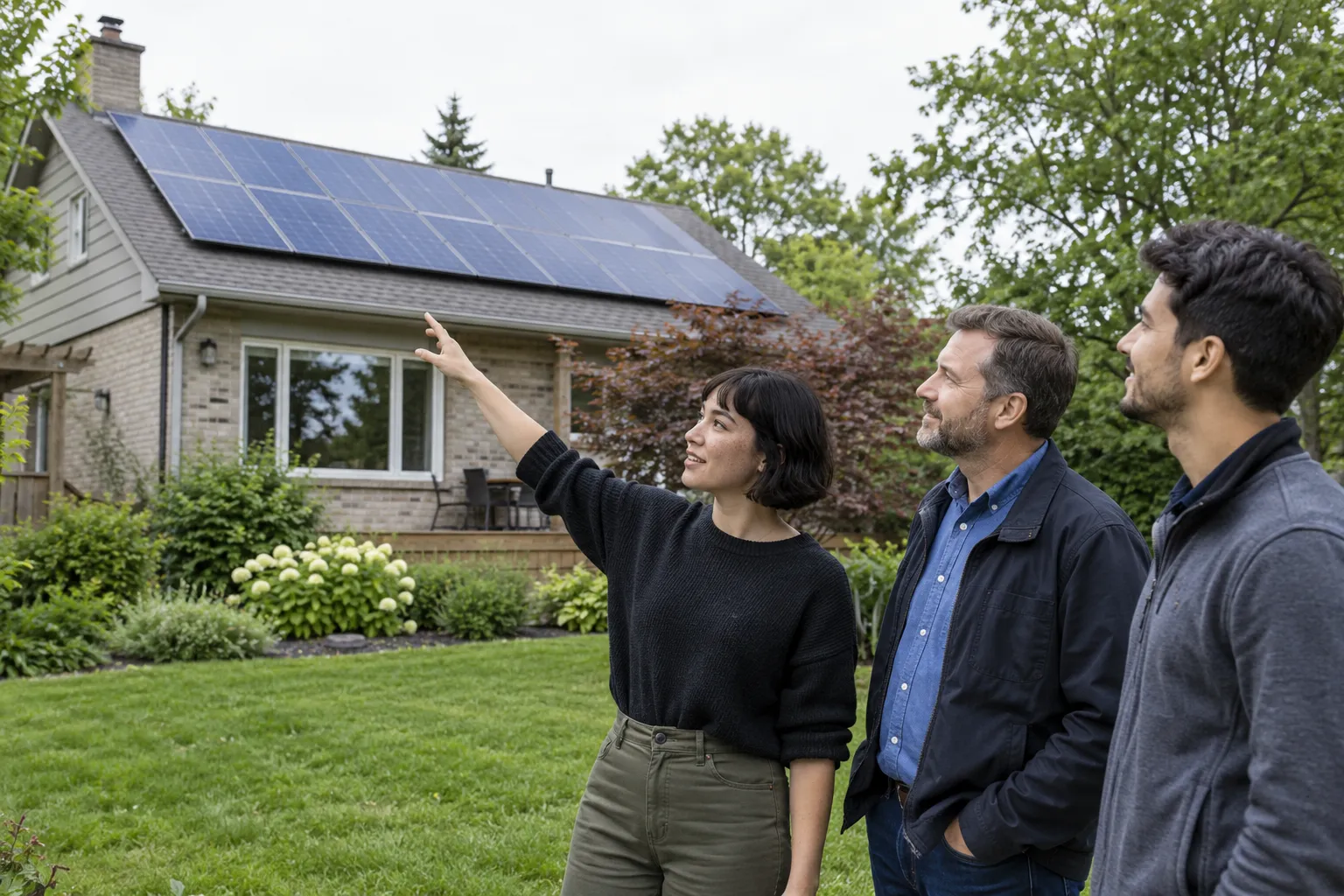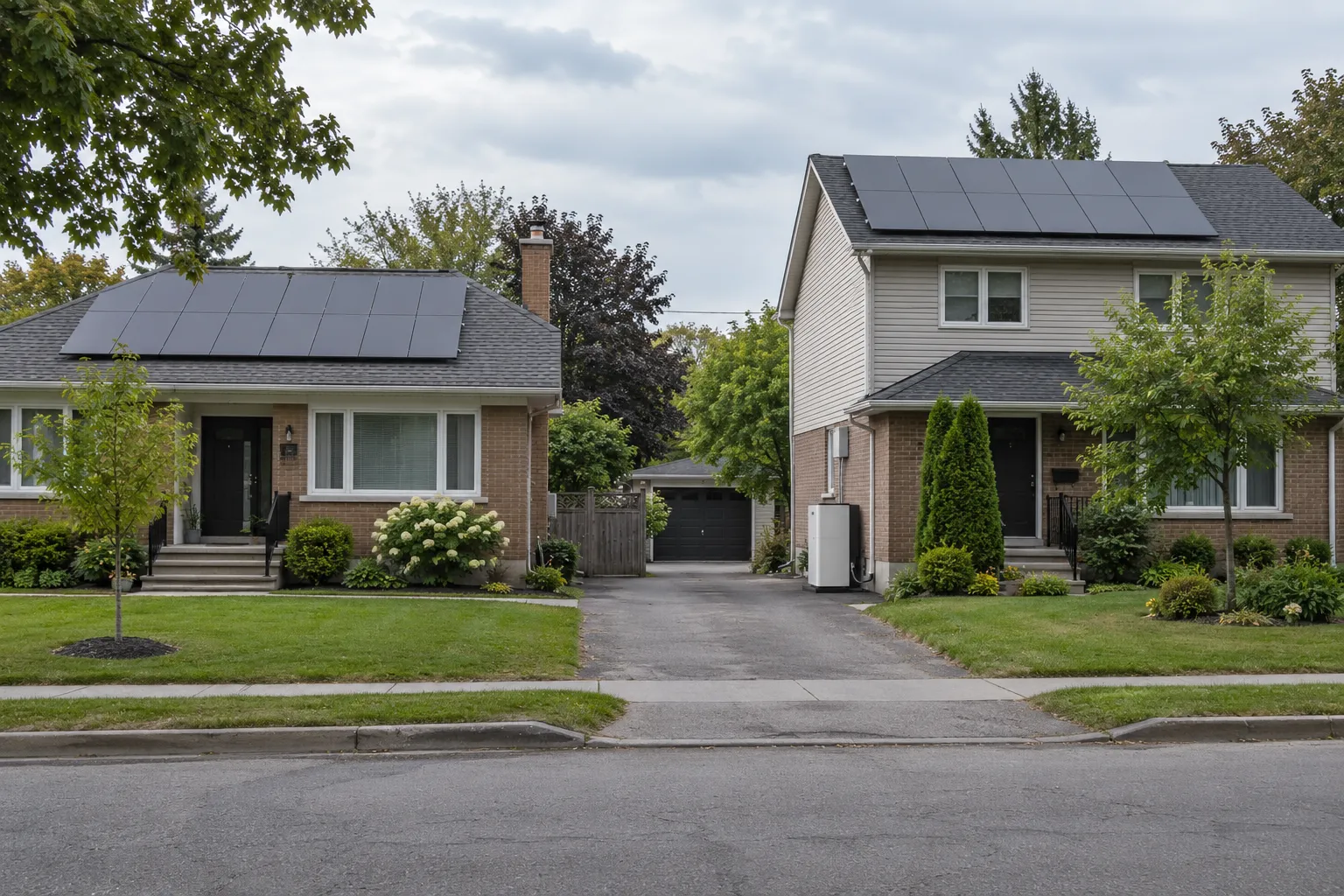
A commercial solar installation in Toronto starts with choosing the right installer. You need a firm that can assess your building, price the work in CAD and take the project from design through connection. This guide shows you how to compare installers, what a site assessment should cover, and how to read a quote and its payback. It also covers which incentives can lower the net price and which approvals come before the system runs.
How to compare Toronto commercial solar installers
Equipment brands tell you little about a proposal. Two solar panel installers can quote the same panels and still deliver very different projects. The difference lies in who assesses the site, who signs the engineering and who handles each approval. Commercial solar rewards buyers who compare responsibilities as closely as they compare hardware.
Experience, licences and comparable proposals
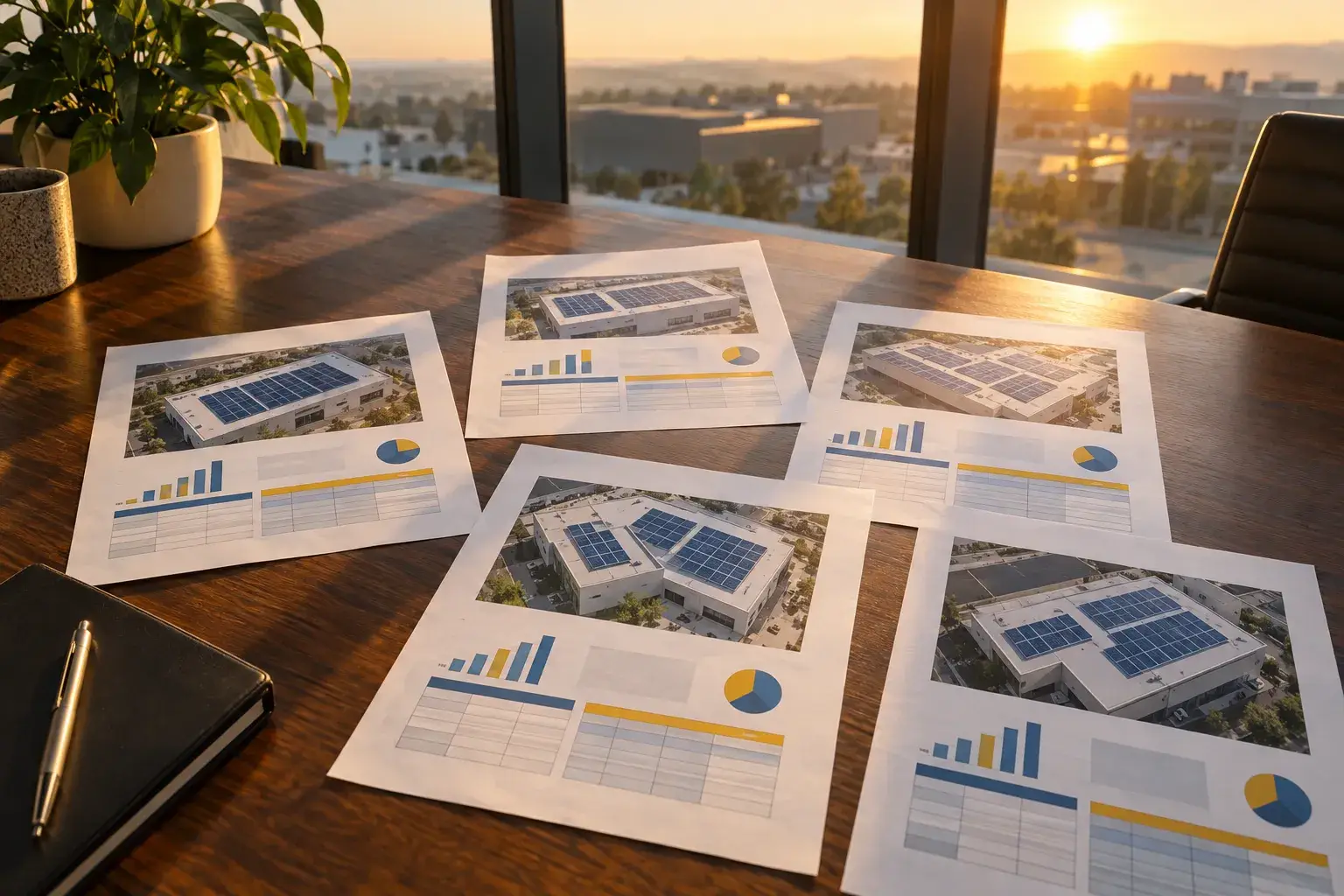
Reviews only get you started. Reading reviews of commercial solar installation in Toronto narrows the field, but the City of Toronto advises buyers to verify more than reputation. Check each of these items before you shortlist a firm:
- Commercial experience and references: ask for completed projects similar to yours and contacts you can call.
- Licences and insurance: confirm both are current for the work being quoted.
- Warranties: find out what each warranty covers and how long it lasts.
Give every prospective solar installation company the same building information and the same requested scope. That way, differences between proposals reflect real choices and not mismatched assumptions. For large projects, Save on Energy directs businesses to the Canadian Renewable Energy Association’s installer and developer directory.
Who owns each project responsibility?
Every commercial solar panel installation needs two named professionals. One is the licensed electrical contractor. The other performs and signs the structural engineering. If a proposal names neither, ask for both before you go any further.
Approvals need owners too. The proposal should name the party that submits the local distributor’s connection application and the party that obtains the City permit. A general promise to “coordinate” assigns neither task.
Redesign risk is the remaining gap. A utility requirement can force changes after the contract is signed. Ask who pays in that case, because the cost may not be included in the installation price.
Match the installer to the project
Compare who takes on site assessment, engineering, electrical compliance, commissioning and tax-eligibility assumptions. Those responsibilities decide how the project goes. At New Dawn Energy Solutions, we design custom systems, handle permits and installation, and guide businesses through financing and government incentive programs as one turnkey installation.
The right scope depends on the property. Our commercial solar services for Toronto businesses include grid-tied systems, solar-plus-battery setups, solar parking structures with EV charging and building-integrated solar. Across the GTA, each of these supports a different path in the clean energy transition and the shift to renewable energy.
What a commercial site assessment should cover
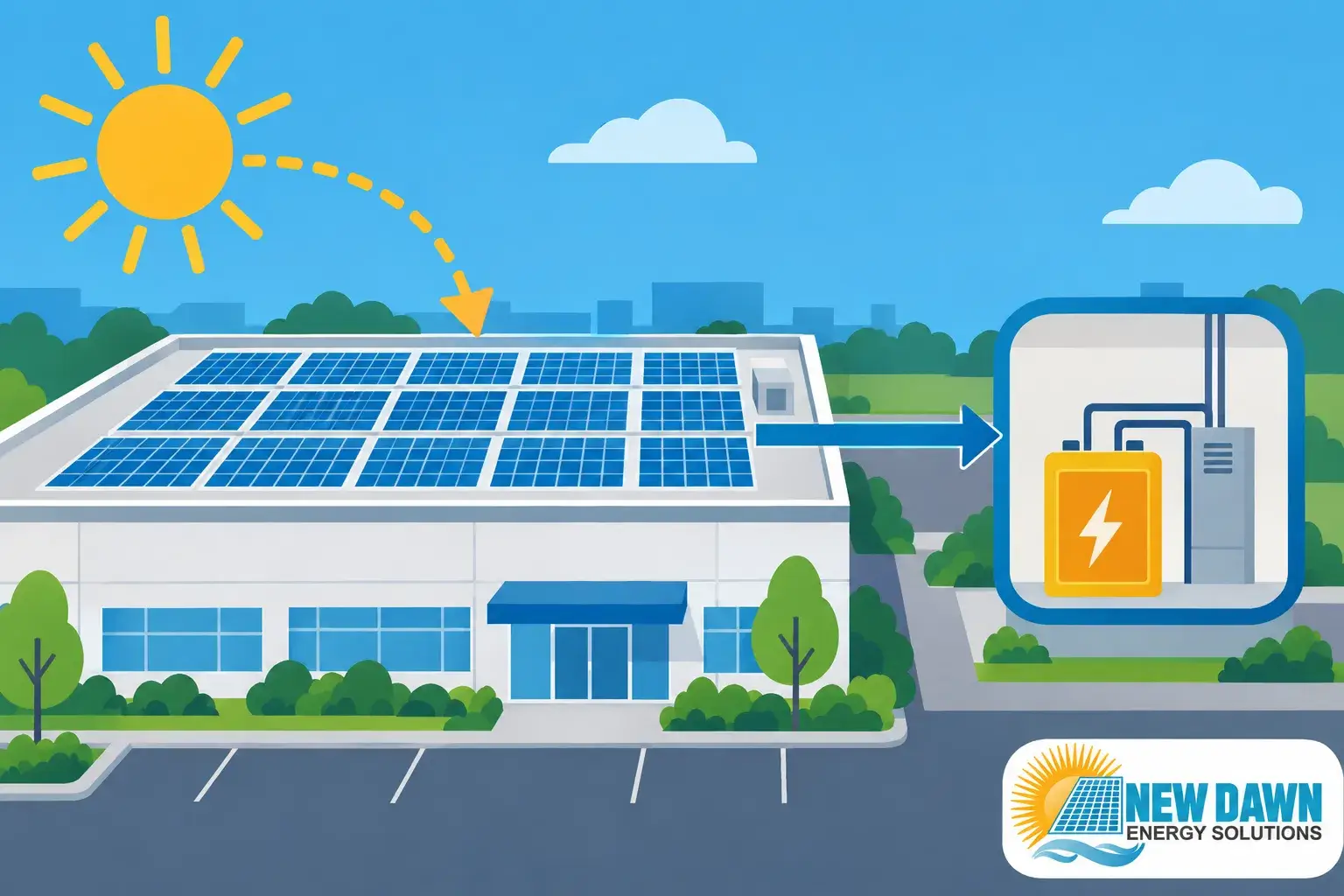
A quote is only as reliable as the assessment behind it. Rooftop solar has to fit the roof, the electrical service and the way the building uses power. A proper visit covers all three before anyone fixes a price for a commercial solar panel system.
Roof condition and array placement
Start with the roof’s age. The City of Toronto strongly recommends an in-person assessment. It generally advises against installing solar on a roof more than 10 years old unless the roof’s condition supports it. If the roof needs replacing, plan the reroofing alongside the installation.
Then map the space the array can actually use. The assessment should record:
- Usable area: the open roof surface left once you exclude edges and obstructions.
- Rooftop HVAC equipment: units that take up space and need service clearance.
- Access paths and shading: walkways to keep clear and shade from nearby objects in every season.
- Structural capacity: the load the roof can carry, including snow and wind exposure.
The mounting method has to protect the roof membrane and its warranty. At 60 Mobile Drive, we chose non-penetrating racking to keep the roof intact beneath the array. The Toronto office building rooftop array shows how industrial solar panels can sit on a roof without breaching it.
Electrical service and connection route
Next comes the electrical room. Locate the service entrance, main switchgear, proposed connection point and transformer. Together, these determine whether the planned array can connect at its proposed capacity.
Trace the cable and conduit route from each array section to that equipment, and note any service or switchgear upgrades. Review fire-access requirements alongside roof access and the electrical layout. Settle all of this before the array design is fixed.
Sizing for the building’s actual use
Annual totals hide timing. Collect 12 months of electricity bills and any interval data available, which records consumption in short time steps. The design can then reflect when the building draws power. Size the system against that use, the usable roof area and sunlight exposure.
Occupancy patterns, manufacturing processes, refrigeration and multi-tenant metering can each change the right design for solar panels in Toronto. A battery is optional for commercial PV. We pair storage with solar where backup power or demand management fits the business’s load profile.
How to compare CAD quotes and payback
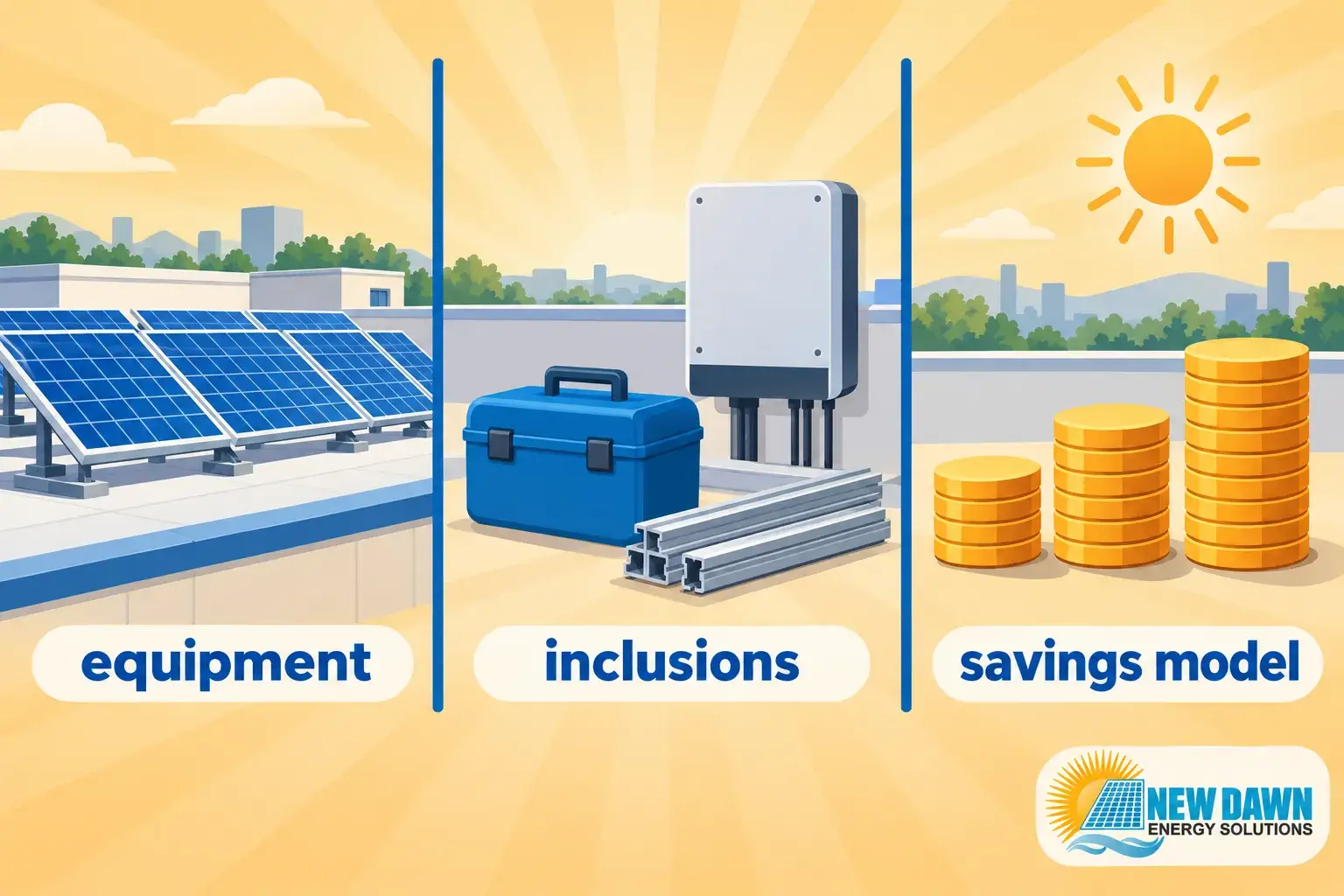
Two proposals can show similar totals and still describe different projects. Comparing them takes three checks: what is installed, what the price includes and how the savings are modelled. Here is how to put each quote on the same basis.
Capacity, equipment and included work
Read the two capacity figures separately. DC kW describes the photovoltaic array, while AC kW describes the inverters that feed the building. Ask for expected annual production in kWh/year along with the modelling assumptions behind it.
The equipment schedule should be specific enough to compare line by line. The price should also be broken down item by item. Use this checklist:
| Item | What the proposal should state |
| Panels | Manufacturer, model, quantity and wattage |
| Inverters | Manufacturer, model, quantity and AC rating |
| Racking | Proposed mounting method |
| Price breakdown | Equipment, labour, design and engineering, electrical upgrades, permit work, utility work, monitoring |
| Tax and incentives | Before or after HST; gross price, assumed incentives and net price |
The last row matters most. A net price that already deducts incentives cannot be compared fairly with a gross figure from another installer.
What cost per watt leaves out
Benchmarks give scale, not quotes. The Canada Energy Regulator’s archived 2018 model estimated a 200-kW commercial system at $2.210 CAD/W under its then-current-cost assumption. That works out to about $442,000 CAD. Its near-future and low-cost-future assumptions gave $1.772 CAD/W and $1.529 CAD/W. These figures exclude sales tax and do not reflect the 2026 cost of a commercial solar installation in Toronto.
A lower cost per watt can hide excluded structural engineering or utility work, while a quote that includes a battery covers a different scope. Also check monitoring access, scheduled commercial solar maintenance, fault response and who handles inverter repairs. Equipment warranties and workmanship warranties are separate, so confirm how removal and reinstallation are handled if the roof needs work later. These terms shape solar panel maintenance and solar panel repair costs for years.
Test the savings and financing assumptions
Your rate class matters. Toronto Hydro’s business rates effective May 1, 2026 separate General Service under 50 kW from General Service 50–999 kW. The larger class includes kVA-based distribution charges and maximum- or peak-kW-based transmission charges. An estimate built only on annual kWh savings misses those charges.
A credible payback model values on-site use separately from exports. It should state its assumptions for production, self-consumption, export credits, electricity-price escalation and panel degradation. When you compare financing, look at interest, term, fees and equipment ownership. Ask that cash flow include maintenance, eventual inverter replacement, downtime and roof work so the projected ROI holds up.
Which incentives can reduce the net price?
Federal and provincial solar incentives can reduce the net price considerably. Each one has eligibility conditions that a proposal should state openly. Here are the rates and how to check them.
Federal Clean Technology Investment Tax Credit
The Clean Technology Investment Tax Credit is refundable and can reach 30%. It covers qualifying solar electricity-generation equipment and fixed-location storage acquired after March 27, 2023. The property must be available for use before January 1, 2035, subject to eligibility.
Timing and labour treatment both affect the rate. According to Canada Revenue Agency guidance:
- Through 2033: the regular maximum rate applies.
- In 2034: the rate falls to 15% for property that becomes available for use that year.
- Labour election: the regular rate requires electing to meet prevailing-wage and apprenticeship requirements.
- Covered work: those requirements apply to work performed on or after November 28, 2023.
If you do not make the election, the rate falls by 10 percentage points. A quote that assumes the full credit should say which labour treatment it relies on.
Ontario solar incentive rates
Save on Energy lists $1,000 CAD/kW DC for eligible systems of 10 kW DC or less. Effective June 30, 2026, the rate for systems over 10 kW AC dropped to $770 CAD/kW AC from $860 CAD/kW AC.
The prescriptive incentive applies to systems up to 1 MW AC. A large-scale solar project above that size may still qualify, but its incentive is capped at 1 MW AC.
Check assumptions before accepting a net price
Check the application date first. Applications submitted before June 30, 2026 may be assessed at the rate in force when submitted, subject to Save on Energy approval, and a Toronto Hydro page still shows the earlier $860 CAD/kW AC rate. On May 29, 2026, Save on Energy removed wall-mounted configurations and updated its solar worksheet. We also identify 100% first-year depreciation for qualifying Class 43.1 solar property available for use before 2030. Review every assumed credit and depreciation figure with a tax adviser.
What approvals are needed before operation?
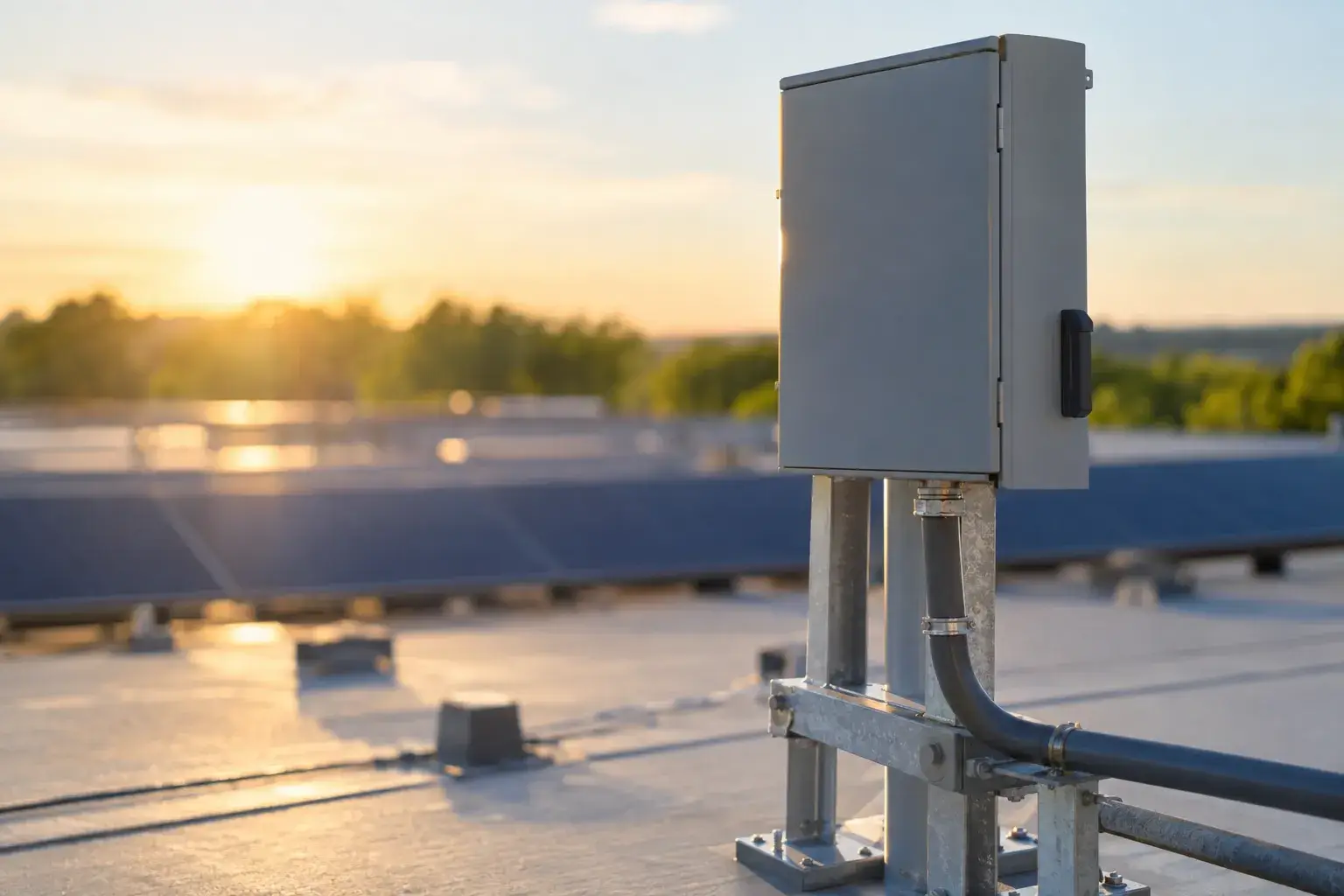
A finished array cannot run until three gates are cleared: the municipal permit, utility connection approval and electrical-safety inspection. Delays at any of these push back your energy savings. That makes clear ownership of each gate as important as the installation itself.
Toronto building permits
Permitting depends on the type of installation. For a solar panel installation in Toronto, the City of Toronto rules work as follows:
- Rooftop or wall-mounted collectors: a building permit is required above 5 m².
- Permit fee: for 2026, $425.30 CAD per structure for installations over 5 m² on buildings other than small residential ones.
- Ground-mounted arrays: freestanding systems need no solar-collector permit, but zoning rules still apply.
- Plan accuracy: the application must show the installation accurately.
Inspectors check the finished installation against the submitted plans. Any design change made on site therefore needs to go back through the permit drawings.
Utility connection and electrical inspection
Toronto Hydro is the local distributor within the city, but a GTA property outside it may have a different distributor and connection process. The distributor approves grid capacity and checks compliance with distribution-code, CSA and utility-service requirements. Being eligible for net metering does not authorize connection on its own.
The final stage is electrical-safety notification and inspection, followed by system testing and activation. Every commercial solar installation in Ontario completes these steps before it can operate.
Ontario net-metering credits
Ontario net metering pays in bill credits for eligible exported electricity, not in cash. The Ontario Energy Board says these credits offset consumption-related charges only. Unused credits carry forward for up to 12 months and then drop to zero.
Ontario has no general current rule limiting commercial solar to 20% of a building’s use, and no 500-kW net-metering threshold. The real limits are own-use eligibility and the utility’s connection capacity, so size your system with both in mind.
Frequently Asked Questions
How does a rooftop solar array affect the roof over time?
Mounting points and penetrations that are not properly sealed can let water in, so the installation has to keep the roof watertight. Preventive maintenance clears debris and pooling water around the array. If the roof is replaced after installation, the panels may have to be removed and the system reconnected afterwards.
Can a solar water-heating proposal be compared with a solar PV quote?
Not directly. Photovoltaic equipment turns sunlight into electricity, while solar thermal equipment produces heat, so the two proposals cover different scopes. We list SolarPV+Thermal among our business solar solutions for properties that need both.
What should a commercial solar contract state about monitoring and guaranteed production?
It should state who controls the monitoring account and whether any production figure is contractually guaranteed. It should also list the monitoring hardware, portal access, network or cellular connection requirements, scheduled maintenance, fault-response arrangements and any work the proposal excludes.