This guide maps every active funding pathway, from provincial incentives to municipal eco-roof rebates, that can reduce the cost of a government-supported solar installation on a commercial flat-roof building in Toronto. It also shows how to budget accurately and plan the application process.
Toronto solar funding and incentive options
Commercial building owners in Ontario can combine several financial tools to shorten the payback period of a rooftop solar project. Provincial utilities, the City of Toronto, and federal tax policy address different cost components, so the order of each application matters. For a complete overview, see Canadian government funding for solar panels.
Save on Energy solar eligibility
The Save on Energy Prescriptive Retrofit stream is the most direct route to free government grants for a solar installation on a commercial flat-roof property in Ontario. Administered through your local distribution company, this provincial program supports behind-the-meter rooftop solar that offsets facility load and reduces grid demand. Micro-generation systems up to 10 kW receive CAD 1,000 per kW-DC. Systems above 10 kW-AC and up to 1 MW-AC receive CAD 770 per kW-AC. The incentive cannot exceed 50% of eligible project costs, making system sizing and documentation important from the outset.
- Eligible building types Offices, malls, schools, hospitals, hotels, multi-residential buildings, municipal facilities, and industrial sites qualify under the program’s participant criteria.
- Lessee participation Tenants may apply with written authorization from the property owner, extending access beyond direct ownership situations.
- Pre-approval requirement A Retrofit application must be submitted and approved before any binding commitment, including a purchase order, is made for the solar project.
- Completion deadline All program steps, from pre-approval through utility connection, must be completed within 24 months of application approval.
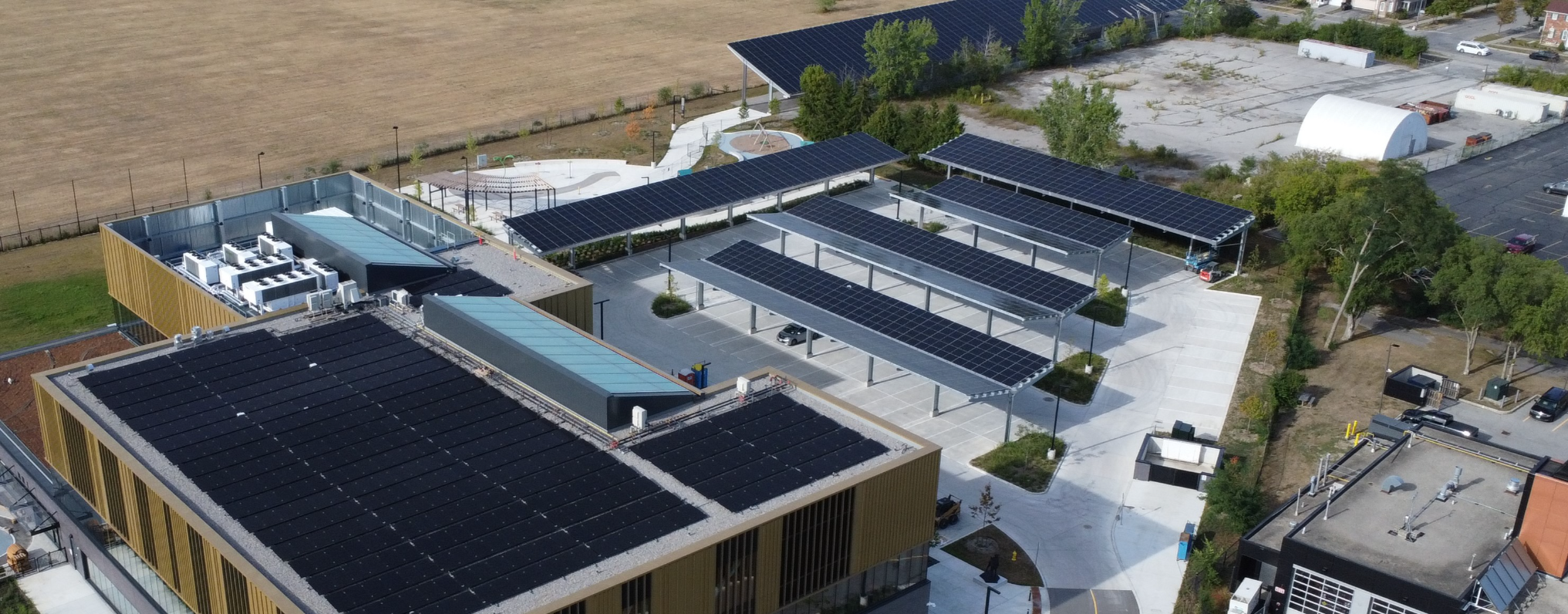
After pre-approval, you must obtain connection approval from your local distribution company before installation begins. Reviewing the commercial solar installation in Toronto guide before submitting a Retrofit application can help align system specifications with program requirements. The project at Native Child and Family Services of Toronto also shows how institutional buildings can combine funding sources to improve energy performance.
| System size | Incentive rate | Cap |
| Up to 10 kW (micro-generation) | CAD 1,000/kW-DC | 50% of eligible project costs |
| 10 kW–1 MW (small/medium generation) | CAD 770/kW-AC | 50% of eligible project costs |
Tax support for commercial projects
Beyond utility-administered rebates, businesses pursuing solar in Ontario can use two important federal tax mechanisms. Eligible solar and battery-storage projects qualify for a 30% investment tax credit, which is fully refundable. Eligible solar systems also qualify for 100% first-year depreciation under accelerated depreciation rules, allowing the full capital cost to be deducted in the year of installation. These measures operate independently of Save on Energy funding.
Combined with the CAD 770/kW Save on Energy incentive, the 30% tax credit, and accelerated depreciation, a well-sized commercial system can recover a significant share of its capital cost within the first fiscal year.
Application timing and approvals
Sequence matters as much as eligibility. Both the Save on Energy Prescriptive Retrofit stream and the City of Toronto Eco-Roof Incentive Program require approval before physical work begins. Signing contracts or starting construction too early can make a project ineligible. Treat the application calendar as a project-management milestone and coordinate it with your installer’s schedule from the first planning meeting.
- Step 1: Retrofit pre-approval Contact your local distribution company, open a Retrofit Portal account, and submit the solar application before issuing purchase orders or signing installation contracts.
- Step 2: Eco-Roof application If adding a green roof or cool-roof component to the solar project, submit the City of Toronto Eco-Roof application and receive written approval before any roof work begins.
- Step 3: Utility connection approval After Save on Energy pre-approval, obtain your local distribution company’s approval to connect before energizing the system.
Commercial flat-roof solar design in Toronto
A flat-roof commercial property is one of the most technically advantageous locations for a rooftop solar array. Its open surface, flexible panel orientation, and accessible maintenance areas support a high-performing system with a competitive lifecycle cost. Engineering decisions made at the design stage determine how effectively the installation matches the building’s daily electricity demand.
Can solar work on a flat roof?
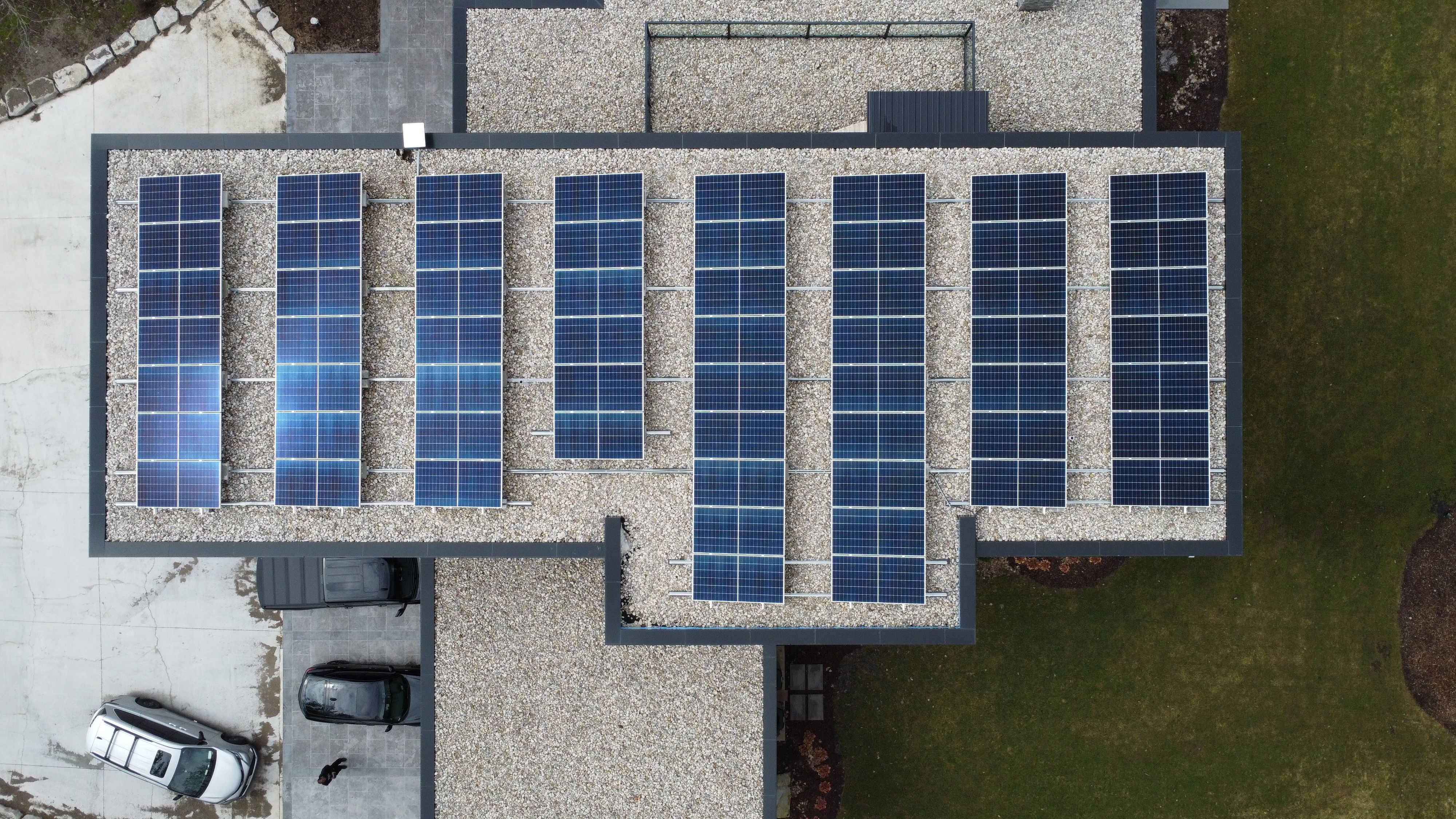
Yes. Flat and low-slope roofs are well suited to solar PV for both structural and logistical reasons. Their broad, continuous surfaces reduce shading constraints and let engineers optimize the layout without working around dormers, ridgelines, or steep pitches.
The cost calculation for solar panels in Toronto can also favour flat-roof projects. Installation labour is safer and faster on an accessible horizontal surface, which can lower the per-kW installation expense compared with steep-slope residential work. Bifacial solar modules can perform particularly well above reflective roof membranes because they capture additional output from reflected light.
- Surface area advantage A flat roof provides an unobstructed platform, maximizing the number of panels deployed per square metre of building footprint.
- Flexible orientation Panels can be tilted and angled in different compass directions, giving designers precise control over the production profile and its alignment with facility operating hours.
- Bifacial module compatibility Reflective membranes beneath bifacial panels create an albedo effect that can increase energy yield beyond standard single-face output assumptions.
Flat roofs also simplify ongoing maintenance. Cleaning and inspecting panels is safer and more efficient when crews work on a level surface, reducing long-term service cost and supporting consistent performance throughout the installation’s lifespan. That operational advantage is often underestimated in the initial investment analysis.
East-west arrays for business demand
An east-west array is a defining design choice for commercial flat-roof solar in Toronto’s urban environment. Instead of concentrating generation at solar noon, when grid electricity can already be abundant, the split orientation produces power from sunrise through late afternoon. This pattern closely follows a commercial facility’s daytime demand.
Better alignment between generation and consumption reduces grid reliance during peak-tariff hours and can shorten the system payback period. For any business evaluating the cost of solar panels in Ontario, this demand-focused production profile carries real financial weight: a system that offsets peak-hour consumption can deliver greater effective savings per kWh than one designed only for maximum daily output.
New Dawn Energy Solutions completed a demonstrative 100 kW commercial rooftop project in Toronto in December 2020 using this approach. The array included 49.35 kW facing east and 52.2 kW facing west across a flat commercial roof. Four SolarEdge grid-tied inverters, each rated at 20 kW AC, provided 80 kW AC of combined inverter capacity.
Premium Canadian Solar modules and durable mounting hardware were selected to support long-term performance stability.
Installer support from design to connection
A qualified commercial installer manages much more than panel placement. Site-specific engineering, permit acquisition, and utility interconnection all influence whether a project connects to the grid on schedule.
New Dawn Energy Solutions provides turnkey support for commercial solar projects across office buildings, warehouses, retail stores, manufacturing facilities, and other commercial properties throughout the Toronto area and broader Ontario market.
- Site assessment and design Custom array layouts identify the best ballasted or mechanically attached system for the roof membrane while meeting Save on Energy technical requirements for behind-the-meter systems.
- Permitting and approvals The installer coordinates building permits, local distribution company interconnection applications, and Retrofit pre-approval submissions for the building owner or lessee.
- Incentive and tax documentation Complete project records support Save on Energy incentive claims, accelerated depreciation filings, and the 30% investment tax credit application, helping ensure that no available financial benefit is missed.
Selecting a contractor with proven flat-roof commercial experience in Ontario is a financial safeguard, not a procedural formality. Application sequencing, technical specifications, and interconnection paperwork all have program-specific deadlines that a Toronto commercial installer tracks as part of the contract. The right installer keeps the entire sequence on track from site visit to utility sign-off.
Cool-roof rebates and green roof requirements
Toronto’s Eco-Roof Incentive Program adds municipal funding that commercial building owners can pursue alongside solar incentives. Whether your roofing strategy includes a vegetated green roof, a reflective membrane, or both, review the program’s grant structure and technical requirements before installation begins. Eligibility depends on application timing and documented material compliance.
Toronto Eco-Roof Program funding
The City of Toronto’s eco-roof incentive program, launched in 2009 under the city’s Climate Change Action Plan, provides direct grant support for eligible roofing upgrades on existing and qualifying new buildings. A cool roof in Toronto that meets the required material and coverage standards can receive CAD 2 to CAD 5 per square metre, up to CAD 50,000. This funding can reduce the cost of large commercial re-roofing projects. Green roof projects receive higher funding: CAD 75 to CAD 100 per square metre, up to CAD 100,000, reflecting the greater capital cost and environmental performance of vegetated systems.
- Green roof grant: CAD 75–100/m², maximum CAD 100,000, available for eligible existing buildings and qualifying new buildings under 2,000 m² of gross floor area.
- Cool roof grant: CAD 2–5/m², maximum CAD 50,000, available exclusively for existing residential, industrial, commercial, and institutional buildings.
- Structural assessment grant: Up to CAD 1,000 to cover the cost of a structural assessment required for green roof projects on existing buildings.
- School board eligibility: Toronto Public and Separate School Board buildings of any size qualify for green roof funding, regardless of gross floor area.
Projects must be located within the City of Toronto municipal boundary, and the eco-roof application must receive written approval before roof work begins. Projects already underway or completed when the application is submitted are excluded. This pre-approval rule parallels the Save on Energy Retrofit sequencing requirement, so coordinate funding applications before signing construction contracts.
The eco-roof incentive program is funded through fees collected from developers under Toronto’s Green Roof Bylaw. As of early 2014, the program had supported 112 projects covering 233,000 square metres of eco-roof area, demonstrating a sustained funding record in Toronto.
Cool-roof performance standards
Accessing cool-roof rebates requires more than choosing a light-coloured membrane. Materials must meet precise performance thresholds. Funded roofs must deliver measurable thermal benefits, not surface-level aesthetics. A compliance review before material selection can prevent disqualification and avoid later substitutions.
Coverage requirements are strict. Cool roofs must cover 100% of the roof area to qualify. Partial installations are accepted only when accompanied by a letter from the property owner confirming the intention to complete future replacements with compliant materials. By contrast, the Toronto green roof coverage requirement ranges from 20% to 60% of available roof area, depending on building size. Green roof construction must also follow the Toronto Green Roof Construction Standard, with a building permit in place.
- Low-slope SRI requirement: Roofs with a slope below 16.7% (9.5 degrees) must achieve a Solar Reflectance Index rating of at least 78.
- Steep-slope SRI requirement: Roofs with a slope above 16.7% must achieve an SRI rating of at least 25 to qualify for cool-roof funding.
- Emissivity standard: All cool-roof materials must have an emissivity above 0.9 and an initial solar reflectance of at least 0.65.
- Material purity requirements: Eligible materials must be asbestos-free and mercury-free, emit zero VOCs, and contain no ozone-depleting substances.
A white TPO or PVC membrane can meet these thresholds on a low-slope commercial roof. Specify compliant materials from the outset. That approach streamlines the program review and avoids costly substitutions during installation.
Pairing reflective roofs with solar
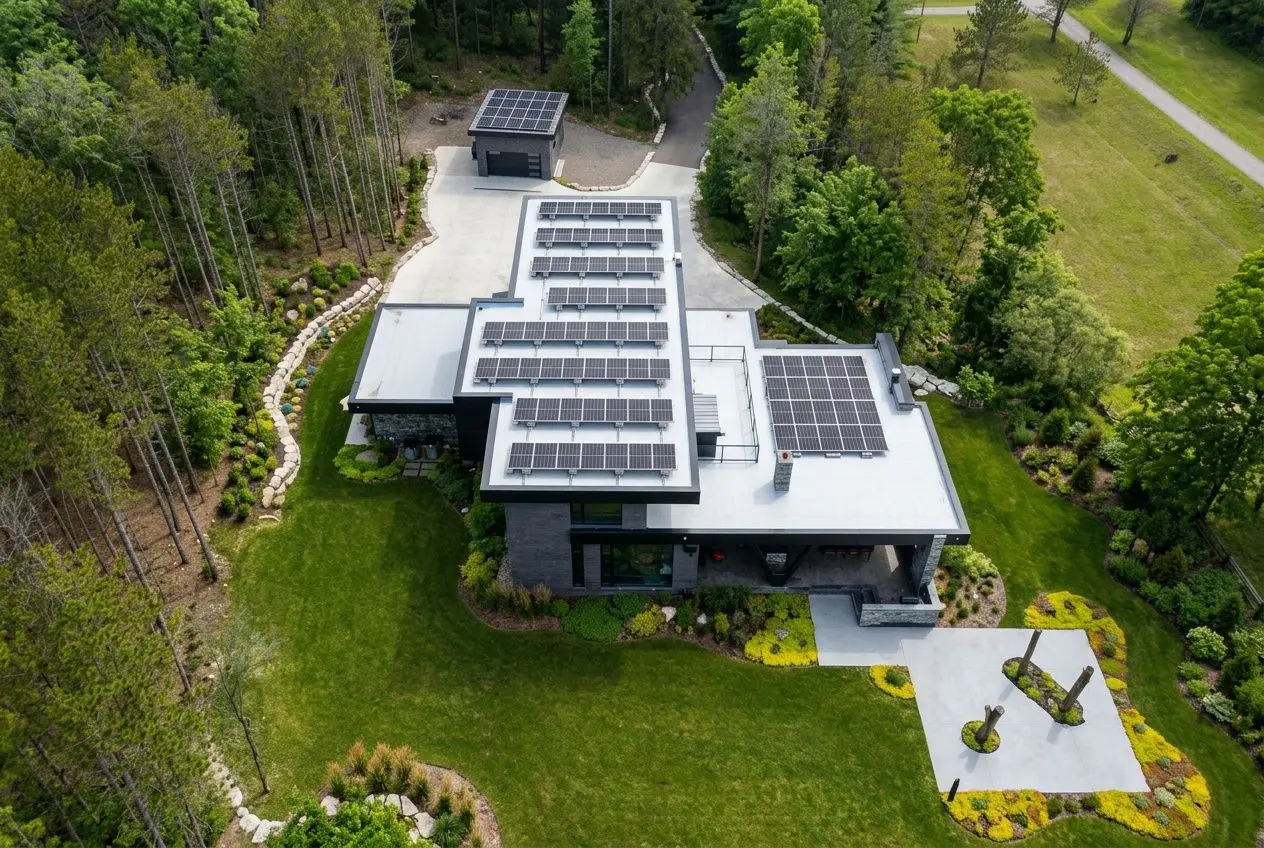
A white PVC or TPO membrane can qualify for cool-roof rebates while improving the output of bifacial solar panels installed above it. Light reflected from the bright surface reaches the underside of bifacial modules, creating an albedo effect that increases overall energy yield. Roofing and solar design therefore need to be coordinated. Every solar panel anchor point must be sealed correctly to preserve the membrane’s watertight integrity, which makes an experienced commercial contractor and a coordinated installation plan important.
Businesses that combine a reflective membrane with rooftop solar can benefit from several financial offsets. The cool-roof grant reduces membrane cost, while the Save on Energy incentive helps lower solar system cost. The 30% tax credit and accelerated depreciation further reduce the net capital outlay. The resulting commercial rooftop produces clean solar energy. It lowers HVAC cooling loads and strengthens the owner’s sustainability profile. Tenants notice.
For a business evaluating a turnkey installation, the permit pathway, available rebates, and municipal grant requirements should be confirmed before the design is approved. An integrated review can support energy savings, grid resilience, and a shorter system payback period while keeping the project aligned with Ontario’s clean energy transition.
Frequently Asked Questions
What government grants and incentives are available for a commercial solar installation on a flat roof in Ontario?
The main provincial incentive is the Save on Energy Prescriptive Retrofit stream. It provides CAD 1,000/kW-DC for systems up to 10 kW and CAD 770/kW-AC for systems from 10 kW up to 1 MW-AC, with funding capped at 50% of eligible project costs.
At the federal level, eligible businesses can claim a 30% refundable investment tax credit and 100% first-year depreciation for qualifying solar systems. The Clean Technology Investment Tax Credit may provide further federal tax relief for qualifying solar systems.
Can you install solar panels on a commercial flat roof in Toronto, and does this affect grant eligibility?
Yes. Flat-roof commercial buildings are well suited to rooftop solar PV in urban areas. Their continuous, unobstructed surface allows strong panel coverage, while flexible array orientation helps engineers align electricity production with business operating hours.
An east-west configuration, used in the December 2020 Toronto installation of approximately 100 kW, spreads generation more evenly across the working day. The Save on Energy program requires solar PV to be mounted on a building rooftop, so a flat-roof installation meets its deployment model. Bifacial modules can also perform well above reflective membranes, giving businesses an additional incentive to pair a high-SRI roof surface with the solar array.
What happened to the Canada Greener Homes Grant, and what federal solar support exists in 2026 for homes?
The Canada Greener Homes Grant closed to new applicants in February 2024. As of 2026, no new nationwide federal residential solar grant has replaced either program for new applicants.
The federal CAD 800-million Canada Greener Homes Affordability Program is rolling out province by province. It targets income-eligible households with no-cost retrofits rather than commercial buildings. For commercial solar projects, the active federal support mechanisms are the 30% refundable investment tax credit and accelerated depreciation rules for eligible systems.
Provincial and municipal programs, including Save on Energy and the Toronto Eco-Roof Incentive Program, remain important funding sources for businesses installing rooftop solar in Ontario in 2026.