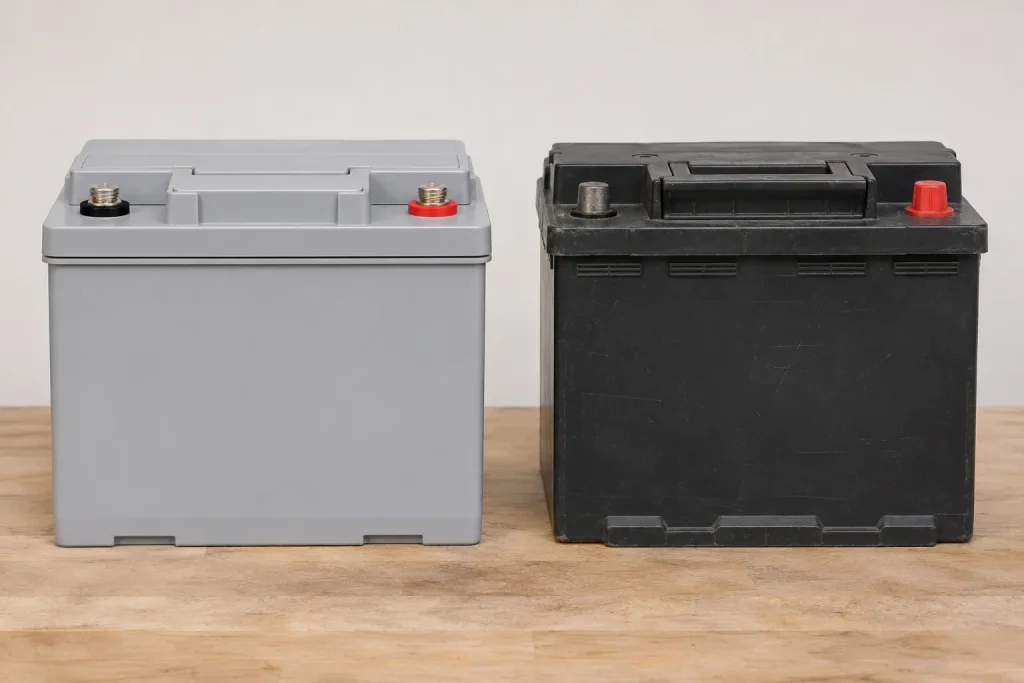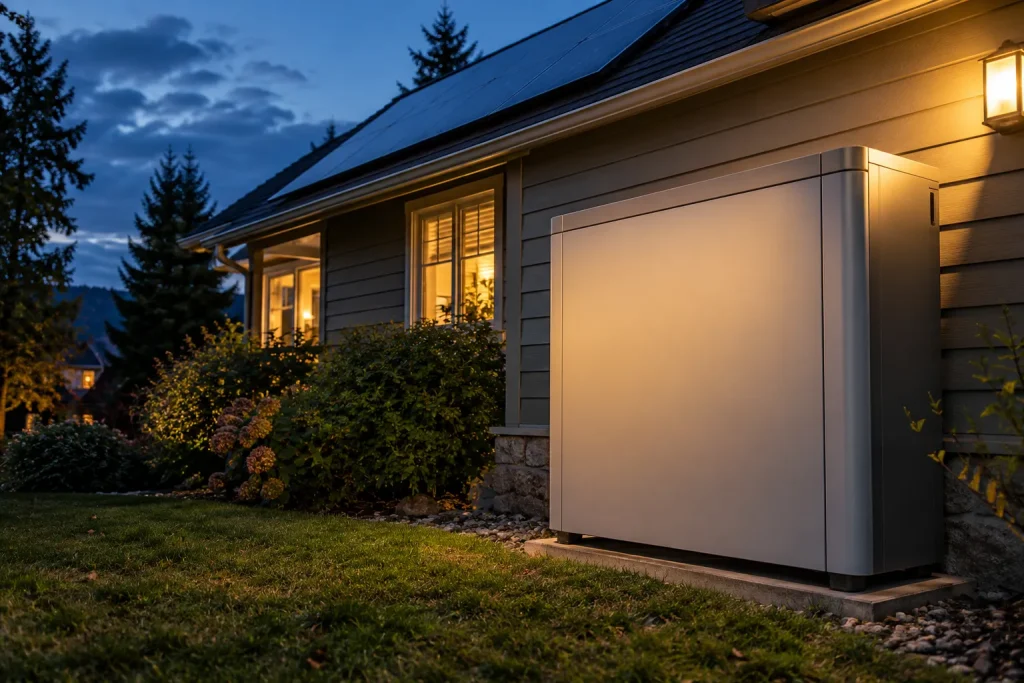
A LiFePO4 battery stores energy for solar arrays, RVs, boats and backup systems, and it can run through thousands of charge cycles. Its chemistry differs from lead-acid in upfront cost, cycle life and care. Sizing, charging, maintenance and Ontario installation costs in CAD all shape a confident choice.
Are LiFePO4 batteries worth it?
They are worth it when you discharge and recharge a battery often. For occasional or low-budget uses, the answer depends on lifetime cost rather than chemistry alone.
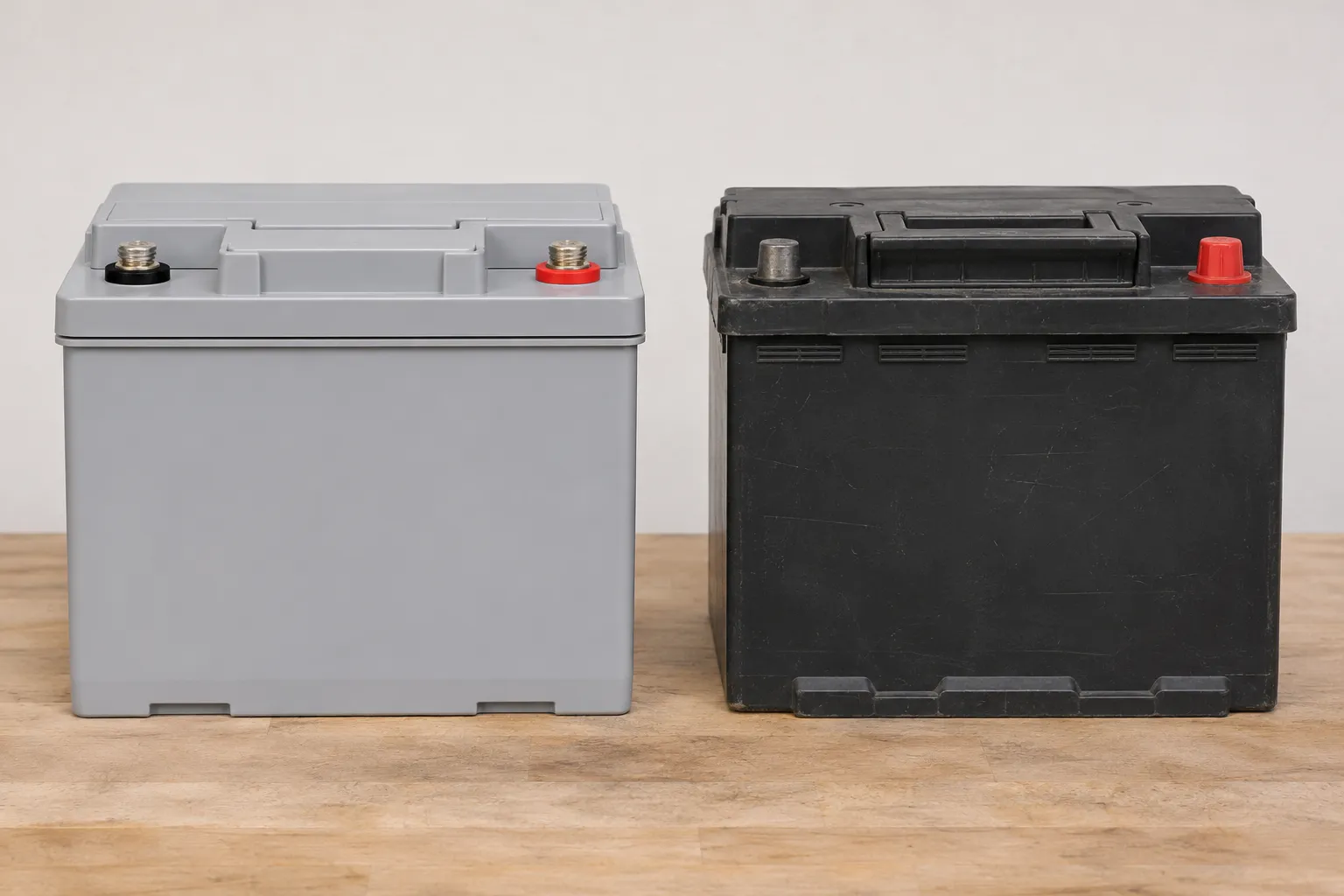
A rechargeable battery built for repeated cycling
LiFePO4, short for lithium iron phosphate, is a rechargeable chemistry within the lithium-ion batteries family. A LiFePO4 battery uses lithium iron phosphate in its positive electrode, also called the cathode. Four cells of 3.2 V each, wired in series, produce a nominal 12.8 V battery that most sellers label 12V.
- Deeper cycling: Within their specified limits, LiFePO4 batteries generally tolerate deeper discharge and more cycles than conventional lead-acid, which suits deep cycle applications.
- Thermal stability: The chemistry is more thermally stable than higher-energy lithium-ion types, although damage, short circuits or a poor installation can still create serious hazards.
- Size trade-off: Its lower energy density makes a pack larger for the same stored energy than higher-energy lithium-ion alternatives.
Deep-cycle value compared with lead-acid
Lead-acid batteries cost less to buy. That price is only one part of a deep cycle comparison. For a fair lifetime comparison, look at usable energy, cycle life and the installed cost of each replacement, not just the purchase price or the amp-hour rating.
LiFePO4 also carries less weight for the same usable energy, charges faster and more efficiently, and holds a steadier voltage while discharging. It does not need the watering and equalization that flooded lead-acid requires. However, a deep cycle LiFePO4 battery is not automatically approved for starting an engine.
Solar, marine and portable power uses
LiFePO4 solar batteries store daytime generation so you can use it in the evening or during an outage. New Dawn Energy Solutions builds lithium iron phosphate solar storage systems for homes, businesses and remote communities across Ontario. Each system is designed around the client’s needs.
RV house batteries and portable power packs run refrigerators, lights, pumps and electronics. A replacement must fit the mounting space and work with the RV’s converter and alternator. Marine batteries need more checks: house-load or engine-start approval, water resistance and discharge current. For the vessels its policy covers, Transport Canada identifies ABYC E-13 as an alternative electrical standard for battery systems over 600 Wh.
Which voltage and capacity do you need?
Start with two numbers: the system voltage, and the energy you actually use. The voltage has to match your equipment. The energy you need sets the capacity.
Choosing 12V, 24V or 48V
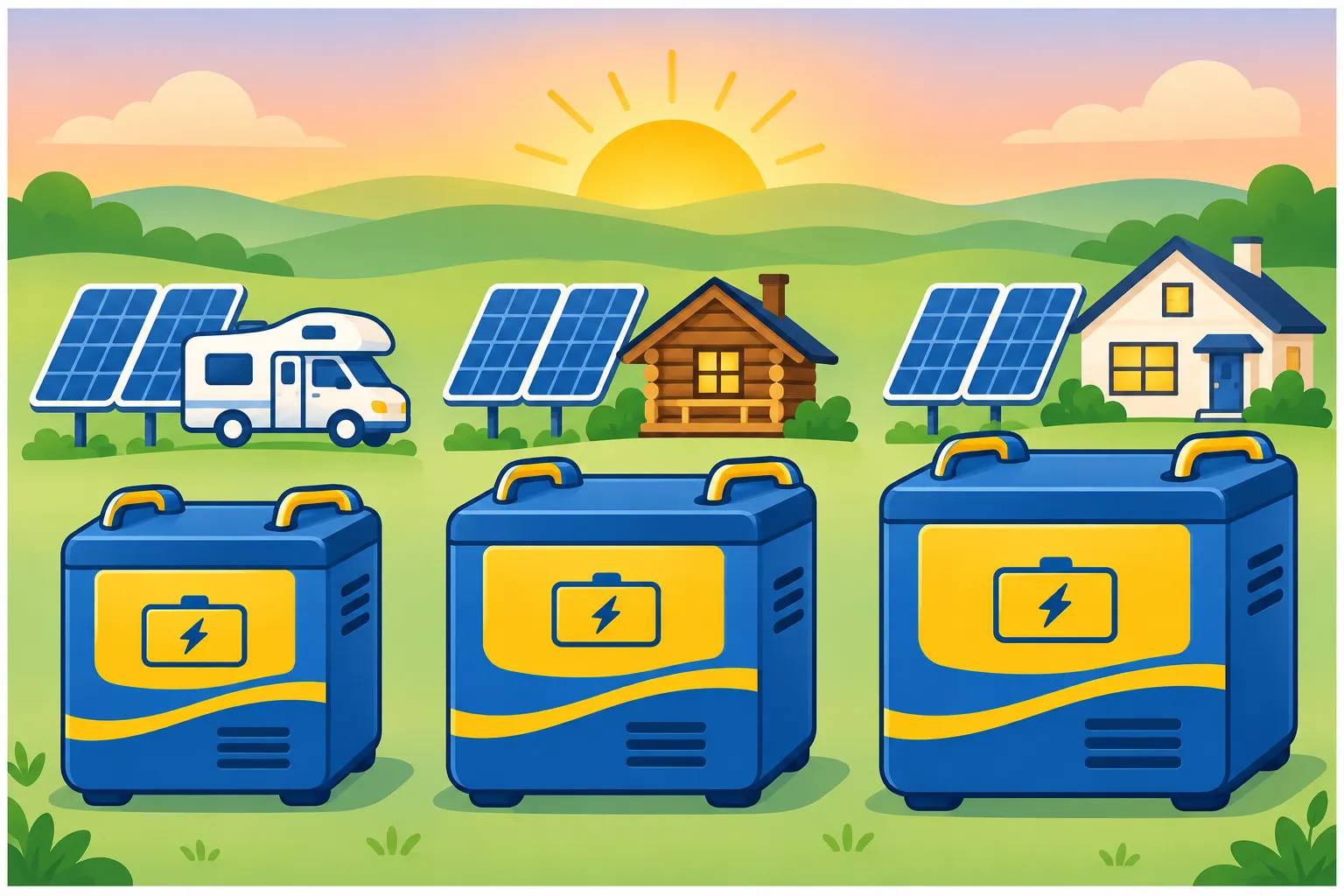
For the same power, a higher voltage draws less current. That is why 12V suits RVs and small systems, 24 V suits medium off-grid setups, and 48 V or 51.2 V serves larger cottages and homes. Whichever you choose, it must match your inverter, charger and distribution design.
Current ratings matter separately from capacity. As an illustration, a 2,000 W AC load at 90% inverter efficiency draws about 174 A from a 12.8 V battery. Compare the battery’s continuous and surge ratings against figures like that one.
| Capacity at 12.8 V | Nominal energy |
| 50 Ah | 640 Wh |
| 100 Ah | 1,280 Wh |
| 150 Ah | 1,920 Wh |
| 200 Ah | 2,560 Wh |
| 300 Ah | 3,840 Wh |
Calculating usable energy and runtime
The nominal watt-hours in that table are not what reaches your appliances. To estimate runtime, divide usable watt-hours by the load in watts. Depth-of-discharge limits, inverter losses, temperature, battery age and BMS cut-offs all reduce the result. A 12.8 V, 100 Ah battery at 80% usable capacity, before conversion losses, runs a 50 W load for about 20.5 hours. At 100 W it lasts 10.2 hours, and at 200 W, 5.1 hours.
At 400 W, runtime drops to 2.6 hours, and to 1.3 hours at 800 W. Now apply the method to a typical RV day. A 45 W fridge running 12 equivalent hours uses 540 Wh, and a 40 W CPAP running 8 hours uses 320 Wh. Lights and phones add 140 Wh, for a total of 1,000 Wh before inverter and cold-weather losses.
Sizing solar storage and backup power
An off-grid solar system needs a larger margin. Sizing accounts for daily loads, days without charging and winter production. A cottage using 5 kWh per day, with two days of autonomy, needs about 10 kWh of usable storage before design margins and conversion losses.
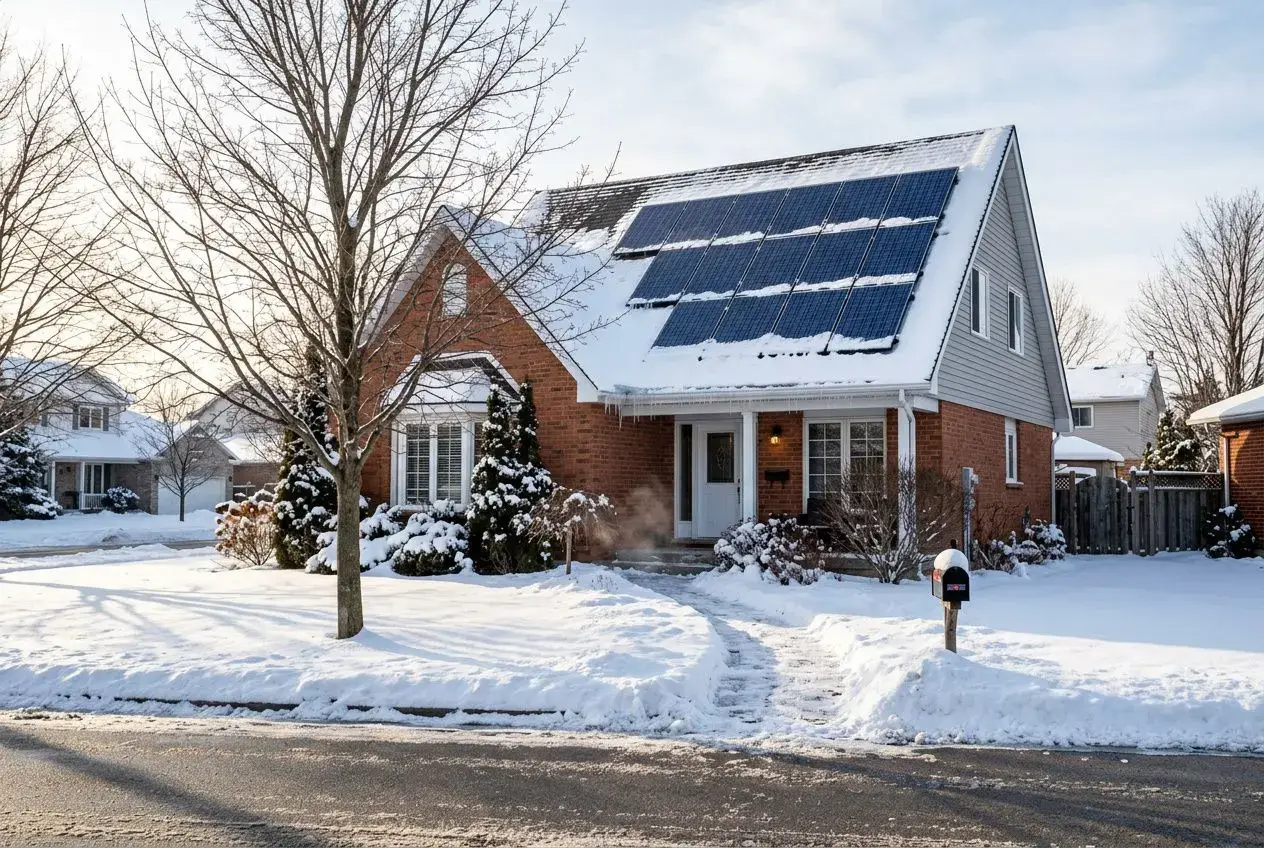
Solar energy storage combines panels, a charge controller, batteries and an inverter. When you size a LiFePO4 battery for solar use in Canada, plan for December: shorter days, snow-covered panels and cold cells can leave a summer-sized bank short at cottages.
A battery added to an existing grid-tied array does not provide backup power on its own. The design needs a compatible inverter or transfer arrangement that isolates the home from the grid. Our battery energy storage installations in Ontario start with an assessment of essential loads. They then switch to battery automatically during outages, and their operating modes can shift stored energy away from peak-rate hours.
How long will the battery last?
A long cycle life is one reason to pay more for LiFePO4. Two separate measures describe its lifespan: cycles and calendar years. Each one responds differently to how you use the battery.
Understanding cycle life and lifespan
One cycle equals a complete discharge and recharge, which can be spread over several days. In one manufacturer’s tests, a battery reached 5,000 cycles at 50% depth of discharge and 3,000 at 70%. At 80%, it reached 2,500 cycles. End of life meant keeping at least 80% of nominal capacity, and those figures apply only to that product. At one full cycle per day, 3,000 cycles take about 8.2 years. A well-designed battery may last about 8–15 years, depending on temperature, charge settings, discharge rate and construction.
Keeping performance healthy
How you operate the battery shapes how it ages. A 2024 Canadian-led cell study by Zsoldos and colleagues found less capacity fade at lower average states of charge. That result applies to cells, not to complete batteries. LiFePO4 batteries also offer high round-trip efficiency and low self-discharge, although those in seasonal storage still need periodic checks.
Warranty terms show what a supplier commits to. Our solar-storage solutions carry a warranty of 10 years or more than 6,000 cycles, with energy-throughput measurement. When you compare products, use each product’s own warranty and operating conditions.
Storage, warning signs and recycling
Keep terminals clean, dry and secure. Repeated BMS trips, shorter runtime or temperature warnings call for investigation rather than repeated resets. For unused batteries, Health Canada advises storing them at about 50% charge, checking them every three months and keeping them dry and away from extreme temperatures. The battery maker’s instructions take precedence.
At the end of its life, a pack needs a collection or take-back route that accepts it, never household garbage. Ontario’s producer-collection regime covers batteries weighing 5 kg or less, so larger RV or home packs need another route. Transport Canada’s lithium-battery rules add special provisions for recycling shipments and damaged packs.
How do you charge it safely?
Charging is where compatibility problems can show up. The charger, the protection electronics and the temperature each set limits. Safety depends on all three working within the battery’s specification.
Matching the battery charger and settings
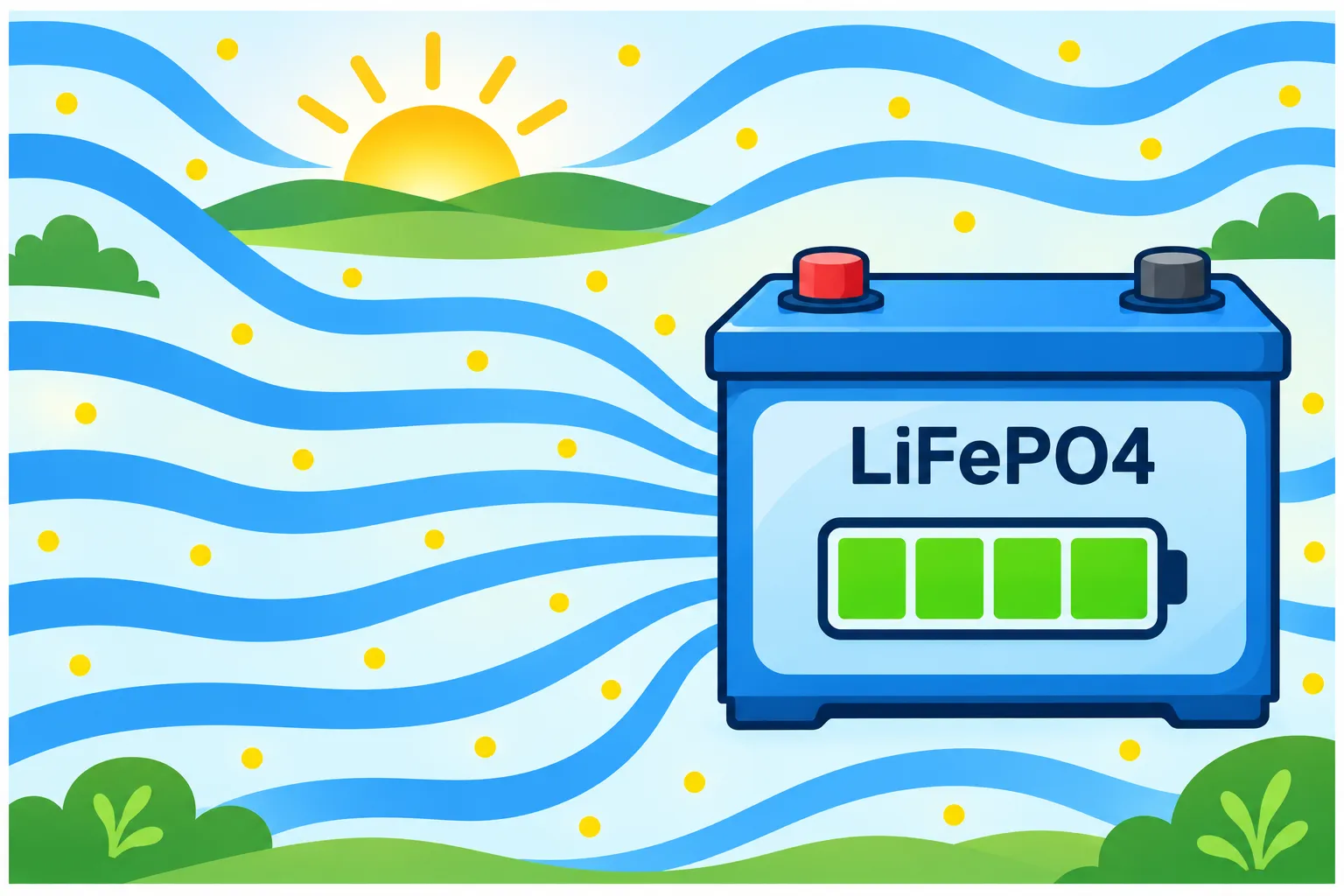
Your battery charger must be compatible with the chemistry and set to the correct system voltage and current limits. It does not have to come from the battery manufacturer.
A typical 12.8 V LiFePO4 battery may call for a charging voltage of around 14.0–14.6 V. One product-specific example sets absorption at 14.2 V for 2 hours, then float at 13.5 V, with temperature compensation disabled. Its recommended current is 0.5C, which is 50 A for a 100 Ah battery.
Lead-acid modes such as equalization, desulphation and reconditioning may not suit LiFePO4 batteries. Check every source against your battery’s limits: the solar controller, shore-power converter, inverter/charger, generator charger and vehicle charging system.
What the battery management system protects
A battery management system, or BMS, can monitor and balance cells. It also guards against excessive voltage, excessive current and unsafe temperatures. Some packs integrate one, while others require an external unit. Treat the BMS as a last resort. It does not replace correct charge settings, properly sized cables or external fuses.
A protection cut-off can also disrupt connected equipment. Before installation, confirm that the inverter, solar controller, RV converter and alternator can tolerate a BMS disconnection and recover from it.
Charging through a Canadian winter
Cold sets a charging limit for LiFePO4 batteries in Canada. Health Canada advises against charging lithium-ion batteries below 0°C. Base the decision on the battery’s internal temperature and the model’s instructions, not on the outdoor air temperature.
Some models set a stricter limit. One manufacturer’s January 2026 instructions set a default charge cut-off at 5°C. Some LiFePO4 batteries can discharge at temperatures as low as −20°C, but that does not mean they can charge at −20°C.
In an unheated shed or a winter RV, check the low-temperature cut-off, the cell heating and the charger’s temperature control. Where the solar controller’s instructions require a battery-temperature reading, install the sensor they specify.
What will an Ontario installation cost?
The purchase price is only the starting point. Taxes, duty, inspection fees and connection steps all add to the cost of an installed system in Ontario.
Battery price, taxes and project fees
The cost of a LiFePO4 battery in Canada depends on capacity, BMS ratings, heating, certification and the enclosure. That LiFePO4 battery price is not the installed total, which also covers wiring, fuses, disconnects, power electronics and labour.
- Ontario HST: The 13% HST applies to an ordinary taxable Ontario supply, as the CRA illustrates. It is not a battery-specific surcharge.
- Direct imports: GST or the federal HST component generally applies unless an exception covers the import.
- Customs duty: The CBSA tariff effective 1 September 2026 lists lithium-ion “other” accumulators under 8507.60.90 at 7% most-favoured-nation duty.
- Preferential treatment: Numerous preferential tariffs reduce that duty to free. The actual rate depends on classification and origin.
Approval and electrical safety
Ontario’s 2026 ESA Wiring Fee Guide took effect on 1 April 2026. It lists a storage battery component fee of $86 CAD for the first group of up to 10 batteries filed by a contractor, or $93 CAD for a non-contractor. Other project fees may apply.
Ontario’s Electrical Safety Code took effect on 1 May 2025. The May 2025 residential storage bulletin separates approved ANSI/CAN/UL 9540 systems from UL 9540A fire-test data, and cell-level approval does not approve a complete assembly. A fixed storage design should also address location, mounting, moisture, disconnects, conductor sizing and overcurrent protection. ESA says almost all electrical work requires notification, including off-grid work.
Permits, grid connection and incentives
Where ESA review applies, file the notification before work begins. Request a review before wiring is concealed and again at completion. Correct any defects, then keep the Certificate of Acceptance. Anyone you hire for the electrical work must be a Licensed Electrical Contractor.
A grid-connected project may also incur municipal permit and distributor connection charges. For eligible micro-embedded generation of 10 kW or less, Hydro One’s published process requires an application and an offer. You must accept an offered allocation within 90 days, before further approvals and connection.
The federal Greener Homes grant closed to new applicants in February 2024, and final grant documents were due 31 December 2025. The loan’s final application day was 1 October 2025. Through our turnkey solar and storage solutions, we handle assessment, design, permits, installation, financing guidance and long-term maintenance, and we check current incentives for each project.
Frequently Asked Questions
Can you combine different LiFePO4 batteries in one battery bank?
Follow the maker’s balancing procedure and its series-or-parallel instructions. Mixing batteries of different models, ages or states of charge can reduce usable capacity or trigger repeated BMS trips.
How should you judge a manufacturer’s cycle-life claim for a LiFePO4 battery?
Check whether the tests covered cells or a complete battery. Then look at the depth of discharge, current, temperature and end-of-life capacity used, and whether the figure was measured or projected.
Do you need a battery to save on bills with a grid-connected solar system?
Not necessarily. A utility net-metering arrangement may give you grid credits for surplus production instead of storing every kWh. Measurement Canada notes that these programmes differ by utility and province.