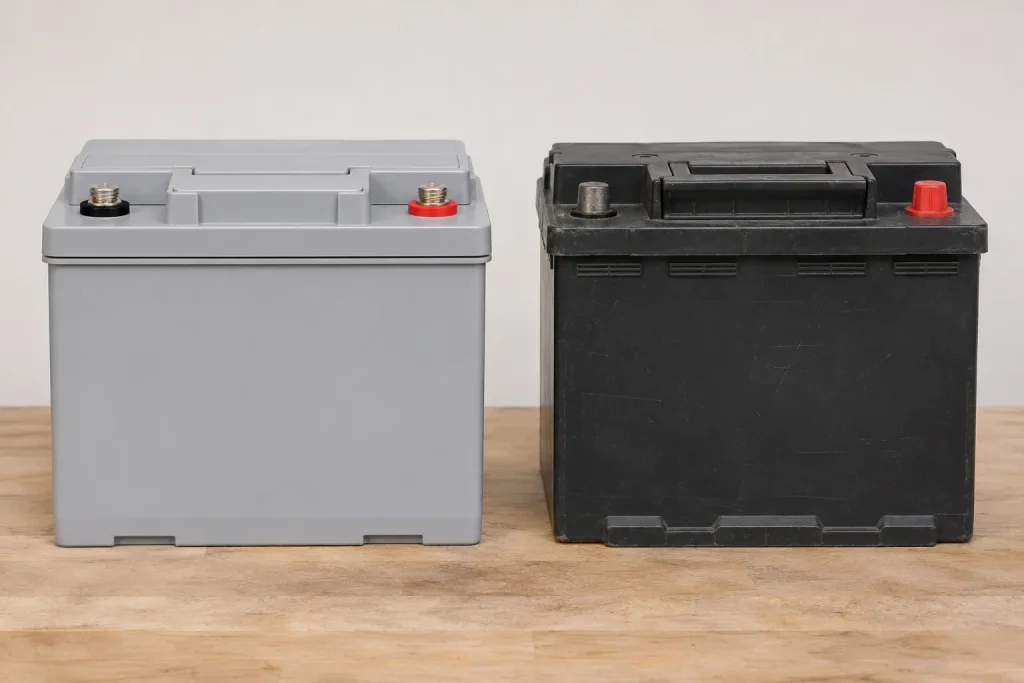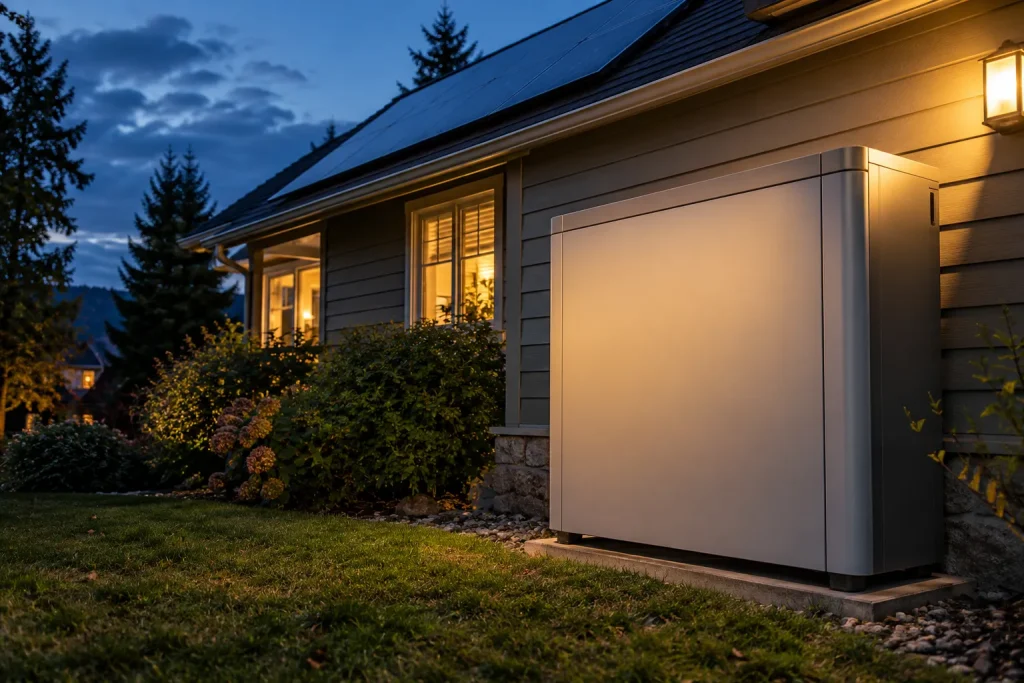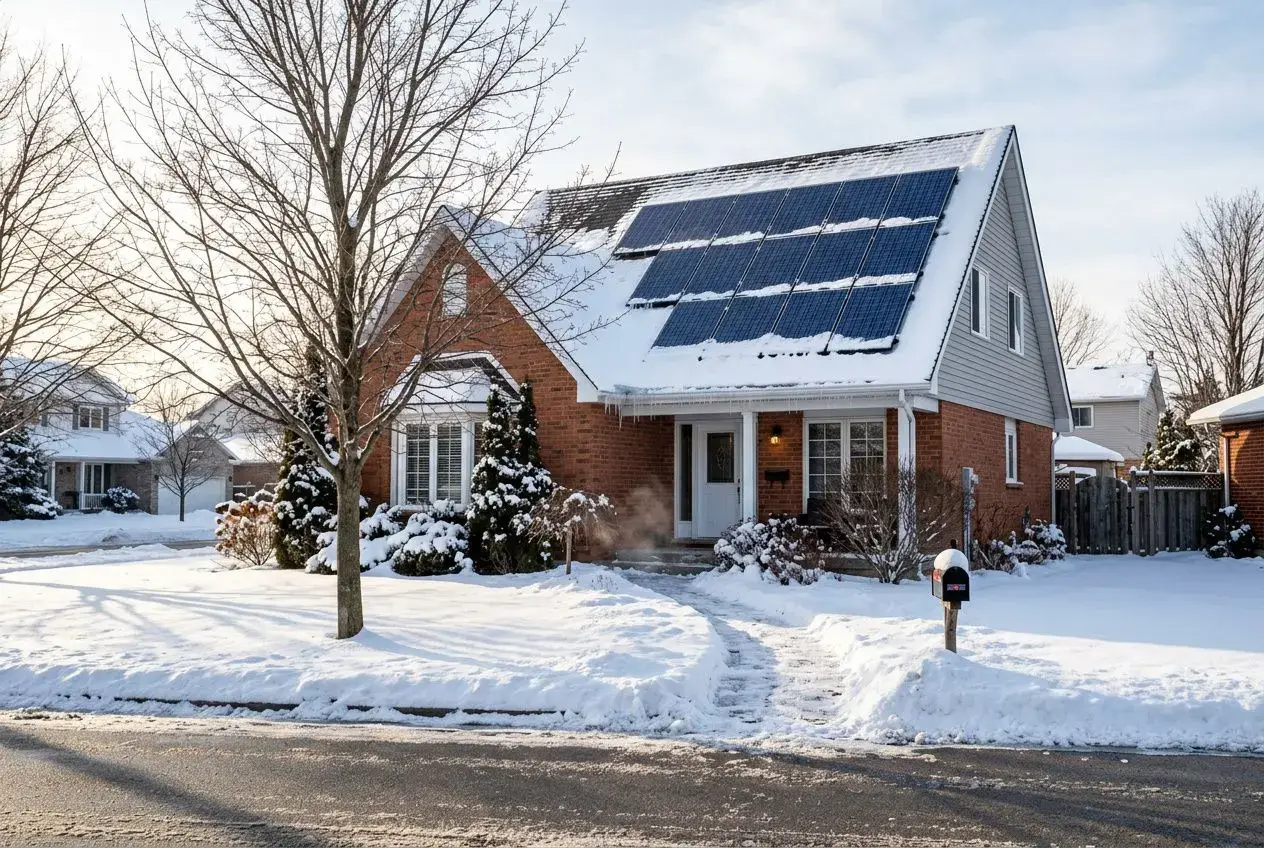
The lifespan of solar panel batteries usually runs about 10 to 15 years, shorter than the panels they pair with. Chemistry, daily use, Ontario winters and charge settings all shape that range, and a settings issue can look like real wear. Warranty terms and Ontario electrical rules then frame when and how a replacement happens.
How long do solar batteries last?
Battery life is measured in years, but it is also measured in what a battery can still deliver. Chemistry, daily use and the loads your home asks of a battery all shape how long it stays useful. The answer starts with a range, then narrows to your own system.
Typical lifespan and replacement timing
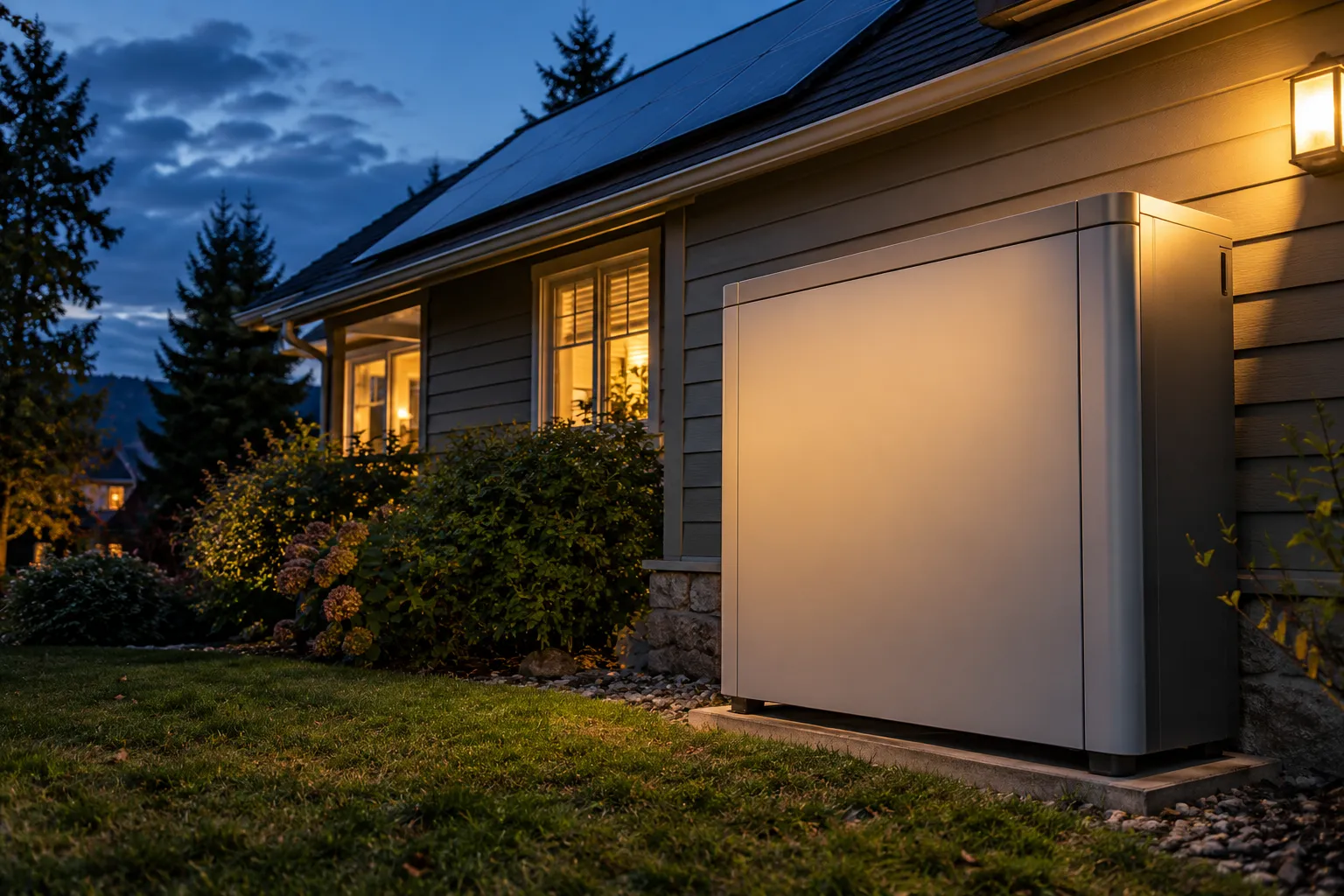
Modern home solar batteries have a typical lifespan of about 10–15 years. The City of Toronto notes that some residential lithium-ion systems can last more than 15 years, depending on chemistry and operation. In a solar panel system, storage usually wears out first, so you may replace the battery once while the panels keep producing.
Age alone does not set an end-of-life date. Usable capacity declines gradually, and what counts is whether the remaining storage still covers your home’s evening use and outage backup. A 12-year-old battery that meets those needs is still doing its job.
How battery chemistry changes longevity
Battery type matters. One published comparison estimates 15 years or more for lithium iron phosphate (LFP) and 10–15 years for nickel manganese cobalt (NMC), two chemistries used in lithium-ion solar batteries. These are estimates, not product guarantees. LFP offers strong cycle ratings and thermal stability, typically 3,000–10,000 cycles against 1,000–3,000 for older lithium-ion designs.
Older technology ages faster. Published estimates put lead-acid batteries at 3–5 years and 500–1,000 cycles. The City of Toronto gives about 2 years as an illustration for daily-cycled lead-acid storage, which shows how strongly use conditions drive the lifespan of solar batteries. LFP is known for its stability and long cycle life, qualities that matter in combined solar and storage systems.
| Chemistry | Estimated life | Typical cycle rating |
| Lithium iron phosphate (LFP) | 15 years or more | 3,000–10,000 cycles |
| Nickel manganese cobalt (NMC) | 10–15 years | Varies by product (older lithium-ion designs: 1,000–3,000 cycles) |
| Lead-acid | 3–5 years (about 2 years cycled daily, City of Toronto) | 500–1,000 cycles |
What a 10 kWh battery can supply
Battery capacity is energy, measured in kWh. Output power is measured in kW. Approximate backup time equals usable energy divided by the average backed-up load, before losses and operating limits. With 10 kWh usable, idealized backup lasts 100 hours at 100 W and 40 hours at 250 W. It drops to 20 hours at 500 W, 10 hours at 1 kW and 5 hours at 2 kW.
Nominal capacity can exceed the usable AC energy your home receives, because conversion losses, reserve settings and operating limits take their share. Better Homes Ontario cites about 30 kWh of daily use for an average home. A 10 kWh battery alone cannot cover that full day without more generation or lower demand, so size storage around the loads you truly need.
What affects battery lifespan?
Several factors wear a battery down, and some of them work even when it sits idle. Time, cycling, discharge depth and charge settings each leave a mark. Understanding them helps you read your system’s behaviour with confidence.
Calendar ageing and cycling
Battery degradation follows two paths. Calendar ageing happens with time alone, even without use, while cycle ageing from repeated charging and discharging adds its own wear. Repeated cycling alters electrode materials and interfaces. Rising internal resistance then lowers voltage under load and turns more energy into heat.
Conditions shape the pace. Natural Resources Canada laboratory cells kept 80–97.5% of their capacity after 8 years under one mild storage condition. Under elevated temperature at full charge, some cells reached 80% in 2–3 years. These cell tests do not forecast a complete home battery’s life, yet they show why heat and storage habits matter.
Why depth of discharge matters
Depth of discharge is the share of stored energy you use. Drawing 10 kWh from a 13.5 kWh battery is about 74%. Regularly exceeding the manufacturer’s permitted depth can shorten cycle life. No universal 80–90% limit applies to modern home batteries, while some lead-acid models specify limits of 30–50%.
Usage pattern sets the cycle count. Daily solar charging with evening draw produces roughly 300–365 cycles a year, while outage-only use may produce far fewer. A cycle rating still cannot predict calendar years of solar battery life, because ageing also runs on time. Check your own model’s discharge limits before changing how you use stored energy.
Charge settings and routine care
High charging currents, a battery held at full charge for long periods and repeated very low levels all add stress. Charging from the grid is not inherently damaging when the system stays within its permitted limits. Well-configured controls keep those limits in place without daily input from you.
New Dawn’s smart monitoring tools show solar production, battery charge and household use in real time. A monthly look at status, alerts and backup reserve can reveal abnormal changes before you lose backup service. Modern stationary batteries need little owner maintenance: keep clearances unobstructed, leave software servicing to manufacturer procedures, and never open the enclosure or change protection settings. Our solar battery storage installation in Ontario includes this post-commissioning support for long-term battery lifespan and safety.
How do Ontario winters affect battery performance?
A January cold snap in Newmarket or Caledon can make a healthy battery look tired. Cold changes how lithium-ion cells accept energy, and winter cuts the solar supply that refills them. Most of these effects are temporary, but they shape where and how a battery should be installed.
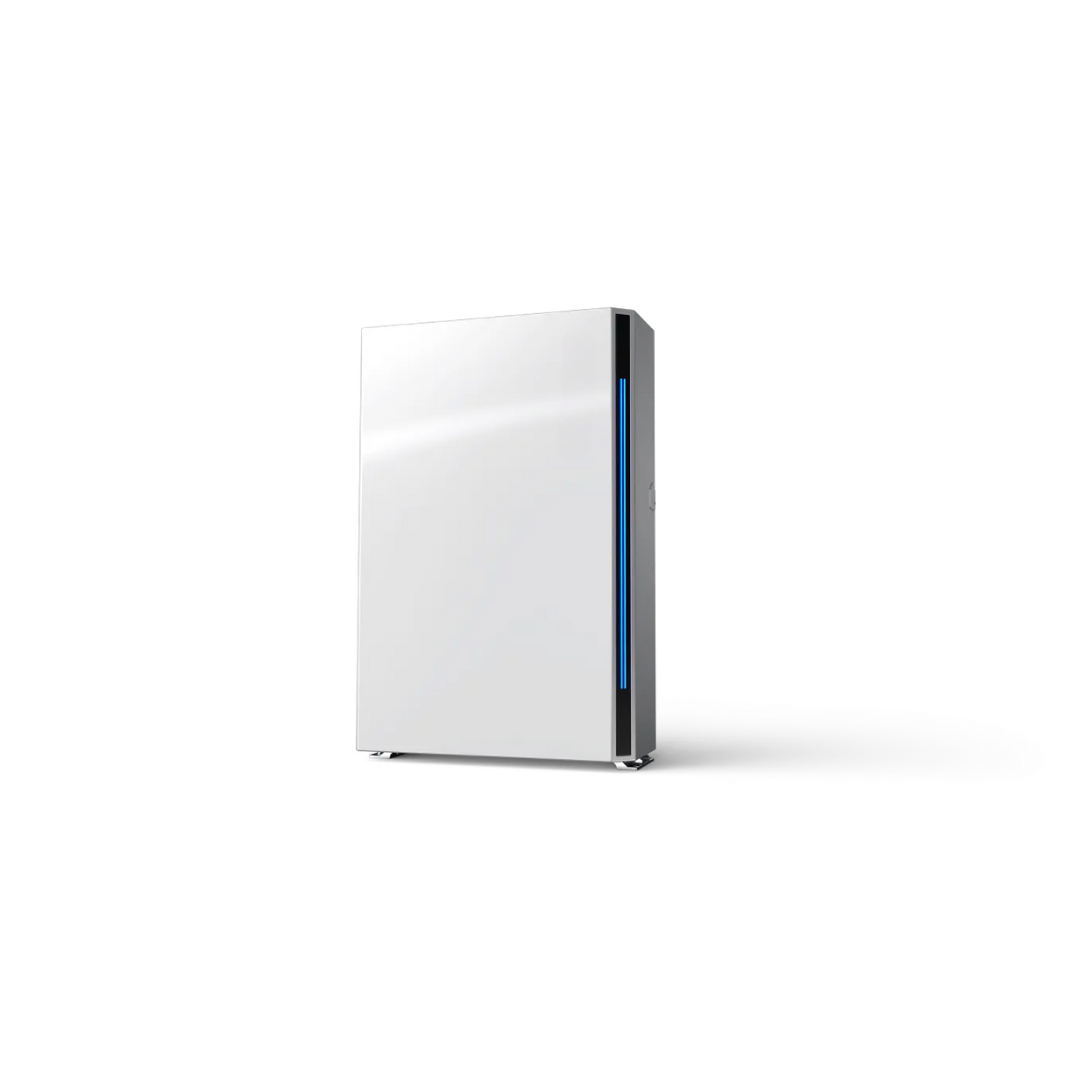
Cold-weather charging limits
Low temperature raises internal resistance in lithium-ion cells and reduces how readily they accept charge. A winter restriction on charging or discharging does not by itself prove permanent capacity loss. Several protections and limits come into play:
- Battery management system (BMS): it may limit current or stop charging when cells are too cold.
- Discharge still possible: a cold battery may continue supplying power while charging stays paused.
- Outdoor approval: an outdoor-rated model is not necessarily able to charge at full power below freezing.
- Lithium plating: charging below the permitted temperature can deposit metallic lithium on electrodes and damage the cells.
Health Canada advises against charging lithium-ion batteries below 0°C and directs owners to the manufacturer’s instructions for their system. A paused charge on a frigid morning can therefore be built-in protection at work rather than a fault.
Placement and enclosure conditions
Some manufacturers specify an ideal operating range around 0–35°C, but your installed model’s own limits govern safe operation. An Ontario garage is not necessarily heated. Outdoor placement must be checked against the model’s permitted location, minimum charging temperature, cold-weather controls, snow clearance and drainage requirements.
Indoors is not automatically simpler. Indoor placement still has to meet product instructions and the applicable electrical, working-space, ventilation, clearance and fire-safety requirements. Confirm the coldest temperature the actual enclosure reaches before choosing a location.
Winter backup versus battery wear
Less sun means less stored energy. Short days, snow on the panels and lower production in December can leave a battery partly charged without any sign of degradation.
When winter backup time drops, compare similar days in your monitoring data. Account for solar charging, battery temperature, household heating demand, charge history and reserve settings before drawing conclusions.
Energy and power are separate checks. A cold battery can hold plenty of kWh yet lack the continuous or motor-starting power to run every backed-up load at once, such as a furnace blower and well pump together.
When does a battery need replacing?
Replacement is a performance decision, not a birthday. A battery earns retirement when it can no longer serve your home, and that needs evidence. Symptoms, tests and warranty terms each contribute a piece.
Changes that warrant investigation
Shorter battery backup can come from reduced usable capacity, higher household loads or a changed reserve setting. One short night does not prove failure. Watch for these other signals:
- Stopped charging: possibly a BMS temperature or protection limit rather than a cell fault.
- Offline status: possibly an inverter or communications fault, which may be repairable.
- Unexpected shutdowns: protection events triggered by unsuitable loads or a component failure.
- Frequent low charge: rising consumption or limited solar surplus can explain it before cell wear does.
Replacement makes sense when a working battery no longer covers essential overnight use or meaningful outage backup. Needs also grow. Adding an EV in Vaughan or Whitby can outgrow a perfectly healthy battery, which calls for a capacity review rather than a diagnosis of failure.
Tests before a replacement decision
Evidence comes before any order. Follow this owner-level sequence:
- Record the symptom: note the date, what failed and any error codes shown.
- Review monitoring: check alerts and battery temperature in the app.
- Compare with earlier records: set current energy delivery and loads against similar past periods.
- Request qualified testing: have the battery, inverter, controls and communications diagnosed.
An installer can measure usable energy against the commissioning baseline and review cycle or energy throughput history, separating ageing from a changed operating pattern. System diagnostics distinguish cell problems from repairable faults.
What the warranty does and does not prove
A 10-year battery warranty is common, but the warranty period is not a failure date. The City of Toronto says lithium-ion warranties commonly guarantee 70–80% of available capacity at the end of that term.
Terms differ by product. One Canadian-market example covers 10 years or an earlier cycle-count or throughput limit, whichever comes first, with a 70% capacity-retention threshold. Its documented version applies to products activated on or after November 19, 2021, unless superseded.
A solar battery’s warrantied life differs from its useful life. Expiry or reduced capacity alone does not justify replacement, and the actual terms of a product warranty decide whether diagnosis, labour, removal and reinstallation are covered. Read those terms before assuming the whole job is paid for.
What does replacement involve in Ontario?
Swapping a battery is an electrical project, not a part exchange. Compatibility, code compliance, cost and disposal all need attention before the old unit comes out. Planned well, the work restores your backup without touching the rest of the system.
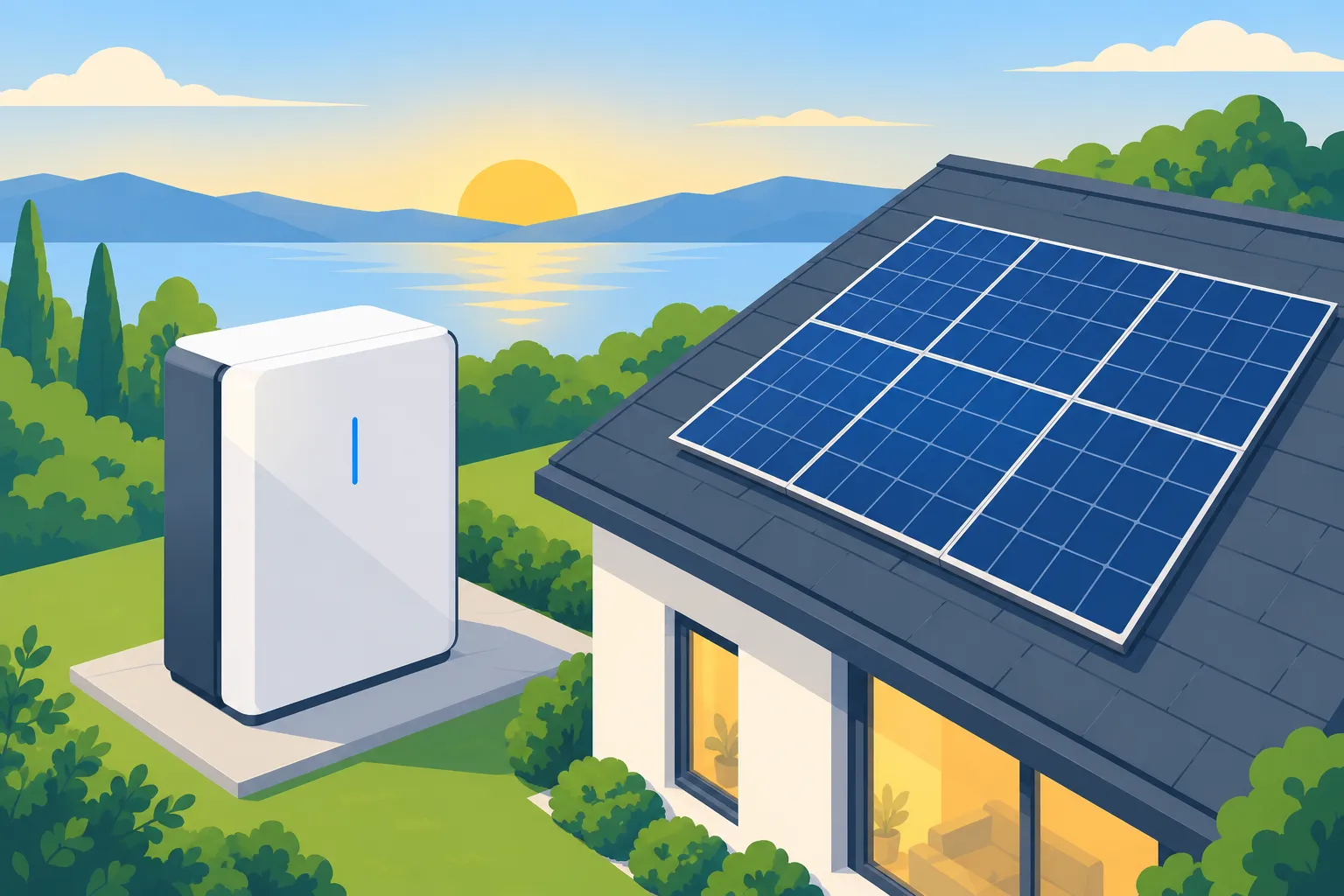
Compatibility with the existing system
Replacing battery storage does not automatically mean replacing the panels or the inverter. The new unit must be compatible with your existing solar equipment, and supported combinations change as products and software evolve. Compatibility hinges on:
- Inverter architecture and voltage: the system design the battery must match.
- Communications protocol and BMS: how the battery and inverter exchange data.
- Controller and firmware: the software versions approved for the pairing.
- Certifications and backup configuration: the approvals and circuit set-up already in place.
Before ordering, have a qualified installer assess the inverter, gateway, protection equipment, wiring, electrical panel, backed-up circuits, location and clearances. Through our battery energy storage service in Ontario, we design each system around household usage and backup requirements.
Electrical approval and commissioning
Ontario’s 2024 Electrical Safety Code, 29th edition, took effect May 1, 2025, and ESA Bulletin 64-8-3, issued in May 2025, addresses residential storage locations, capacity limits, separation and working space. Confirm ESA notification and inspection requirements for your actual job, like-for-like included. The ESA 2026 Wiring Fee Guide took effect April 1, 2026, with a 1.9% fee increase. A qualified professional should isolate, remove, install and commission the equipment; afterward, confirm backup and monitoring work and keep electrical, commissioning, serial-number and warranty records.
Cost and end-of-life handling
Better Homes Ontario lists $6,000–$30,000 CAD for an installed home battery system, which is not a verified battery-only replacement price. Quotes vary with capacity, compatibility, electrical work and any warranty remedy. Ask for separate lines covering hardware, labour, removal, inspection, commissioning, disposal and tax. Ontario’s general HST is 13% on taxable supplies, and Home Renovation Savings Program eligibility for new energy storage does not establish eligibility for a replacement.
A stationary battery never goes in household garbage or ordinary recycling. It needs a collection or recycling program that accepts its chemistry, size and condition. Arrange that authorised route before removal, especially for a damaged or recalled pack.
Frequently Asked Questions
How long will a 10 kWh solar battery last as it ages?
As an arithmetic example, a battery first delivering 10 kWh would supply 9, 8 or 7 kWh at 90%, 80% or 70% retention. At the same load, that means shorter outage backup or fewer evening hours on stored solar energy. Age alone cannot predict hours; calculate them from measured usable energy, reserve settings and the loads you power.
Can a battery with reduced capacity still be useful?
Yes. Solar batteries lose usable capacity gradually rather than failing on a set anniversary, and they can stay useful after the warranty ends. A reduced battery may still cover smaller backup loads, while a home that must reliably power critical loads may need a replacement before complete failure.
Which warning signs mean a home battery is a safety concern?
Smoke, hissing, unusual chemical odours, severe overheating or visible swelling are potential emergency signs; never dismantle or try to repair the battery. Health Canada advises following manufacturer instructions, not using damaged or swollen batteries and avoiding any tampering. After a severe storm or system fault, review alarms and arrange an inspection if you suspect damage.