Understanding the disadvantages of using solar energy is essential before committing to a major home improvement in Canada. This article reviews the main limitations, including high upfront cost, weather dependence, roof constraints, and end-of-life impacts, so you can determine whether a solar PV system suits your home, finances, and location. For deeper technical context, consult the peer-reviewed solar energy research journal published by the International Solar Energy Society, which examines technology, policy, and sustainability across solar applications.
Disadvantages of solar energy for Canadian homes
Solar PV installations have become more accessible as equipment prices have fallen sharply over the past decade. Canadian homeowners must weigh installation cost, local climate, roof condition, electricity rates, and the expected ownership period. Provincial conditions can change the result significantly.
The key trade-offs to assess
A balanced review identifies five recurring concerns: high initial investment, variable output linked to sunlight, the need for storage or backup, physical installation limits, and end-of-life environmental impacts.
- High upfront cost A typical 7.5 kW system costs roughly CAD $25,050 in Canada, with significant provincial variation. That initial price represents a substantial capital commitment for most households.
- Variable energy output Production changes by the hour, day, and season. Cloudy periods and short winter days can reduce generation when household electricity demand is high.
- Storage and backup requirements Grid-tied systems shut down during outages unless a battery backup is installed. Adding storage increases equipment cost and system complexity.
Ontario’s relatively competitive installation prices and moderate electricity rates create a different financial picture from Newfoundland and Labrador, where installed costs exceed CAD $4.00 per watt. Panels typically last more than 25 years, but the financial return depends on remaining in the property long enough to reach the system payback period, commonly 12 to 15 years across Canada.
When solar may not suit
At least 5 disadvantages of using solar energy can make a system unsuitable for some homes: steep or north-facing roofs, low local electricity prices that limit energy savings, frequent cloud cover, inadequate space for a properly sized array, and short-term ownership plans that prevent payback recovery.
Solar performance and savings are not uniform. A home in southern Ontario with a south-facing roof, high electricity consumption, and a long ownership horizon faces a different calculation from a property in a northern or heavily overcast region. The right conclusion depends on the roof, available sunlight, local price of electricity, financing terms, and long-term plans.
Upfront cost and slow financial returns
The initial price of a residential solar system remains one of the most significant barriers for Canadian homeowners. Although equipment costs have declined, a complete installation still requires substantial capital. Understanding how the cost breaks down, and how long energy savings take to recover it, is essential when assessing whether solar energy makes financial sense for your property.
Why installation costs vary
Among the disadvantages of solar energy that Canadian buyers often cite, uneven provincial pricing ranks near the top. The national average is approximately CAD $3.34 per watt, while Ontario averages CAD $2.42 per watt. That compares with more than CAD $4.00 per watt in Newfoundland and Labrador and Nunavut. Geography, supply chains, and installer availability all influence the final figure.
The cost of solar panels covers more than the modules themselves. Inverters, mounting hardware, wiring, permits, and labour also affect the total. Adding a battery increases the investment further because solar energy storage equipment is among the most expensive components in a complete system. Homeowners seeking full backup capability should plan for an additional expense of thousands of dollars.
| Province / Region | Approx. installed cost per watt (CAD) | Notes |
| Ontario | ~$2.42 | Among the lowest in Canada; competitive installer market |
| National average | ~$3.34 | Based on a 7.5 kW system (~$25,050 total) |
| Newfoundland & Labrador | $4.00+ | Remote logistics and lower installer density increase price |
| Nunavut | $4.00+ | Highest costs; supply chain and climate challenges compound expense |
A cash purchase generally produces the greatest lifetime savings, but many households do not have sufficient reserves available. Financing through a loan or another arrangement creates repayment obligations that reduce net savings over time. Government grants, rebates, and loan programs may lower the effective solar panels cost, so include them in the budget before signing a contract.
Payback depends on local rates
Explaining the disadvantages of solar energy only in general terms overlooks the most important financial variable: the local electricity price. Provinces with lower utility rates provide fewer annual savings, which lengthens the system payback period. Canada’s average payback is estimated at 12 to 15 years, although favourable rates can bring it closer to 10 years in some regions.
- High electricity rates Households paying above-average rates per kilowatt-hour recover their investment faster because each unit of self-generated power avoids a higher utility charge.
- Low electricity rates Provinces with inexpensive grid electricity produce smaller annual savings, potentially extending the payback period well beyond 15 years.
- Ownership duration Moving before reaching the payback milestone limits financial returns, even if the installation adds some property value at resale.
- Financing terms Interest and repayment schedules reduce net savings compared with a cash purchase; the solar panels cost must be weighed against the full borrowing cost over the loan term.
Net metering programs, where available, let homeowners send surplus electricity to the grid for a credit, strengthening the financial case. However, credit rates and program rules vary by province. No arrangement removes the need to assess whether the system will generate enough power, relative to household consumption and local prices, to justify the investment during your ownership horizon.
The advantages of solar include lower utility bills, greater grid resilience, and progress toward the clean energy transition. A turnkey installation can simplify delivery, but it does not replace a careful review of price, financing, battery requirements, system life, and expected electricity savings.
Weather limits solar energy output
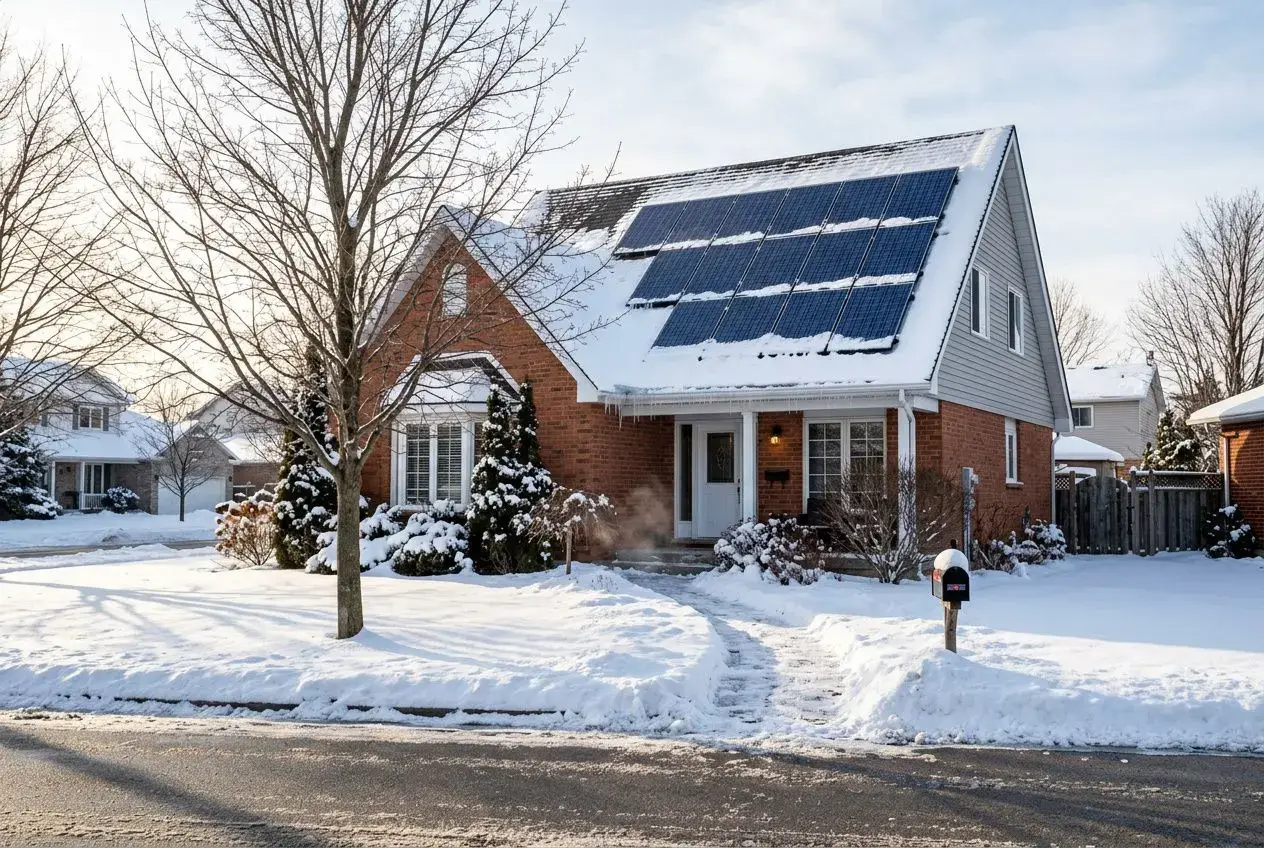
Canada’s climate creates a fundamental challenge for solar energy: output is weather-dependent. Panels generate electricity only when sunlight reaches their cells, so clouds, precipitation, snow accumulation, and low winter sun angles can all reduce production. Understanding these variations helps you set realistic expectations for what a system can deliver throughout the year.
Daily and seasonal energy changes
One of the key disadvantages of solar energy is the timing mismatch between peak solar generation and household demand. Solar intensity can rise from near zero at dawn to approximately 1,000 W/m² around midday before falling to almost nothing by sunset. Most homes, however, use significant electricity in the morning and evening, when output is lowest.
Cloud cover intensifies this daily cycle. On partly cloudy days, generation can fall for seconds as clouds pass. During prolonged rain or overcast conditions, lower output may continue for several days. That reduction can erode expected energy savings for households using solar to offset a substantial share of their consumption.
Seasonal changes are more pronounced in Canada than in sunnier markets. Average sunlight in southern Québec increases by roughly 50% between December and June, so a system sized around summer demand may underperform substantially during winter. This predictable pattern must be included in any credible energy generation forecast for Canadian conditions.
Winter demand and solar mismatch
The mismatch is sharpest in winter, when heating and lighting loads are highest while solar output is lowest. In Québec, solar energy is unavailable during peak-demand periods on winter mornings and evenings, so the grid or another source must supply electricity regardless of panel size. The same constraint applies across much of Canada.
For homeowners assessing energy independence or grid resilience, this winter shortfall is a central design consideration. A system that covers 80% of annual consumption in Ontario may cover far less in January and February. Net metering can balance some seasonal deficits over a billing cycle, but it cannot create electricity when sunlight is absent, and some provinces limit how credits accumulate.
Regional sunlight differences
The country spans many latitudes and climate zones, so a system in southern Ontario or the interior of British Columbia will generally outperform one in northern Manitoba or the coastal Atlantic provinces. Because energy generation depends on the quality and duration of direct sunlight, geography places a practical ceiling on system output.
Where sunlight remains limited throughout the year, hydropower or geothermal energy may be more suitable than a solar-primary system. Reviewing local solar irradiance data before finalizing a design is essential.
These weather-related limitations must be weighed alongside the benefits of solar. The main cons are variable production and seasonal timing, while the disadvantages of solar energy to the environment can include manufacturing impacts and land requirements.
Backup needs for reliable electricity
Solar panels generate power only when sunlight is available, making continuous electricity supply a real challenge for grid-tied systems. Without additional equipment, a solar installation cannot guarantee power during outages or after dark. Understanding backup options and their cost is essential for homeowners who value grid resilience or want to reduce reliance on the grid beyond daylight hours.
Why grid-tied systems shut down
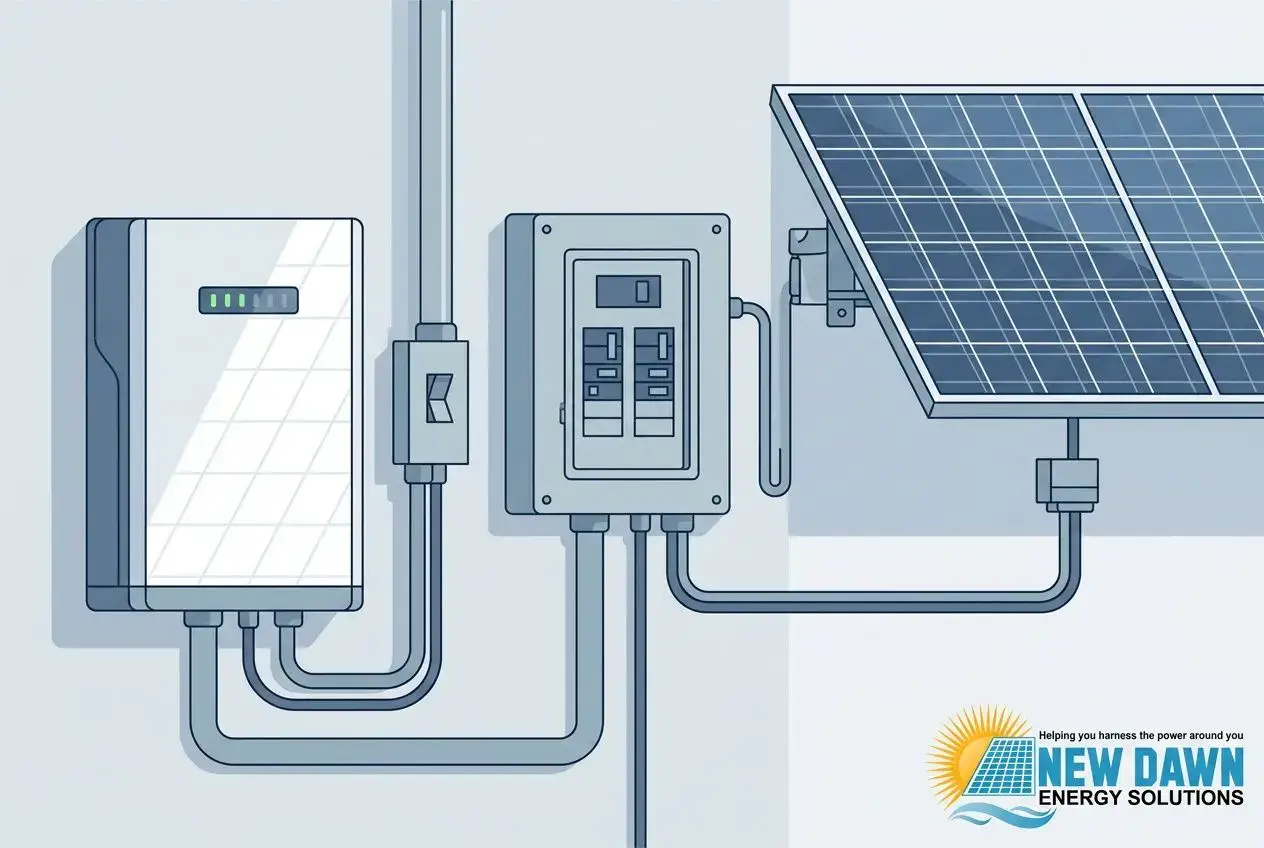
Reviewing the 10 advantages of solar panels helps establish the context: fewer daytime grid purchases, potential outage resilience, and lower long-term electricity costs are commonly cited benefits. However, this depends on system configuration. A standard grid-tied installation, which represents the large majority of residential solar in Canada, must disconnect automatically when the grid goes down under safety regulations.
This anti-islanding requirement protects utility workers from live lines during repairs. It also means that a grid-tied system without a battery stops supplying the home during an outage, even on a sunny day when the panels are producing at full capacity. Homeowners who experience frequent outages, or who need continuous power for medical or operational reasons, should address this limitation during system design.
Adding a battery backup system closes the outage gap but introduces more equipment, installation complexity, and cost. The system must be sized correctly. A battery that covers only a few hours of average household consumption will not sustain a home through a multi-day weather event. Turnkey installation quotes should state the expected backup duration, not just battery capacity in kilowatt-hours, so you can compare options properly.
Battery storage raises system cost
The advantages of solar are most useful when the system can deliver power reliably, and that often requires storage. Battery hardware is one of the most expensive parts of a residential energy system, so adding it can substantially increase the total project cost. The financial case for storage should therefore reflect a clear need: outage protection, time-of-use rate management, or genuine off-grid operation.
For many grid-connected households, buying electricity from the utility at night remains more economical than installing enough battery capacity for overnight supply. Solar energy storage can shift midday generation into the evening and reduce peak-rate consumption where time-of-use pricing applies, but it cannot eliminate the seasonal shortfalls created by Canadian winters. Treat storage as a targeted solution rather than a universal answer to intermittency.
Limits of energy independence
That requirement significantly increases the initial investment. The more ambitious the independence goal, the more expensive and complex the system becomes, making this one of the most underestimated cons of solar energy in residential planning.
- Overnight supply Panels produce nothing after sunset. A battery sized for overnight household use adds considerable cost before a single backup event occurs.
- Extended low-sun periods A battery cannot solve a week of overcast winter weather. Fossil-fuel backup generation may be required in genuinely off-grid scenarios.
- Grid economics For most grid-connected homes, the grid remains the most cost-effective source of nighttime and winter electricity, making full independence a high-cost choice.
Solar works best as part of a hybrid energy strategy: it can generate much of your daytime electricity, reduce grid purchases, and supplement rather than replace the utility connection for most Canadian households. Evaluate backup needs against your actual outage history and rate structure before committing to battery expenditure that may not be justified by local grid reliability or electricity price.
Space, roofs and environmental effects
Solar installations face more than financial and weather-related constraints. Roof geometry, available land, and structural characteristics determine whether a system can be installed efficiently. Homeowners should also consider the full environmental impact of manufacturing, installing, operating, and disposing of equipment, including its footprint beyond the property.
Roof and land constraints
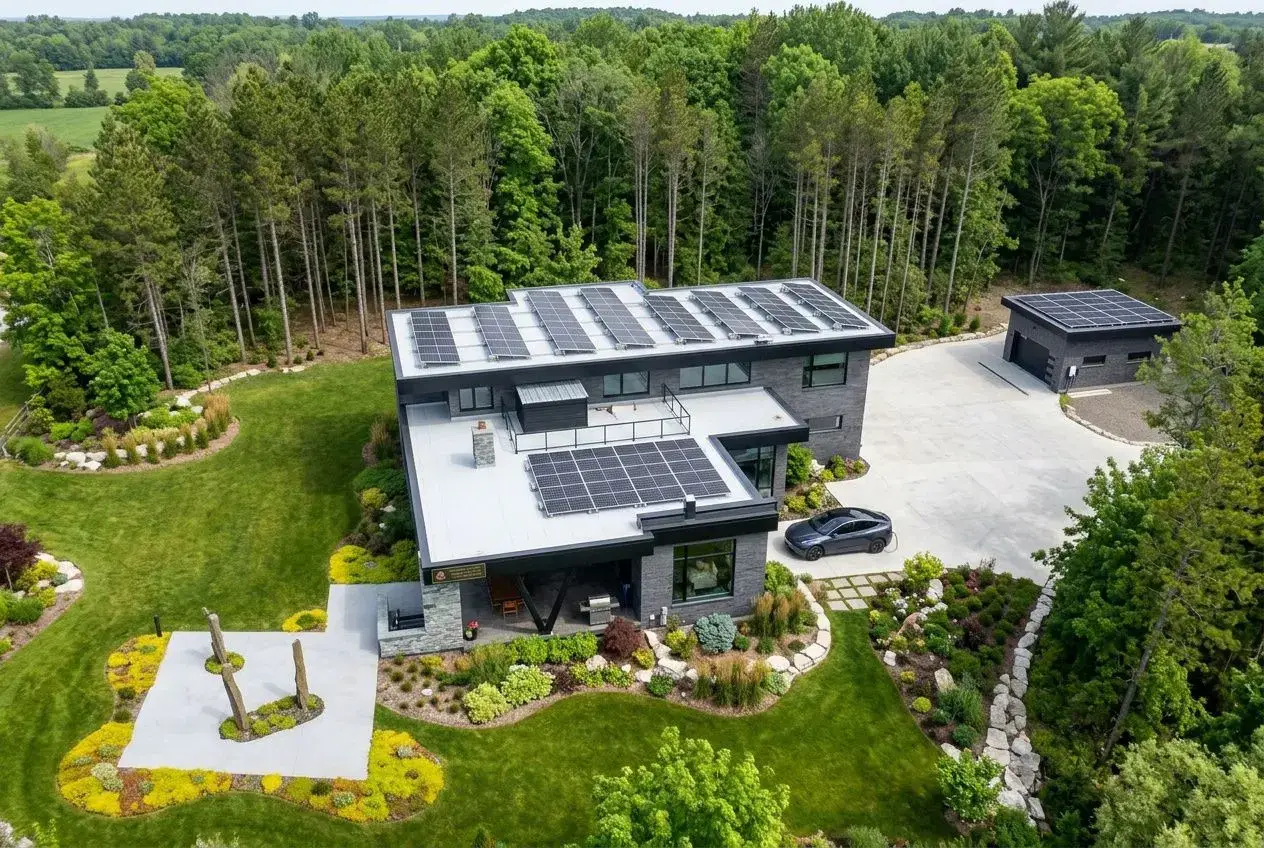
Solar production is generally strongest on a south-facing roof with a pitch of roughly 15 to 40 degrees. Many Canadian homes meet these conditions, but others do not. The space requirements for a fully sized residential array may exceed the usable area on a shaded, obstructed, or poorly oriented roof, limiting electricity production from the outset.
- Orientation and slope North-facing roofs are generally unsuitable. Shallow or very steep pitches reduce the efficiency of solar panels compared with an optimally angled installation.
- Rooftop obstacles Skylights, dormers, vents, and roof decks reduce the available area and make installing solar panels more complex and expensive.
- Challenging roofing materials Slate and cedar tile roofs, found on many heritage and older properties, require specialist handling. This can push the installed price beyond standard projections.
- Insufficient area Some roofs cannot accommodate enough modules to meet a household’s full electricity demand. Even so, a partial array may still be a worthwhile addition because it can offset a portion of grid consumption.
Ground-mounted systems solve some roof-related limitations but require substantial open land. A utility-scale plant serving 1,000 homes may need approximately 32 acres. These projects are usually sited far from load centres, which introduces grid transmission considerations. For homeowners, a ground mount can also occupy yard space used for practical or recreational purposes.
Manufacturing and disposal impacts
The environmental impact of solar energy extends beyond operation. Manufacturing PV cells, panels, inverters, and batteries consumes considerable energy, often from fossil-fuel sources, and uses hazardous chemicals and heavy metals that require careful supply-chain controls. The resulting carbon footprint is typically recovered over the system’s operating life, but manufacturing is not impact-free.
End-of-life management is becoming more important. Panels typically last 25 to 30 years, and the volume of retired modules is increasing. High recycling fees can encourage landfill disposal instead of responsible processing. The International Renewable Energy Agency projects that solar-energy-system waste could reach up to 78 million tonnes globally by 2050.
Performance declines over time
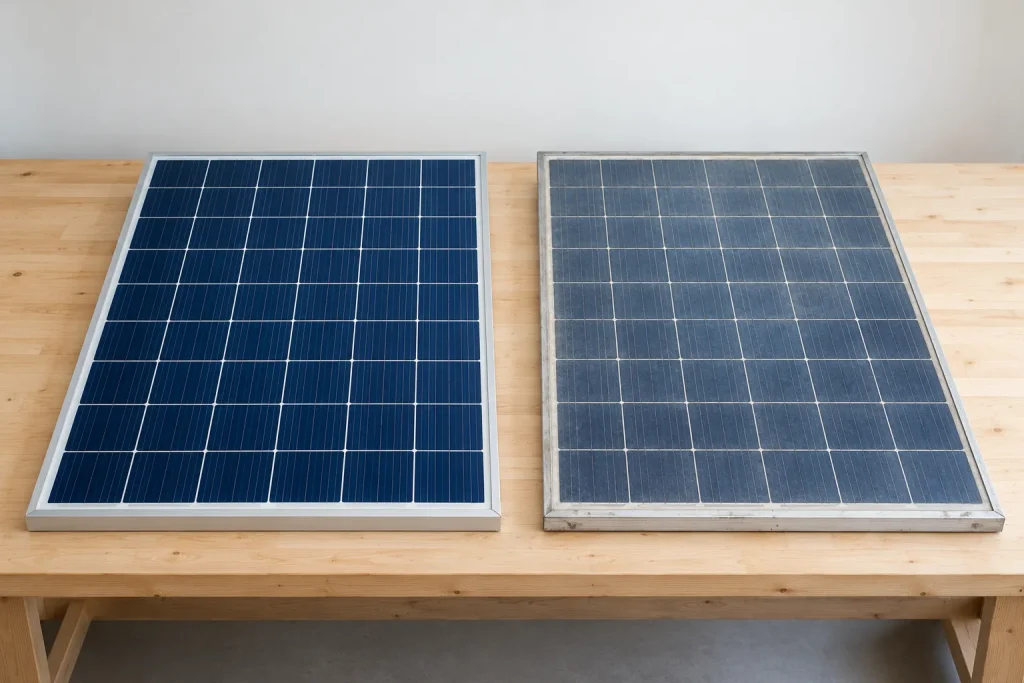
No module produces its rated output indefinitely. Research indicates that solar panels degrade by approximately 0.8% per year on average, while newer modules may decline by around 0.5% annually. Over a 25-year system life, output at the end of the warranty period will be measurably lower than it was at commissioning.
Financial forecasts that assume unchanged production can overstate lifetime energy yield and shorten the expected system payback period. A sound model should also weigh the cons of installation against long-term energy savings.
Frequently asked questions
What are the main financial disadvantages of solar energy for Canadian homeowners?
The main financial drawback is the high initial investment. A 7.5 kW system costs roughly CAD $25,050, based on the Canadian average of CAD $3.34 per watt. In some provinces, the cost exceeds CAD $4.00 per watt. The typical system payback period is 12 to 15 years through accumulated energy savings, so homeowners who move sooner may not recover the full amount.
Adding batteries for storage increases the initial price. Financing can spread the cost, but repayment charges reduce net returns compared with a cash purchase. Government rebates and grants may improve the calculation, provided you include them from the start.
Does weather make solar energy unreliable in Canada?
Solar energy is inherently weather-dependent, creating reliability challenges in Canada. Panels produce less electricity on cloudy days and none at night. Extended overcast periods can reduce generation for several days, while winter brings substantially less sunlight; southern Québec sees roughly 50% more sunshine in June than in December.
Household electricity demand also peaks in the morning and evening, when solar production is lowest. Full energy independence requires expensive batteries to provide storage during low-production periods.
What are the environmental disadvantages of solar panels?
Manufacturing photovoltaic panels and batteries requires energy, often from fossil fuels, and uses hazardous chemicals and heavy metals. Transportation, installation, and maintenance add to cumulative greenhouse-gas emissions, although those emissions are recovered over the system’s operational life.
End-of-life disposal is another concern. High recycling fees can send retired panels to landfill instead of responsible processing. The International Renewable Energy Agency projects that solar-system waste could reach 78 million tonnes by 2050. Select a contractor with clear disposal practices when the system reaches the end of its life; this helps limit that risk while supporting a more responsible clean energy transition.