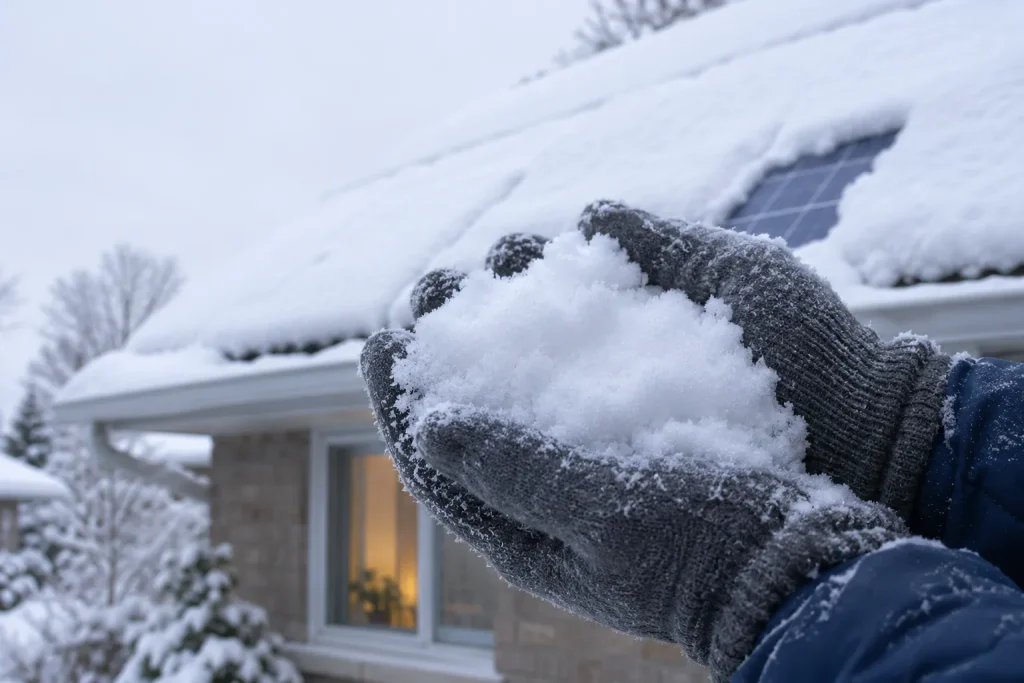
A DIY solar panel snow melter can look like a cheap way to keep winter output up, but the tests behind the idea are not encouraging. Most arrays in Toronto, Markham or Mississauga do better with natural shedding, careful clearing from the ground, regular monitoring and proper approval before anyone adds a heater.
Can a DIY melter work on solar panels?
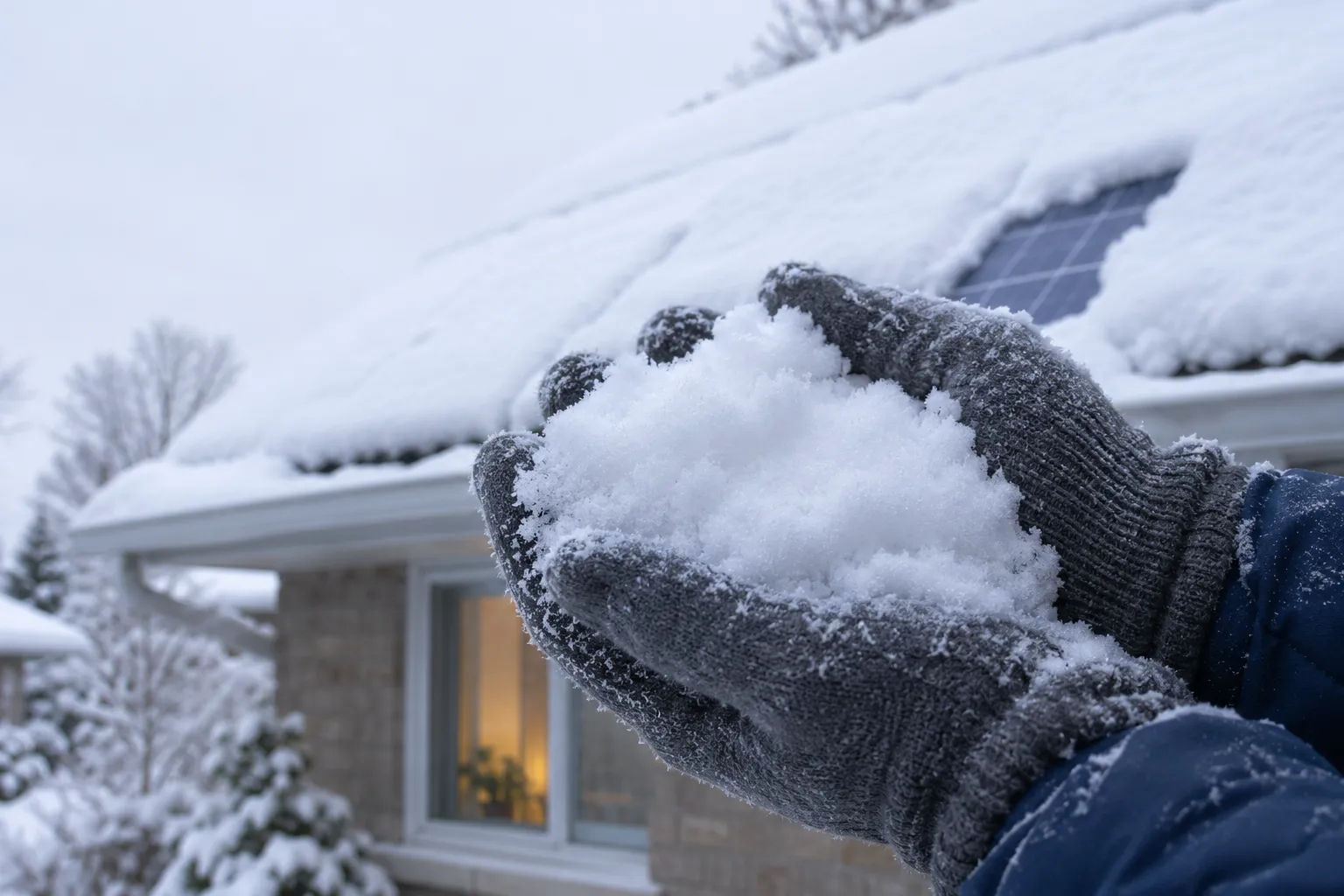
A homemade heater has to deal with frozen snow, the panel’s frame and the electrical system all at once. Lab tests show that heat can make snow slide off a panel. That still does not make a rig built at home safe on a working rooftop array.
What can a homemade heater actually do?
Solar panels generally have no built-in heating elements. A DIY melter therefore adds something new to an installed system. There is no standard heating feature to switch on.
Purpose-built systems may run warm water through small pipes or a hose, or use electrical wires or coils to melt snow and ice. Those products do not prove that a homemade version will work with your array. In one DIY test, exposed metal plates and wires melted no noticeable snow after a full sunny day.
What do controlled tests show?
In a Kingston experiment, researchers ran reverse current through a modified module to heat it. In most tests, the snow slid off in under 30 minutes. The researchers called for more study of long-term effects. Their result does not show that the method is safe for an unmodified rooftop string, inverter or battery system.
Heat alone is not enough. Another Ontario experiment found that a module’s lower frame could hold snow in place even while the module was heated. At solar facilities in northern Ontario, purpose-built blowing and wiping systems could not clear snow frozen onto panels during −20°C nights.
Would a melter be worth installing?
Roof-and-gutter heating cables are a different product. They keep a path open for meltwater to drain. They do not clear photovoltaic modules or reduce the snow load on a roof. One cable kit also rules out installation on a roof that is already snow-covered, on flat roofs and on rubber-membrane roofs, although those limits apply to that kit only.
To judge whether keeping snow off solar panels pays back, start with the extra winter electricity your array would produce once it is clear. Do not use its nameplate output. Then subtract the heater’s own electricity use and the cost of equipment, labour, access and inspection. Meltwater also needs a safe path, because water that thaws and refreezes can create ice hazards at gutters, entrances and walkways.
What does winter snow cost in output?
Snow costs some winter production. How much you lose depends on panel angle, mounting style and how your system is wired.
What changes generation during a snowfall?
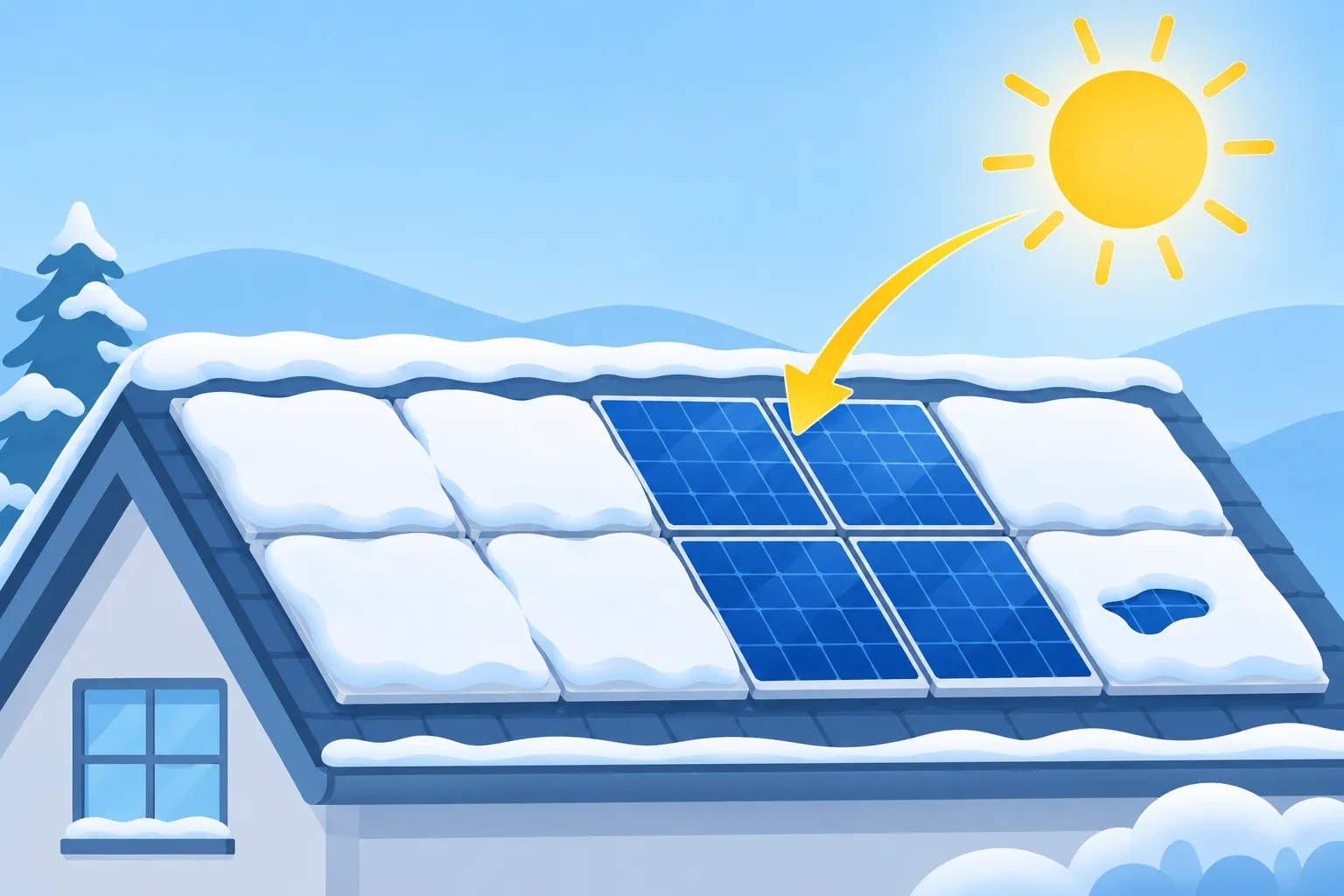
Snow on solar panels blocks sunlight and can reduce output or stop it for a while. A light layer does not always stop production. One New Hampshire operator reports that 2–3 inches of snow slows production without stopping it.
Shorter days, a lower sun and cloudy weather reduce output even when there is no snow. Cold itself can make photovoltaic cells more efficient. Light reflected off nearby snow only helps panels that are not buried. With microinverters, a section that is clear of snow keeps producing energy while another section stays covered. In a string-inverter setup, panels that underperform can hold back production from the whole string.
What do measured losses show?
The Northern Alberta Institute of Technology ran a five-year Edmonton study of 12 modules set at different angles. It found about a 3% annual production loss caused by snowfall. That is a yearly figure. It does not predict what you lose in one winter month or after a single storm.
Solar Alberta compared cleared and uncleared reference arrays and found the largest gains at shallow angles. An Ontario field analysis covering 2011–2017 estimated annual snow losses of 0%–10%, depending on the configuration and the year. In that analysis, some roof-mounted arrays shed snow worse than pole-mounted arrays at similar angles because snow caught on bottom frames or ballast ledges.
| Panel tilt | Extra production from clearing (Solar Alberta) |
| 14° | 5.28% |
| 18° | 5.31% |
| 27° | 4.14% |
| 45° | 1.99% |
| 53° | 1.63% |
When does clearing make sense?
Rooftop arrays usually do not need clearing after every snowfall. Sun, warmer days and gravity shed ordinary snow without any change to the system.
Your own production data is a useful guide. Use daily generation records to estimate your array’s snow loss. Compare snowy days with days that had similar winter daylight and weather, not with summer output. Then weigh the energy you could recover against the cost and risk of clearing.
Residential home solar systems can be grid-connected, battery-backed or off-grid. A grid-connected household can usually wait for snow to shed on its own. An off-grid household may have more reason to clear panels it can reach safely, because its winter electricity demand can peak when solar production is low.
How can you clear modules safely?
Safe solar panel snow removal starts with checks from the ground and ends the moment conditions change. Most damage comes from the wrong tool or from a person standing in the wrong place.
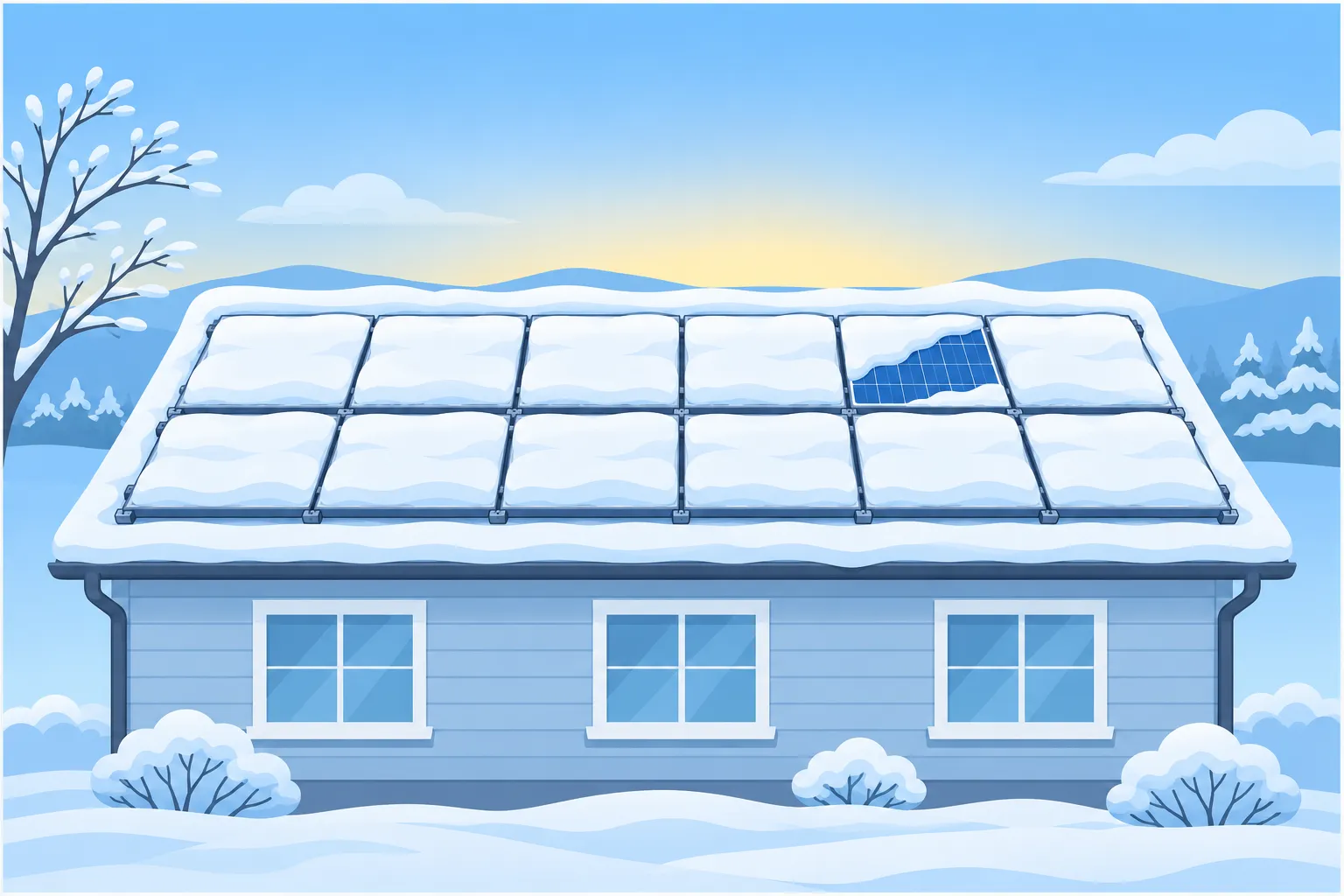
What should you check first?
Before clearing snow, review the following from a safe spot on the ground or indoors:
- Conditions: the forecast and how much of the array is covered.
- System data: recent production history and any inverter alerts.
- Visible damage: cracked glass, displaced modules or loose wiring.
- Landing zone: where snow pushed off the panels could fall.
Clearing panels to restore production is a different job from reducing structural roof load. The Government of Canada cites about 15–30 cm (6–12 inches) as a general guide for preventive roof-snow removal. That is not a panel-clearing threshold, and the National Research Council of Canada advises homeowners not to clear roofs themselves. Arrays can trap sliding snow at their lower edge. Ontario gives snow densities of 7–30 lb per cubic foot and recommends a professional engineer when roof loading is a concern. Section 4.1.6.14 of the 2024 Ontario Building Code, in force since January 1, 2025, does not allow snow removal to reduce a roof’s design snow load.
Which ground-level methods are suitable?
Do not climb an icy ladder or a snow-covered roof just to remove snow from panels. If the module manufacturer allows cleaning and you can reach safely from the ground, move only loose snow gently. Keep tools off the glass, frames, wiring and mounts. These options and limits apply:
- Soft-edged telescoping tool: reaches from the ground and moves loose snow without pressing on the module.
- Conventional roof rake: built for roof snow and may damage delicate module surfaces. Dragging it across shingles can also damage roofing.
- Leaf blower: can move light, fluffy snow. Keep the cord away from puddles and other electrical conductors.
- Banned methods: chipping bonded ice, a metal shovel, an ice chisel, hot water, rinsing with a hose in freezing weather, a pressure washer, salt, unapproved de-icers, a flame or a heat gun.
Several of those methods damage modules directly. Scraping and concentrated pressure can crack glass or cells, and uneven heating from hot water puts the module under thermal stress. Removing snow from solar panels is never worth a cracked module.
When should you stop and seek help?
Stop if conditions change. Panels in daylight can carry hazardous direct-current electricity even with the building breaker or utility disconnect switched off. Stay away from cracked or wet modules and exposed wires, and let a qualified technician interpret any manufacturer instruction to disconnect circuits before cleaning. Stand clear of roof edges and keep people out of the landing area, because falling snow or ice can slide toward entrances, cars or walkways without warning. After the snow clears and similar daylight returns, check whether output recovers. Persistent low production, cracked glass, displaced modules, damaged wiring, loose mounts, leaks or repeated inverter faults call for qualified diagnosis and maintenance.
What does an Ontario heater addition require?
Adding a heater to an existing array is an electrical alteration. In Ontario, that means notification, inspection and possibly utility approval before anything is switched on.
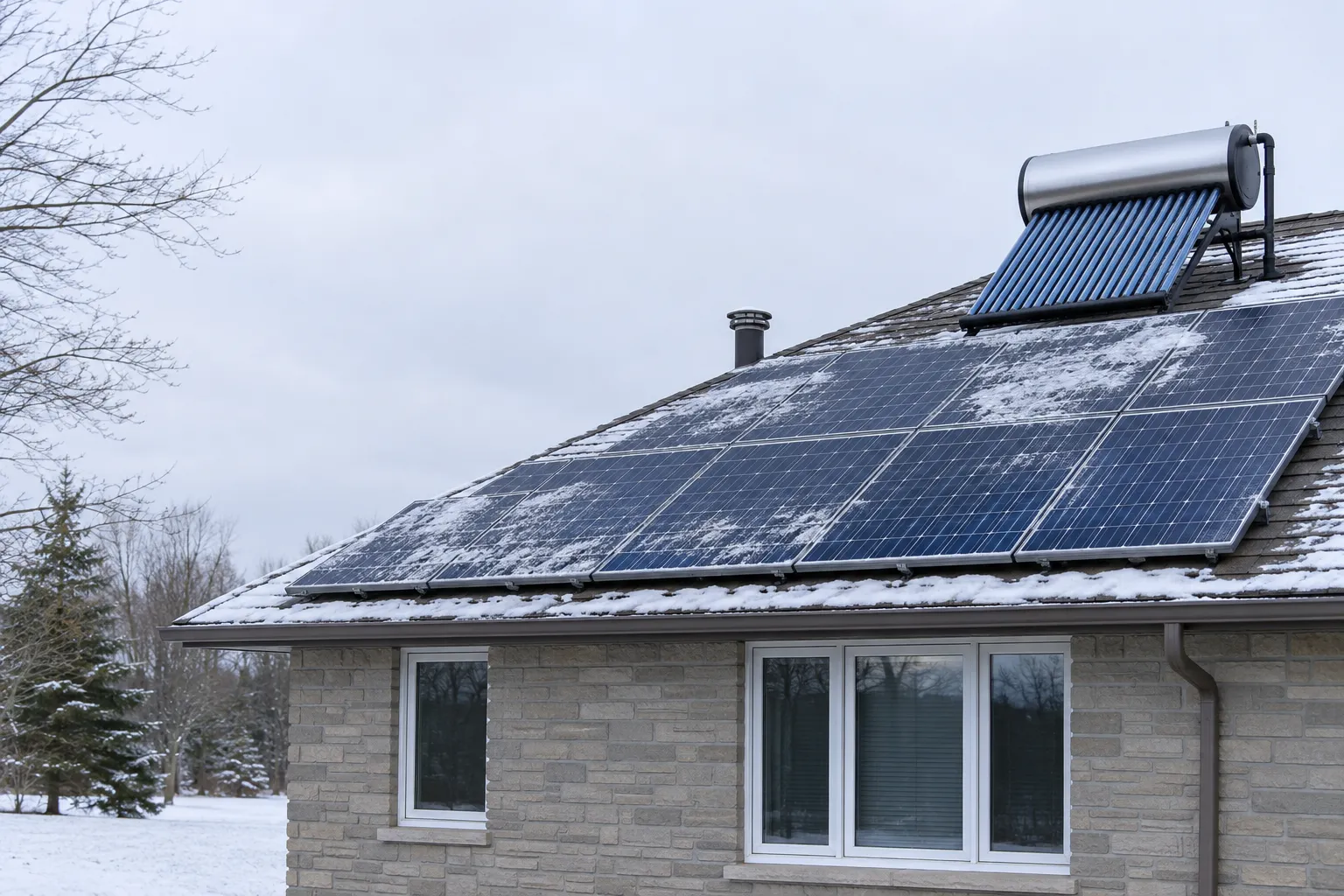
Who can approve and perform the work?
No Ontario authority has said that a homemade heater for solar panels can be approved automatically. Before any electrical or installation work, someone needs to confirm that the heater is compatible with the modules, inverter, racking and roof.
- Electrical Safety Authority (ESA): almost every electrical installation or alteration needs an ESA notification before work starts.
- Building permit: any permit needed for the roof work is a separate approval.
- Installer: you may do qualifying electrical work in your own home, but any business you hire for residential electrical work must be an ESA-licensed electrical contractor.
Warranties need their own review. Check any heating change against the terms for the modules, inverter, racking, roof and installation before you go ahead.
Which fees are relevant?
The ESA’s 2026 Wiring Fee Guide sets a $92 CAD minimum notification fee. The fee category for adding a heater to an existing array has to be confirmed for the actual work.
For new photovoltaic systems of 10 kW or less, the 2026 guide lists $336 CAD for installation by a licensed electrical contractor. The fee is $550 CAD when the property owner does the installation, and both fees include up to two visits. These are fees for new systems, not quotes for adding a heater.
For new systems over 10 kW, the guide prices each component separately and requires plan review. Its photovoltaic-glass-panel charge starts at $917 CAD for systems over 10–250 kW. That charge is only one part of the total project fee.
What sequence and delays could apply?
The ESA sets out this order for an electrical modification:
- Confirm that the equipment is compatible with the system and the roof.
- Get any required distributor and building approvals.
- File the ESA notification.
- Complete inspections and make any required corrections.
- Get acceptance before energising the system.
A failed inspection produces a defect notice, not an acceptance. There is no standard inspection turnaround for a heater.
If the change needs a new grid-connection approval, Ontario guidance says to get distributor approval before buying or installing equipment. Under Ontario Energy Board procedures effective May 2026, micro-embedded generation means systems up to 12 kW. A complete application receives an offer or reasons for refusal within 15 calendar days at an existing connection without a site visit. That rises to 30 calendar days if a visit is needed, and 60 calendar days away from an existing connection.
An offer stays open for at least 30 days. Once approvals, the agreement, service conditions and payments are complete, the distributor aims to connect within five business days, subject to the procedure’s performance rule. At an existing connection without a site visit, preparing the offer costs nothing. A site-visit deposit can be up to $500 CAD and must be refunded within 30 days if the distributor refuses connection after that visit.
Frequently Asked Questions
Can the wrong snow-removal method void a solar panel warranty?
It can. Under at least one module manufacturer’s terms, an inappropriate cleaning method can void the warranty. Your coverage depends on your own equipment and contract. Before adding a heater or coating, check the module, inverter, racking, roof and installer warranty terms and ask for written approval of the change.
Do snow guards help with snow sliding off solar panels?
Snow guards make snow come down gradually instead of in large chunks, mainly to protect people below. A strip of exposed asphalt shingles below roof-mounted panels can catch sliding snow and add to buildup at the lower edge.
What information helps a technician diagnose a winter production problem?
Photos and production records help, as long as you collect them without going near a hazard. If output stays low after the snow clears, a service provider can tell whether the cause is snow or an inverter, electrical, mounting or roof fault. One week of low production does not mean the roof needs emergency snow removal, because roof loading and electricity generation are separate concerns.