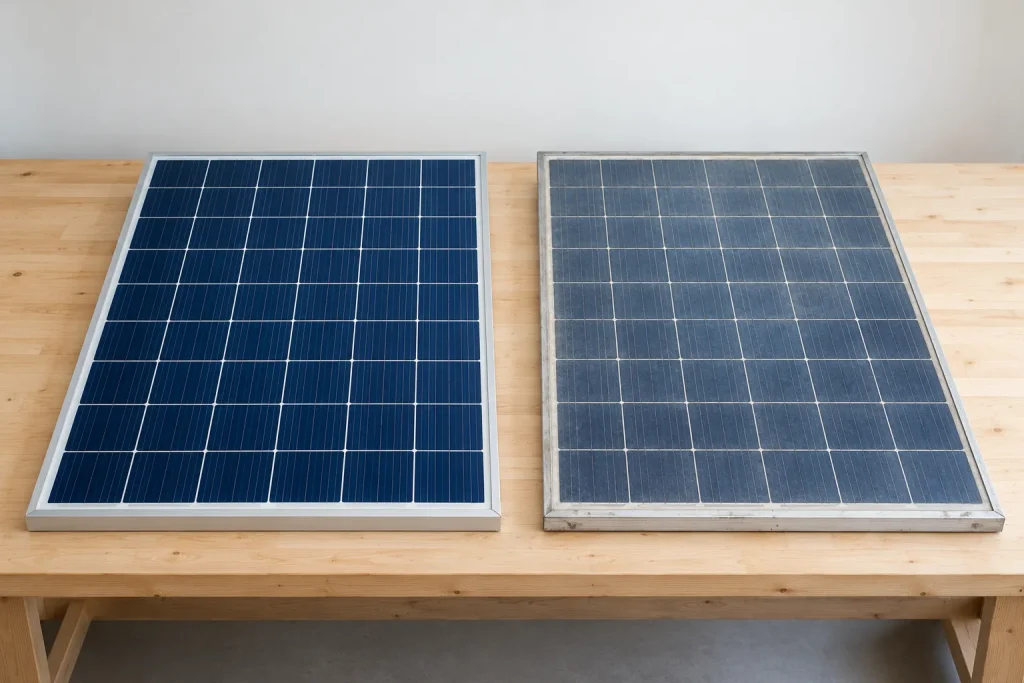
The life cycle cost of solar panels covers far more than the installation invoice. A full cost model in CAD for an Ontario home or business covers installation, approval fees, maintenance, inverter replacement, electricity value, incentives and end-of-life work. Each figure comes with its source, so you can test a quote against a full lifetime rather than a single price per watt.
How is photovoltaic life cycle cost calculated?
A photovoltaic project costs money for 25 years or longer, not just on installation day. You calculate its lifetime cost by listing every expense and every saving, then putting all of them on the same time basis. Annual energy savings only count once they have been discounted next to the capital spent upfront.
What belongs in the cost model?
A life cycle cost analysis covers the whole solar energy system, from design to retirement, so the initial investment cost is never the total cost. A reliable solar panel life cycle cost calculator therefore includes the following items:
- Design and approvals: system design, permits, inspection and the utility connection.
- Equipment and installation: modules, inverters, mounting, wiring and contractor labour.
- Operation over time: monitoring, maintenance and replacement of components that wear out.
- End-of-life work: removal, restoration and the recycling or disposal route.
You also have to pick one financing view. A project-level model uses capital cost and operating cash flows before financing. An owner’s model tracks actual loan advances and repayments instead, so the capital cost is never counted twice. Net present cost then discounts future costs and usable savings to present CAD, adds any justified residual value, and compares the result with the same building without solar.
Which measures make costs comparable?
Levelized cost of electricity (LCOE) divides the present value of lifetime system costs by the present value of lifetime generation in kWh. It gives you a true lifetime CAD per kWh. Installed CAD/W and simple payback cannot do that, because neither one accounts for decades of production.
Net present value weighs discounted inflows against discounted outflows. Discounted payback shows the year in which discounted savings recover the initial investment. A 25-year base case paired with a separate 30-year sensitivity case lets you vary production, electricity prices, inverter work and roof timing, so you are not relying on one supposedly guaranteed lifetime total.
How should a calculator estimate production?
Production estimates start with consumption. We assess energy needs, roof size, roof angle and sun exposure before preparing a tailored residential design with a cost-and-savings estimate. A full year of bills sets your annual consumption, and planned loads such as a heat pump should be added before the system is sized.
Natural Resources Canada’s photovoltaic potential map gives monthly and annual kWh per installed kW DC for grid-connected systems. It uses a grid of roughly 2 km and a modelled performance ratio of 0.75. Uncertainty is about 10% for most systems, so the map gives you a starting point, not a forecast for your roof.
Take an illustrative site yield of 1,100 kWh per kW per year: an 8 kW array would deliver about 8,800 kWh in its first year. Panel efficiency describes how much incoming sunlight a module converts under test conditions. A 20% efficiency rating does not mean the panel delivers 20% of its rated output. A solar savings and payback calculator turns this first-year production into bill savings.
What does installing solar panels cost upfront?
The upfront cost of solar is made up of three layers: a turnkey installation price, taxes and approval fees, and site-specific additions. Treat them as separate lines in your budget. That way you can see which costs are fixed by a schedule and which ones depend on your roof and electrical service.
What do turnkey benchmarks show?
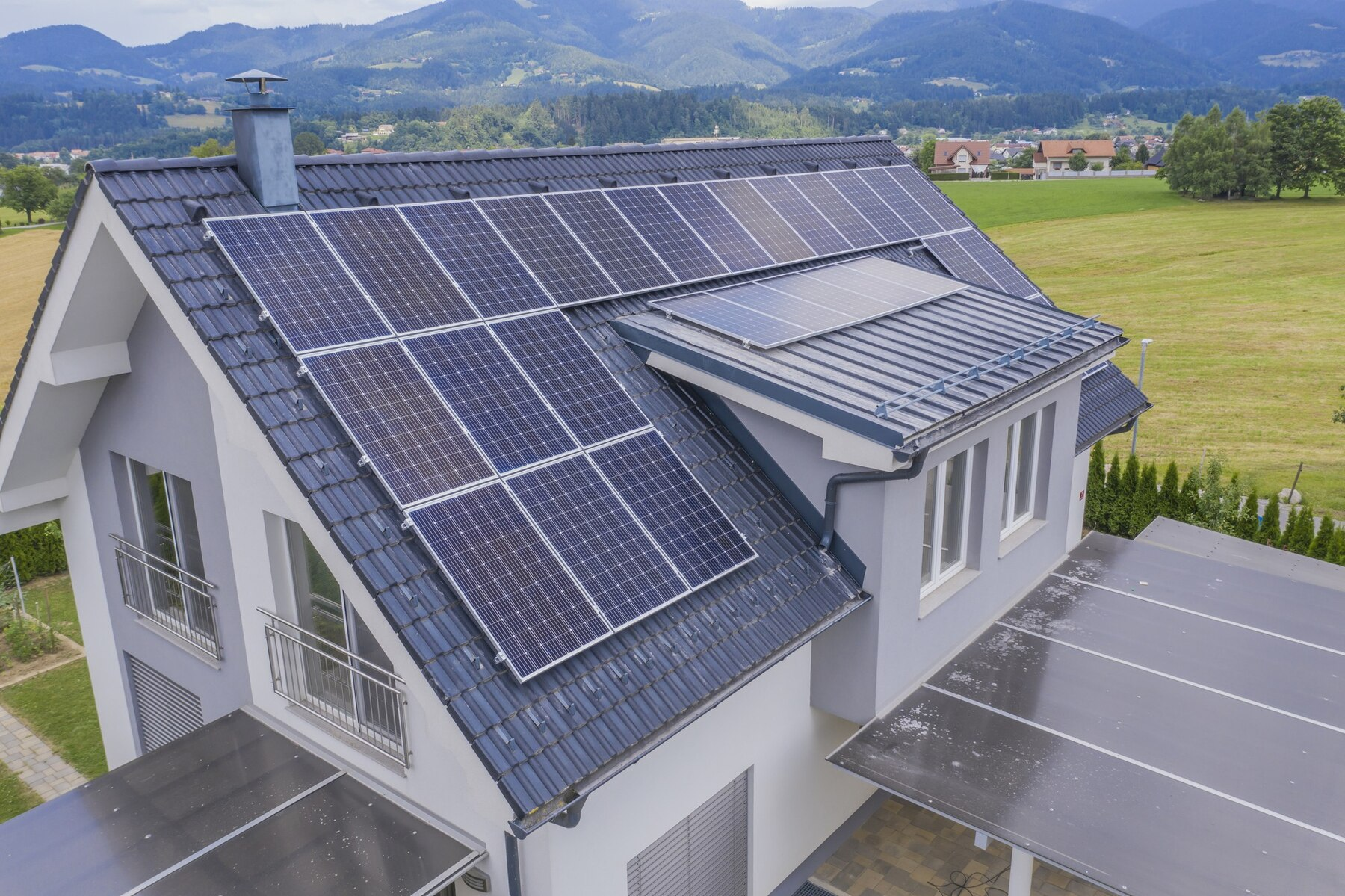
The IEA PVPS Canada update reports 2024 residential turnkey rooftop prices of $2.30–$3.90 CAD/W for 5–10 kW systems. This is a historical Canadian range, not an Ontario quotation, and it already includes the contractor labour to install and wire the array.
At that benchmark, illustrative solar panel installations fall within the ranges below, before any project-specific additions.
| System | 2024 turnkey benchmark (IEA PVPS Canada) | Illustrative installed cost |
| 5 kW residential | $2.30–$3.90 CAD/W | $11,500–$19,500 CAD |
| 8 kW residential | $2.30–$3.90 CAD/W | $18,400–$31,200 CAD |
| 10–100 kW commercial | $2.00–$3.20 CAD/W | Depends on size |
| 200 kW commercial rooftop | $1.90–$2.40 CAD/W (100–250 kW) | $380,000–$480,000 CAD |
The per-watt price drops as systems get larger. For a commercial or institutional rooftop, the 100–250 kW band sits below the residential range.
Which taxes and approval fees apply?
Ontario HST is 13% on taxable supplies. Your cost model should include only the tax you cannot recover. An eligible registered business should have its input tax credits assessed under Canada Revenue Agency rules.
Inspection and permit fees follow published schedules. The Electrical Safety Authority’s (ESA) fee guide effective April 1, 2026 sets the following amounts:
- Up to 10 kW: $336 CAD with a licensed electrical contractor, or $550 CAD for an owner installation.
- Over 10 kW: base panel fees of $917 CAD for over 10–250 kW and $2,292 CAD for 251–500 kW. From 501 kW, the fee is $4,580 CAD/MW, with other equipment charges on top.
- ESA plan review: required over 10 kW, at $350 CAD for the first two hours or part thereof. Each further hour or part thereof costs $175 CAD.
- Municipal permits: Toronto’s 2026 fees are $214.79 CAD for a qualifying small residential installation over 5 m² (about 54 ft²). Other building types pay $425.30 CAD per structure.
Fees vary between municipalities. Waterloo, for instance, lists solar permit categories at $132 CAD, $264 CAD or $440 CAD, with no HST applied.
What changes the site-specific quote?
Where your project lands in the benchmark range depends on roof condition, access, snow and wind loads, mounting, cable runs, electrical equipment, monitoring and storage. Large buildings can also need lifting equipment, shutdown coordination, protection engineering and extra testing. Before you add separate labour or permit allowances to a turnkey price, check what the quote already includes.
- Utility connection: Hydro One’s May 2026 guidance lists a standard microgeneration connection at $800 CAD before HST.
- Impact assessments: an eligible simplified connection-impact assessment costs $2,054.41 CAD. Certain larger net-metering assessments cost $3,329.86 CAD before HST, and neither fee covers connection construction.
- Estimate accuracy: for Hydro One projects over 12 kW, initial Class C estimates are accurate to about ±50%.
Feasibility work should confirm roof rights and condition, shading, fire access and electrical routes before any major spending. If you plan to use net metering, get distributor approval before you buy. Municipal permits, ESA authorization before energizing and utility metering remain separate approvals, and we handle permits and installation for our residential solar systems for Ontario homes.
What do maintenance and replacements cost?
After installation, the costs shift to modest yearly care and a few larger capital events. Modules have no moving parts, but inverters and other electronics age at their own pace. Budget for both categories separately in your lifetime figure.
How much should annual care allow?
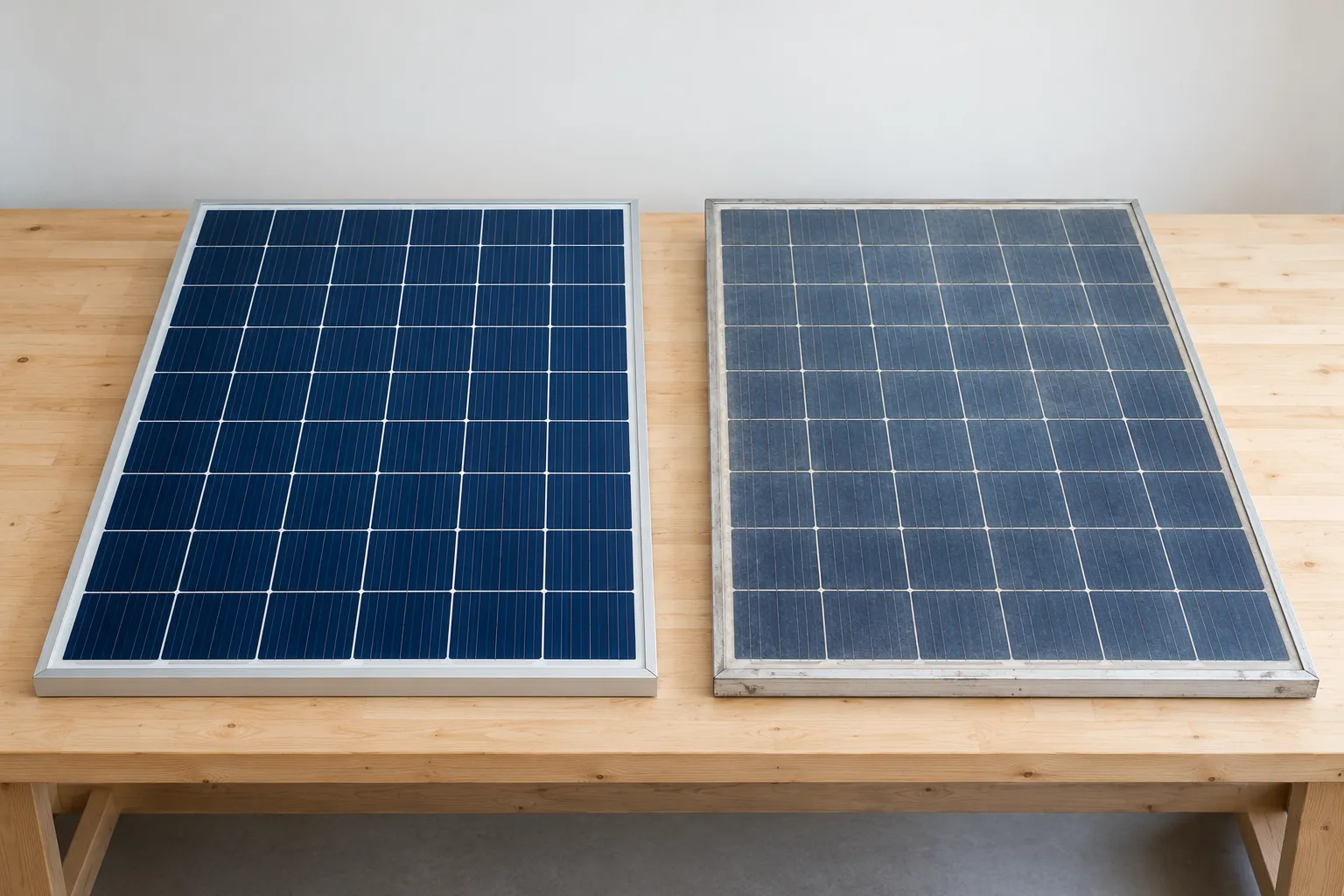
A preliminary Ontario residential allowance for maintenance, monitoring and periodic inspection is about $150–$450 CAD per year. It is a planning figure, not a mandatory fee or a verified provincial average. Visual inspection and monitoring typically cost $150–$300 CAD. A professional cleaning visit typically runs $150–$350 CAD, and how often you need one depends on soiling rather than a fixed annual schedule.
Monitoring protects the value of those visits. Compare system performance against expected generation, weather and your bills to spot unexplained drops. Inspections can then find physical damage, roof waterproofing problems, mount or cable defects, corrosion and protection-device faults.
How long can modules operate?
Solar panels are designed to last at least 25 years. The City of Toronto gives a possible useful lifespan of 30–40 years, so a 25-year performance guarantee does not mark a physical expiry date.
As an illustration, the City of Toronto applies about 0.5% annual output degradation. Compounded, that leaves roughly 95% of original output after 10 years and 91% after 20. The figures fall to 88% at 25 years, 86% at 30 and 82% at 40. Actual operational life depends on equipment, installation, shade, snow and care. Annual production alone cannot tell degradation apart from new shade, soiling or an inverter outage.
Which components may need replacing?
Replacing an inverter is a future capital expense, not routine upkeep. New Dawn Energy Solutions recommends allowing for at least one inverter replacement over the system’s life. Leaving it out of replacement costs understates the real lifetime figure.
- String inverters: typical warranties of 5–12 years, according to the City of Toronto.
- Micro-inverters: warranties of up to 20–25 years.
- Workmanship: coverage may last only 2–5 years.
A warranty period does not predict a failure date, and it may not cover access, labour, freight or lost generation. Your replacement schedule should list inverters, monitoring or communications equipment, batteries where installed and other system components. It should also include paid module removal and reinstallation if the roof needs work. Keep commissioning records as your baseline, and check the warranty coverage and its exclusions before you budget each replacement.
How does electricity value offset lifetime costs?
Costs are only half the model. The electricity your array produces offsets them, and its value depends on how much you use on site, your rate plan and the export rules. Incentives, storage and financing each change the net result in their own way.
What are generation and credits worth?
Ontario grid-connected solar electricity serves on-site load first. Eligible surplus earns net-metering bill credits, not guaranteed cash sales. Unused credits expire after 12 months, and they may not offset fixed charges on your bill.
Ontario Energy Board energy prices effective November 1, 2026 are 9.1¢/kWh off-peak and 18.9¢/kWh on-peak under time-of-use pricing. The ultra-low overnight plan charges 3.7¢/kWh overnight. Its late-afternoon and evening on-peak rate is 37.7¢/kWh. These are electricity-only prices, not all-in avoided-bill rates.
That spread is the reason annual averages mislead. Model production monthly or hourly against load, usable exports, fixed charges and your actual rate plan. For commercial and institutional sites, value also depends on tariff class, peak demand, delivery charges and potentially Global Adjustment.
Which incentives reduce net cost?
Ontario’s 2026 Home Renovation Savings solar incentive pays $1,000 CAD/kW DC, up to $5,000 CAD and 50% of eligible cost. You need written approval before purchase or installation. Systems it supports displace on-site load and do not earn net-metering export credits. A qualifying battery paired with new rooftop solar earns $300 CAD/kWh, also capped at $5,000 CAD and 50% of eligible cost.
For businesses and institutions, the Retrofit solar stream pays $1,000 CAD/kW DC up to 10 kW. Qualifying larger applications from June 30, 2026 receive $770 CAD/kW AC, generally capped at 1 MW AC and 50% of eligible cost. The federal Clean Technology investment tax credit can reach 30% for qualifying property brought into use through 2033, and up to 15% in 2034, subject to eligibility. The Clean Electricity credit is generally 15%. New Canada Greener Homes Loan applications closed October 1, 2025.
How do storage and financing change value?
Energy storage can shift daytime output to evening use, but it adds conversion losses, maintenance and a possible battery replacement. Outage backup requires suitable architecture, protection and controls, not just batteries. Off-grid solar needs enough capacity, charge control and possibly a backup generator to get through Ontario winters, so model it separately. We pair LFP chemistry with arrays in our home solar battery storage systems.
If you finance the system, enter the actual loan terms in your owner cash flows. Third-party equipment or power-purchase agreements need a close look at escalation, maintenance and insurance duties, credit ownership, transfer on sale and termination costs. Your distributor bill continues under any of these arrangements.
What does end-of-life management cost?
Retirement is the last line of the lifetime budget, and it should not be left at zero. In Ontario, end-of-life management has no fixed provincial price, so you need a quotation for your own site.
What must a retirement budget cover?
The Ontario sources reviewed show no universal mandatory take-back or disposal fee for photovoltaic modules, so you need a site-specific CAD quote rather than an assumption of zero. Budget separately for safe electrical isolation, roof access, removal, roof or land restoration, transport, testing for reuse and a recycling or disposal route. Racking and inverters also need a plan. Continued operation, repair, resale, refurbishment, repowering (upgrading panels early by choice), recycling and disposal each carry a different cost.
Can retired materials be recovered locally?
Photovoltaic module materials are recoverable in principle. Getting them back in practice depends on three factors:
- Module construction: glass, aluminium, copper and silicon are recoverable, but laminated layers make separation hard in recycling processes.
- Regional capacity: a Canadian PV-and-battery assessment found underdeveloped regional recycling infrastructure. Theoretical recyclability is therefore not proof of an available local collection service.
- Regulatory scope: Ontario’s electrical and electronic equipment regulation covers categories such as information technology, audiovisual equipment and lighting. Do not assume it provides PV-panel take-back.
Recyclable silicon in a module does not guarantee a collection route near you. Ask for a retirement route during design, while you can still compare options.
How does environmental impact differ from cost?
Financial life cycle cost tracks what you spend and save. Life cycle assessment uses a life-cycle inventory of material and energy inputs to measure environmental impact from raw materials through manufacturing, transport, use and retirement. According to the IEA PVPS 2024 assessment, manufacturing is a major source of photovoltaic life-cycle emissions. Renewable energy from PV is therefore not zero-emission over its full life cycle.
Putting a price on mining, water use, pollution or waste as an external cost requires an explicit valuation method. An older Toronto rooftop case study reported about 79 g CO₂e/kWh. A 2026 Canadian PV-plus-lithium-iron-phosphate-battery case reported 67.6 g CO₂e/kWh. The two use different system boundaries, so they cannot stand in for each other as Ontario factors when you assess the environmental impact of renewable energy.
Frequently Asked Questions
Should solar panels be installed when the roof is replaced?
Where the roof needs replacing, the City of Toronto recommends doing both jobs together. Coordinating them avoids paying later to remove and reinstall the solar panels. If the roof will need work during the system’s life, include that removal and reinstallation in your replacement schedule.
Should a homeowner choose the Home Renovation Savings incentive or net metering?
Model both cases with the same load and the same output. The incentive pays $1,000 CAD/kW DC, up to $5,000 CAD and 50% of eligible cost, and requires written approval first. It applies only to on-site use. Net metering gives up that incentive in exchange for usable export credits.
Is the Canada Greener Homes Grant still available for solar panels?
No. The federal Canada Greener Homes Grant is closed. The final document-submission deadline for existing applicants was December 31, 2025.