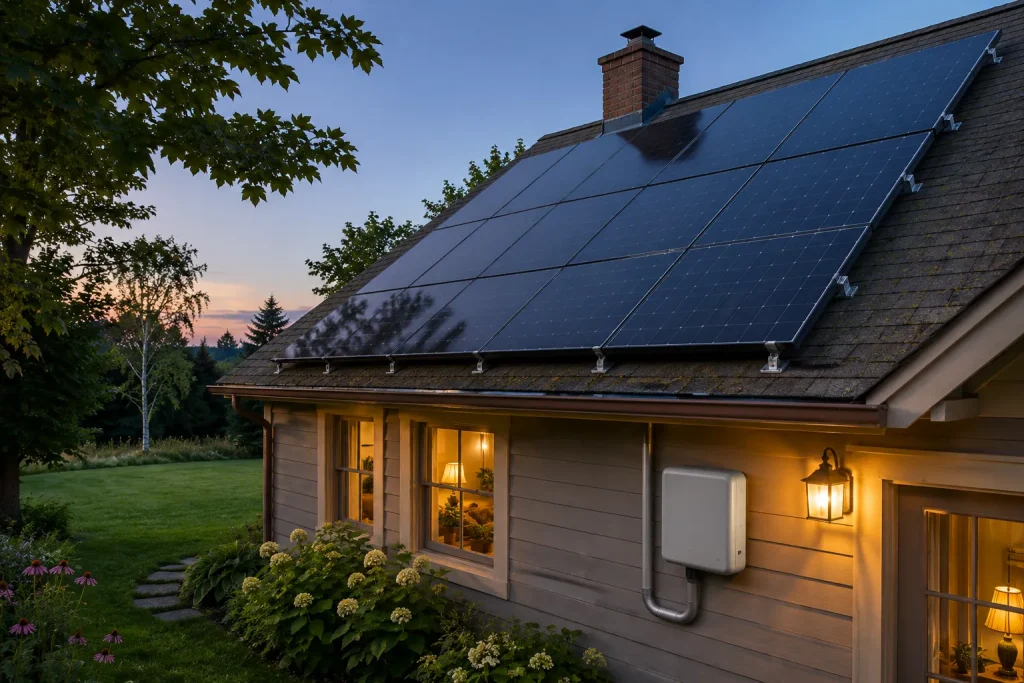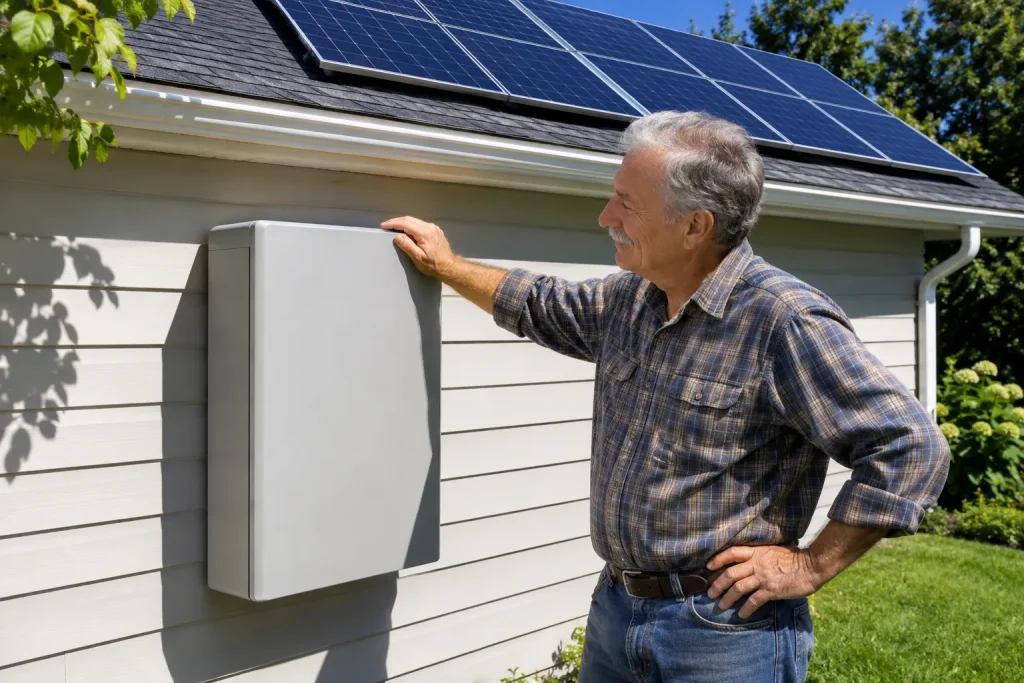
If you have ever wondered whether batteries stop charging when solar panels generate more power than needed, this article provides a direct, technically grounded answer. You will learn how solar battery storage handles a full charge, which protective mechanisms prevent damage, and what your system does with excess electricity once storage capacity is reached.
Do solar batteries stop charging when full?
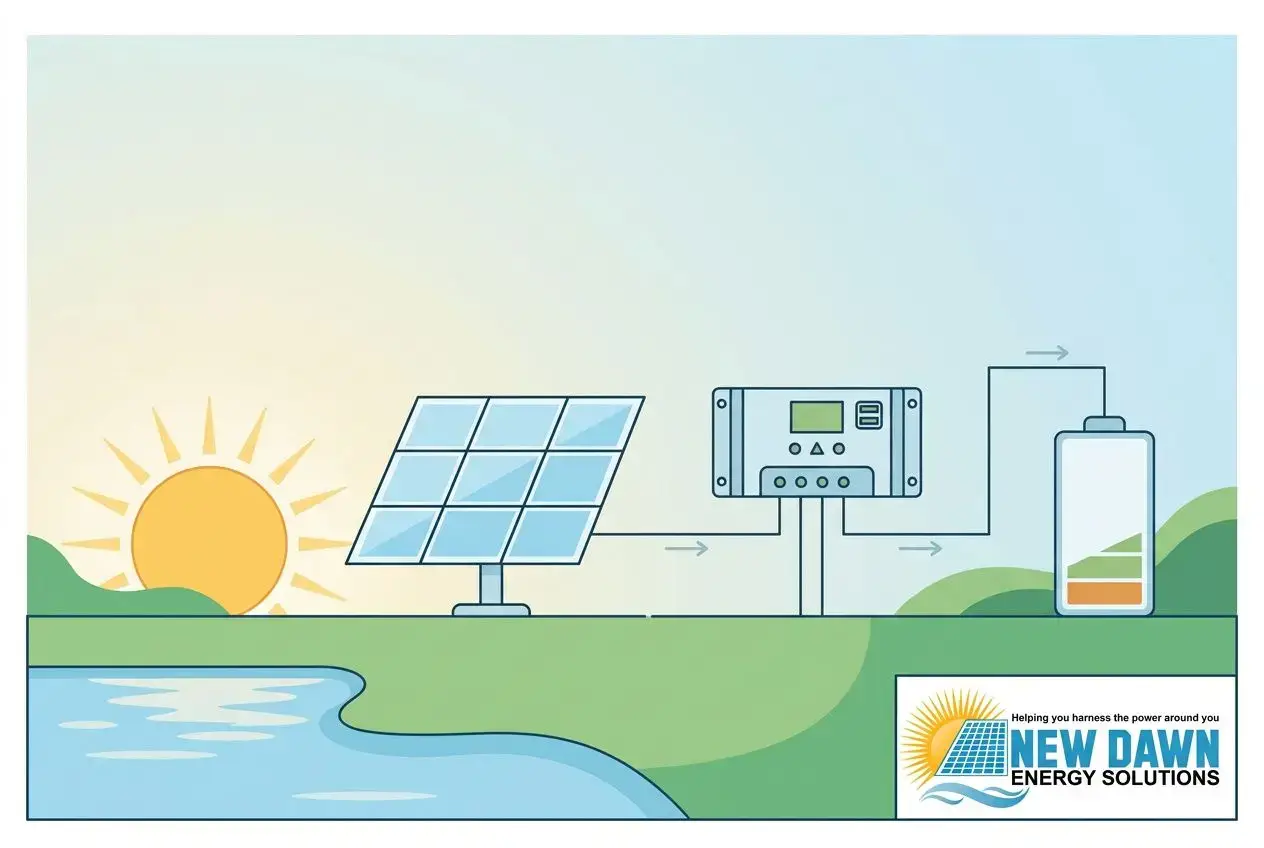
Yes, the battery stops charging once it reaches its safe limit. A properly configured solar installation stops sending bulk charging current, and the charge controller or inverter automatically reduces then halts incoming current while coordinating with the Battery Management System. This prevents overcharging in modern residential systems, including lithium iron phosphate installations commonly used across Ontario.
How the battery protection works
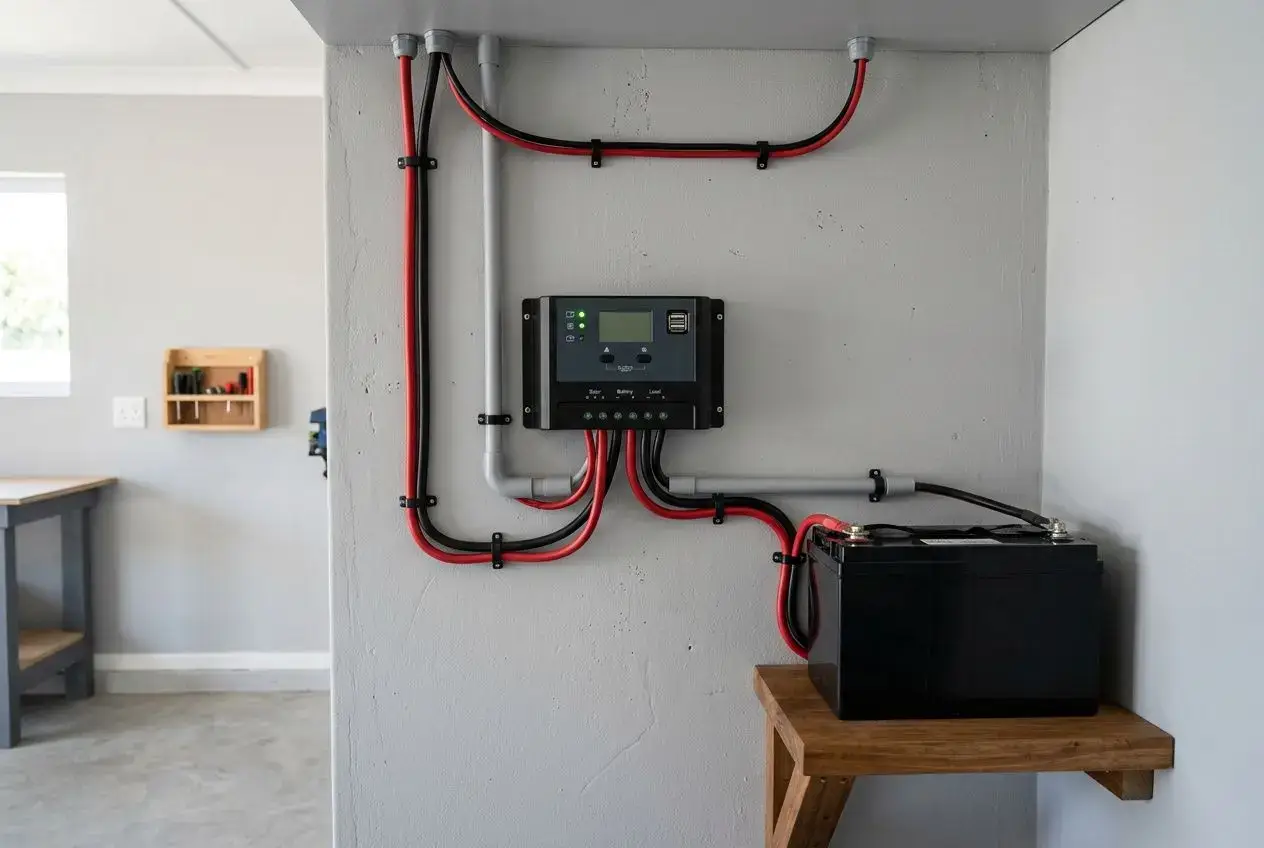
To understand whether batteries stop charging when solar output exceeds storage capacity, start with the Battery Management System, or BMS. This onboard controller monitors cell voltage, temperature, and charge level in real time. As the battery approaches its safe upper limit, the BMS signals the inverter or charge controller to slow and then stop the flow of energy into the cells.
- Voltage sensing: The charge controller tracks battery voltage continuously and reduces current as the cells approach their upper threshold.
- BMS coordination: The Battery Management System monitors temperature alongside voltage and communicates charge limits to the inverter, triggering a controlled slowdown before the battery reaches full capacity.
- Automatic current cutoff: Modern lithium batteries stop accepting charging current at safe limits automatically through coordinated inverter and BMS controls, without manual intervention.
- Safety shutdowns: If sensors detect abnormal heat or voltage spikes, the system can initiate an automatic shutdown, reduce the charging rate, or regulate temperature to preserve safety and extend battery lifespan.
Overcharging a solar battery creates excessive heat and, in severe cases, can lead to thermal runaway or premature cell failure. A high-quality solar charge controller prevents this by stopping input current before voltage exceeds safe parameters. For Ontario homeowners using lithium iron phosphate systems, these protections operate continuously and silently after commissioning.
What float mode means
When a solar battery reaches its configured maximum state of charge, the system shifts from active bulk charging to float mode. The charge controller then maintains the battery at full capacity with only a minimal trickle of current, enough to offset natural self-discharge. For Ontario homeowners, this steady status light on the charge controller confirms the system is holding reserve capacity rather than wasting solar generation.
The controller continues monitoring voltage and resumes normal charging if the charge level falls below its preset restart threshold, such as when evening household loads draw power from the battery bank or during an outage.
Why charge limits can extend lifespan
Charging a lithium-ion battery to 100% every day places measurable stress on its cells and can reduce its useful cycle life. Setting the daily maximum charge level to roughly 80–90% is a practical strategy recommended by many energy professionals, unless the household needs maximum stored power before a storm or an anticipated grid interruption.
- Reduced cell stress Stopping below 100% each day lowers electrochemical strain, helping preserve capacity and cycle count over time.
- Adjustable charge-level settings Most inverters let homeowners set a maximum charge level through options such as Depth of Discharge. This provides control over the daily ceiling without changing core safety features.
- Cycle count warranty Lithium iron phosphate batteries offered through New Dawn Energy Solutions carry a 10-year warranty or a guarantee exceeding 6,000 cycles and specified energy throughput, reflecting the durability of properly managed LFP chemistry.
- Storm-readiness override Charging to full capacity before a forecast outage or severe weather event maximizes backup power when grid resilience matters most.
Explore the broader context of solar battery charging dynamics to see how lithium-ion cost trends, self-consumption goals, and time-of-use pricing have made storage a practical choice for Ontario households, rather than an optional addition to a photovoltaic array.
Where solar power goes after the battery fills
When storage reaches capacity, the electricity from solar panels does not necessarily go to waste. The outcome depends on whether your installation is grid-tied, hybrid, or off-grid. Understanding these options helps Ontario homeowners and businesses capture more energy savings from every kilowatt-hour produced.
Exporting energy to the grid
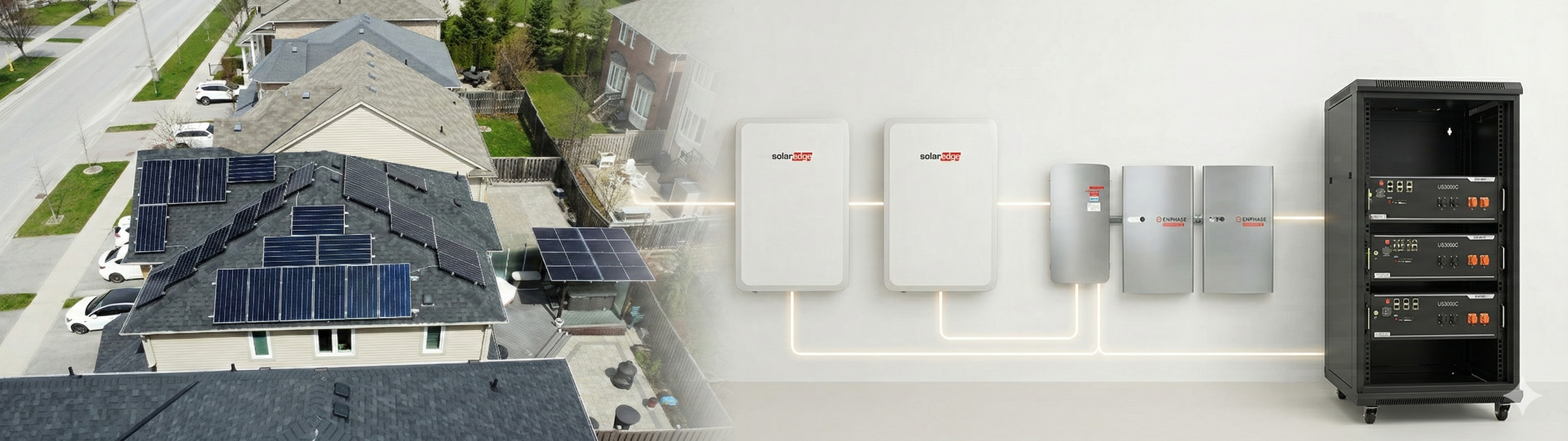
In a grid-tied or hybrid installation, solar power continues to flow after the battery is fully charged. The inverter detects that the battery is full and directs excess generation to the grid connection point, subject to local interconnection rules and export limits.
Ontario homeowners enrolled in net metering can receive credits for each kilowatt-hour exported to the utility. Those credits offset future consumption when your system produces less than you need.
- Net metering credits Surplus electricity exported to the grid generates credits on your utility bill that directly lower your next payment.
- Inverter curtailment When export is restricted or unavailable, the inverter limits panel output to protect the electrical system. No energy value is recovered in this situation.
- Hybrid system advantage A hybrid configuration combines battery backup with grid interaction, providing outage resilience while still allowing export when permitted by the local utility and provincial rules.
- Time-of-use optimization Battery systems with a cost-savings mode store energy during low-rate periods and discharge during peak-rate hours, improving the financial return from solar generation under time-of-use pricing.
For households considering solar + battery storage in Ontario, a smart inverter can automatically switch the system between backup, self-consumption, and export modes. The result is backup power during grid outages, daytime self-consumption, and the ability to export extra generation when storage and household loads cannot absorb it.
Off-grid solar production limits
Off-grid operation is more limited. When the battery is fully charged and household loads cannot use the remaining output, the charge controller stops charging the battery. The extra energy goes unused because no grid connection is available to absorb it. This control prevents overcharging and protects the system from damage.
Off-grid households can respond by sizing batteries for peak generation or adding discretionary loads that consume excess power automatically when the battery bank reaches capacity.
Using surplus energy at home
Some solar energy management systems redirect extra electricity to high-consumption appliances when the battery signals that it is full. Water heaters, electric vehicle chargers, and pool pumps are common targets. This increases on-site consumption and reduces curtailment without requiring manual switching.
App-controlled battery systems also let users configure which circuits receive power when batteries are full and which devices receive priority during an outage. It can improve energy savings and reduce reliance on fossil-fuel generators.
| System type | What happens when battery is full | Value recovered from surplus? |
| Grid-tied with storage | Surplus exported to utility grid via inverter | Yes, net metering credits apply |
| Hybrid system | Export to grid or redirect to discretionary loads | Yes, credits and/or increased self-consumption |
| Off-grid system | Controller curtails panel output or redirects to available loads | Only if discretionary loads absorb it on-site |
| Any system, no available outlet | Inverter limits output; panels produce below nameplate | No, surplus is not captured |
When solar charging starts again
A battery does not remain in float mode indefinitely once household loads draw from it. As stored energy is used, the charge level falls below the controller’s restart threshold. The next time solar power is available, the system automatically begins a new charging cycle.
Restart thresholds for each battery type
When solar output exceeds storage capacity, charging pauses only until the charge level drops far enough to activate the charge controller’s restart threshold. For lead-acid batteries on a 12 V system, voltage commonly needs to fall below the float voltage minus 0.4 V for at least one minute. For lithium iron phosphate chemistry, the comparable threshold is typically the float voltage minus 0.1 V for one minute.
- Lead-acid restart On a 12 V lead-acid system with a default float voltage of 13.8 V, charging resumes when voltage falls below approximately 13.4 V and remains there for one minute. This confirms genuine discharge rather than a temporary surface-charge fluctuation.
- LiFePO4 restart For a 12 V lithium iron phosphate battery, the absorption voltage is approximately 14.2 V. The charge cycle restarts when voltage drops below the float level minus 0.1 V, a tighter threshold that reflects LFP chemistry’s flatter discharge curve.
- Morning cycle start Each morning, a new solar charge cycle begins automatically when PV voltage rises to approximately 5 V above battery voltage. That timing allows the system to capture available energy from the first usable hours of sunlight.
Restart thresholds scale with nominal system voltage. The 12 V reference values double for a 24 V system and quadruple for a 48 V installation. If solar input remains below battery voltage for an extended period—roughly one hour in many controller configurations—the charging algorithm resets and restarts from the bulk stage when panel output recovers. This automatic reset maintains system efficiency without manual intervention.
How long stored power lasts
When batteries stop charging because solar production has filled them, the next question is how long their stored power will sustain a household. Runtime depends on the usable capacity of the installed battery bank and the total watt-hour demand of connected loads. A larger bank serving fewer or lower-consumption appliances will last much longer than a compact unit powering a full home.
With products such as the Tesla Powerwall, batteries stop charging when solar has fully charged them, while the battery management system and inverter coordinate safe operation. The energy delivered per cycle depends on chemistry, configured depth of discharge, and the loads assigned during an outage or high-demand period.
Battery systems at New Dawn Energy Solutions let homeowners designate essential loads—refrigerators, medical equipment, and lighting circuits—for backup power when the grid goes down. Supporting selected circuits instead of the entire building extends how long a fully charged bank can serve critical needs.
Settings that shape the system response
Charge controller settings determine how aggressively the system charges, when it pauses, and how quickly it restarts. Configurable parameters typically include absorption voltage, float voltage, tail current threshold, and maximum state of charge. A maximum daily charge level of 80–90% for routine use, with 100% reserved for storm preparation, protects cell integrity over thousands of cycles and influences the investment’s long-term value.
App-based controls on modern battery systems allow Ontario homeowners to select operating modes that match their energy priorities. Cost-savings mode can store solar energy during low-rate hours and discharge it when the grid charges the most, improving savings under time-of-use pricing. These software controls work with the hardware protections described above, helping households manage the system payback period and gain more value from the clean energy transition.
Frequently asked questions
What happens to a solar panel when the battery is full?
When the battery reaches full charge, the charge controller or inverter stops sending bulk current into storage. In a grid-tied system, the inverter redirects surplus output from the solar panels to the utility grid, where net metering credits may apply. If no export outlet is available, the inverter automatically curtails production by limiting usable output rather than allowing the batteries to overcharge and risk damage. The panels are not harmed; they operate below their nameplate capacity until storage or a grid connection can accept more energy.
Where does solar power go when batteries are full?
Once the batteries are fully charged, the destination of excess solar electricity depends on the system configuration. Grid-tied and hybrid installations export excess generation to the utility, earning bill credits under applicable net metering rules. Some systems automatically redirect power when batteries are full to discretionary loads such as water heaters or EV chargers, increasing on-site energy use. Off-grid installations have no export path, so the charge controller limits panel output to match the power that household loads can absorb immediately. Unused generation remains uncaptured until storage can accept another charge.
How long will a fully charged solar battery last?
Runtime depends on the usable capacity of the battery bank and the total watt-hour demand of connected loads. A system sized for essential circuits—refrigeration, lighting, and medical devices—will sustain those loads considerably longer than one powering an entire home. Lithium iron phosphate batteries offered through New Dawn Energy Solutions carry a 10-year warranty or a guarantee of more than 6,000 cycles. Their longevity can improve when the daily charge level is set to 80–90% for routine use instead of reaching full capacity every day.