The lifespan of a solar panel system depends on more than the panels on your roof. Each component ages on its own timeline, output declines gradually, and warranties, upkeep and Ontario rules all shape when to repair, re-roof or retire an array.
How long does a solar panel system last?
A solar array is a set of parts that age at different speeds. The panels usually outlast everything else in the system. The inverter, mounting and wiring follow their own timelines, so planning for the whole system gives you a more accurate picture of long-term energy savings.
Solar panel lifespan beyond the warranty
Solar panels commonly deliver a useful life of 25–30 years. Many keep generating at reduced output after that, and Toronto’s solar guidance says production can continue beyond 30 years. The U.S. Department of Energy reports that the industry’s estimated operating life rose from about 20 years in 2007 to 25–35 years in 2025.
Natural Resources Canada gives a photovoltaic system life expectancy of 25 years or more. In practice, the lifespan of solar panels ends when their output makes replacement economically sensible, which can happen earlier or later than that benchmark. A residential solar installation in Ontario should therefore be judged on measured production, not on its age alone.
Inverters and electrical components
Every residential solar system combines panels that generate direct current, an inverter that supplies alternating current to your home, and the wiring that connects them. These parts do not wear out together. The U.S. Department of Energy places a usual string-inverter life at 10–15 years, while microinverters tend to last closer to the panels themselves.
Mounting durability depends on weather exposure and installation quality. Junction boxes and exposed cables age according to their conditions and care. A corroded connection or damaged cable can cut production even when every panel remains sound, so check the warranty for your installed model rather than relying on typical figures.
| Component | Typical life | Source or basis |
| Solar panels | 25–30 years, often longer at reduced output | Common useful life; Toronto guidance cites beyond 30 years |
| Photovoltaic system | 25 years or more | Natural Resources Canada |
| String inverter | 10–15 years | U.S. Department of Energy |
| Microinverter | Closer to panel life | U.S. Department of Energy |
| Optional battery | 10 years, 80% capacity at year 10 | One Canadian warranty effective 13 November 2025 |
Batteries and the complete system
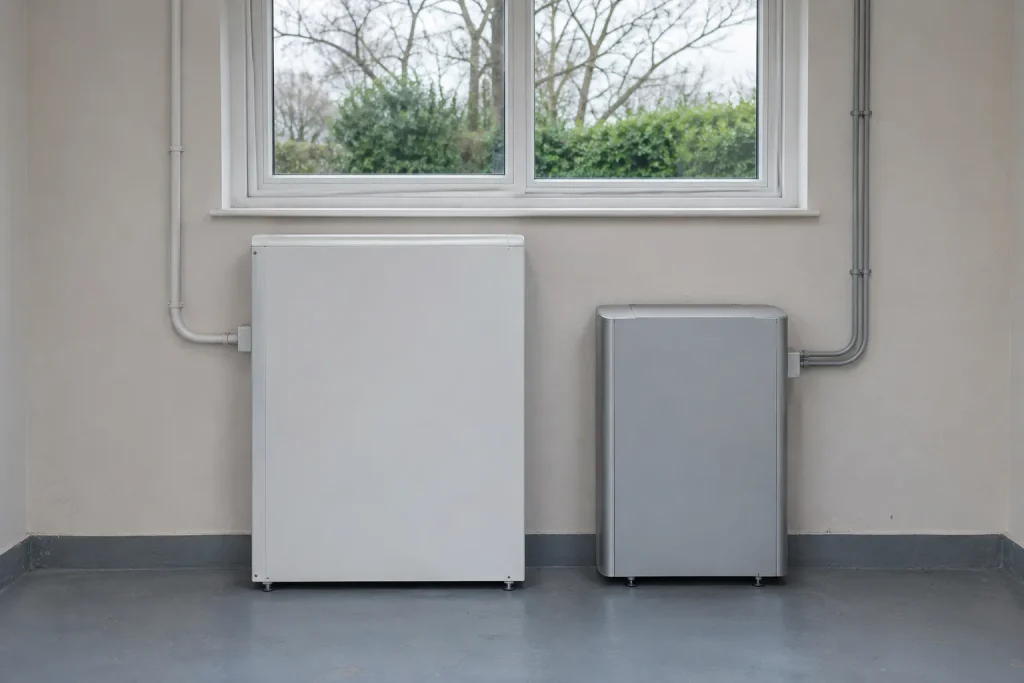
An optional battery carries its own ageing pattern and warranty. One Canadian warranty effective 13 November 2025 specifies 10 years and 80% capacity at year 10 for its listed models, subject to use and throughput conditions. An Ontario modelling analysis dated 20 August 2024 assumes 25 years for panels and 15 years for the inverter, figures meant for planning rather than observed failure dates.
Solar panel longevity does not guarantee uninterrupted production from the whole system. A failed string inverter can stop an entire array. A failed module-level device, by contrast, may barely show in system-wide readings, which is why component-by-component planning matters from the day of your solar panel installation.
How does panel output change over time?
Panels lose output slowly, not all at once. The pace depends on the product, the climate and how well the array was installed. Knowing the normal rate helps you tell ordinary ageing from a fault that needs attention.
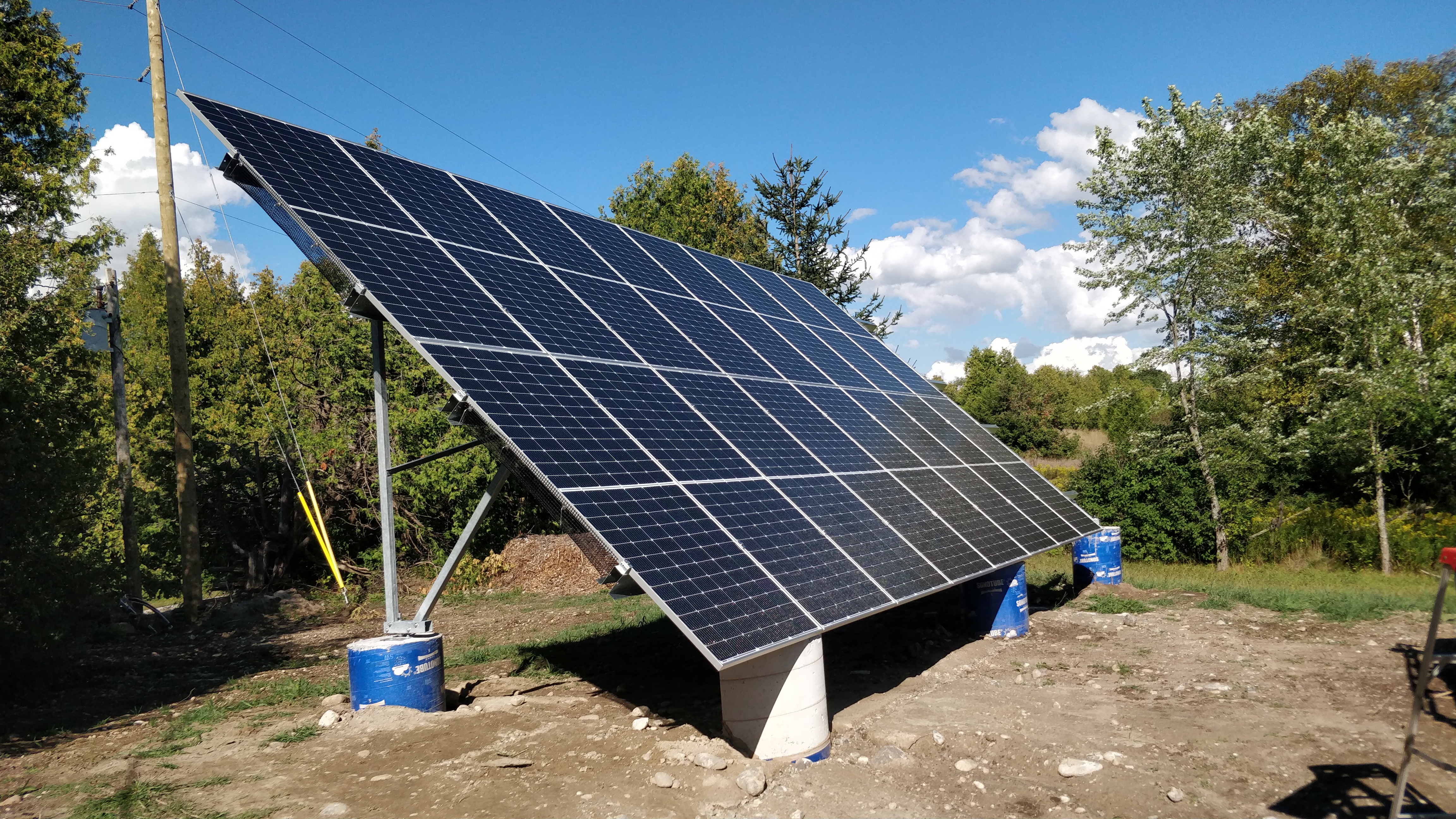
Typical rates of solar panel degradation
Degradation means a gradual decline in output, not a shutdown when the warranty expires. A June 2012 National Renewable Energy Laboratory review found a median rate of 0.5% per year across nearly 2,000 reported rates. Natural Resources Canada uses about 0.6% annually for a well-functioning system as a planning figure.
At a constant 0.5% annual decline, a panel would keep about 88% of its initial output after 25 years. Results still vary widely: an August 2024 National Renewable Energy Laboratory field report measured solar panel degradation below 0.25% per year for some products and approximately 2% for another. Lower degradation rates raise expected lifetime energy production when other conditions are equal.
Weather, materials and installation quality
Climate shapes durability. High temperature can accelerate wear, and repeated thermal expansion can create microcracks. Ultraviolet exposure gradually breaks down the materials protecting the cells, while humidity can contribute to corrosion where sealing is poor.
Hail can damage the glass. Snow loads and high winds can stress equipment or mounts. Secure mounting, ventilation beneath the panels and sound electrical connections all help limit these weather-related problems on homes from Mississauga to Whitby.
Neither monocrystalline panels nor premium panels are assured a longer life by their label alone. When you compare high-quality solar panels, look at the exact module’s certified ratings, degradation schedule, product warranty and performance warranty.
Temporary losses versus lasting damage
A dip in production is not always ageing. Shade, clouds, heat and snow cover can temporarily reduce generation without permanent harm. Cold temperatures can even improve efficiency, although short winter days and snow may limit what the array produces.
Physical damage is a different matter. Cracks covering 11%–34% of a cell can favour hot spots and accelerate local degradation, according to research on cracked cells and hot spots cited by New Dawn Energy Solutions. Have suspected cracked glass assessed by a professional.
Ontario has no “20% rule” requiring panel replacement after a 20% output loss. A panel’s 20% conversion efficiency describes the share of sunlight converted to electricity under test conditions, not a lifespan threshold. The U.S. Department of Energy places industrial monocrystalline-module efficiency at roughly 20%–22%.
What do warranties cover over a system’s life?
Warranties protect specific equipment against specific problems. They do not promise a household bill or a set annual yield. Reading each one carefully shows you where coverage starts, where it stops and who pays for what.
Product and performance coverage
Two kinds of coverage apply to modules. A product warranty covers specified defects or failures, while a performance warranty sets a minimum tested panel output over time. Neither one guarantees annual whole-system generation.
Solar panel warranties commonly include a performance term of about 25 years with a contractual output threshold. When that term ends, a safe and productive panel can stay in service.
- Equipment coverage: Panels, inverters and batteries each carry separate terms and coverage periods.
- Installation workmanship: Covers the quality of the installation work itself, possibly from a different provider than the manufacturer.
- Roof watertightness: Addresses leaks around roof penetrations, with its own claim procedure.
Because providers can handle claims differently, list every warranty with its holder and contact route as soon as your system is commissioned.
Conditions and claim costs
Confirm that each warranty applies to the exact model and to a Canadian installation, including any installer qualifications or operating conditions. Equipment coverage does not automatically pay for diagnosis, roof access, labour, travel, removal or reinstallation, and those costs shape the real value of a claim. Ask, too, whether replacement equipment receives a new term or only the remainder of the original one.
Records to keep in Ontario
Good paperwork makes later service faster and claims stronger. Start at commissioning with the installation date, invoice, model and serial numbers, data sheets, warranties and the as-built panel layout.
- Electrical documentation: The string or microinverter map and the single-line diagram, so technicians can locate each circuit.
- Roof and approval records: Roof-penetration details, utility approval and the ESA Certificate of Acceptance.
- Performance evidence: The first-year production baseline, later monitoring records and dated photographs.
Performance evidence matters most when a fault is suspected. A clear baseline and photo history help document the change and support a warranty claim.
What upkeep supports a longer working life?
Solar arrays have no moving parts, so upkeep stays light. Regular checks still help identify problems early. The work falls into three habits: reading production data, cleaning safely and inspecting for changes.
Monitor production over comparable periods
We include online monitoring with every solar or solar-plus-storage installation, and New Dawn Energy Solutions recommends checking production monthly against the same month of the previous year. For ageing trends, compare annual kWh with a weather-adjusted baseline, since sunlight, temperature and snowfall vary. Our solar and battery monitoring platform shows production, alerts and, on some systems, panel-level output.
Data needs context. A portal can stop reporting while the array keeps generating. A June 2025 New York field study measured an average 0.83% ± 0.09% annual performance-loss rate among operating, communicating systems over roughly their first 4–7 years, a regional result rather than an Ontario or lifetime forecast.
Clean safely and manage snow
Dust, pollen, leaves and bird droppings can block light and reduce output. Rain often rinses tilted panels well enough. New Dawn Energy Solutions recommends cleaning once or twice a year, more often near trees, major roads or construction, guided by visible debris and production trends.
Before any cleaning, read the module manual for its approved method. Work during a cool part of the day with low-mineral water and a soft tool the manufacturer permits. Avoid dry scraping, corrosive products, pressure washers and walking on modules, all of which can damage glass or seals.
Let rooftop snow melt rather than climbing onto an icy roof only to recover winter generation.
Inspect for faults and changing site conditions
Look over the array from the ground every six months, and book a professional inspection annually or at the equipment’s specified interval. Schedule an earlier visit if a problem appears. The following signs call for professional attention:
- Visible damage: Cracked glass, shifted mounts, exposed wires or burn marks.
- Site intrusions: Pests nesting under the array or a new roof leak.
- Inverter warnings: Repeated faults or overheating that keep returning.
- Urgent signals: Smoke or a burning smell, which need prompt action.
Solar panel maintenance also means watching for new tree shade, keeping inverter ventilation clear and recording cleanings, alerts and technician visits. Ontario’s Electrical Safety Authority warns that illuminated modules remain energized during repair or removal; our guide to solar panel maintenance in Ontario covers the full routine.
When should a system be repaired or retired?
Falling production is a prompt to investigate, not a verdict. The right response depends on which component failed, the state of your roof and the Ontario rules that apply to the work.
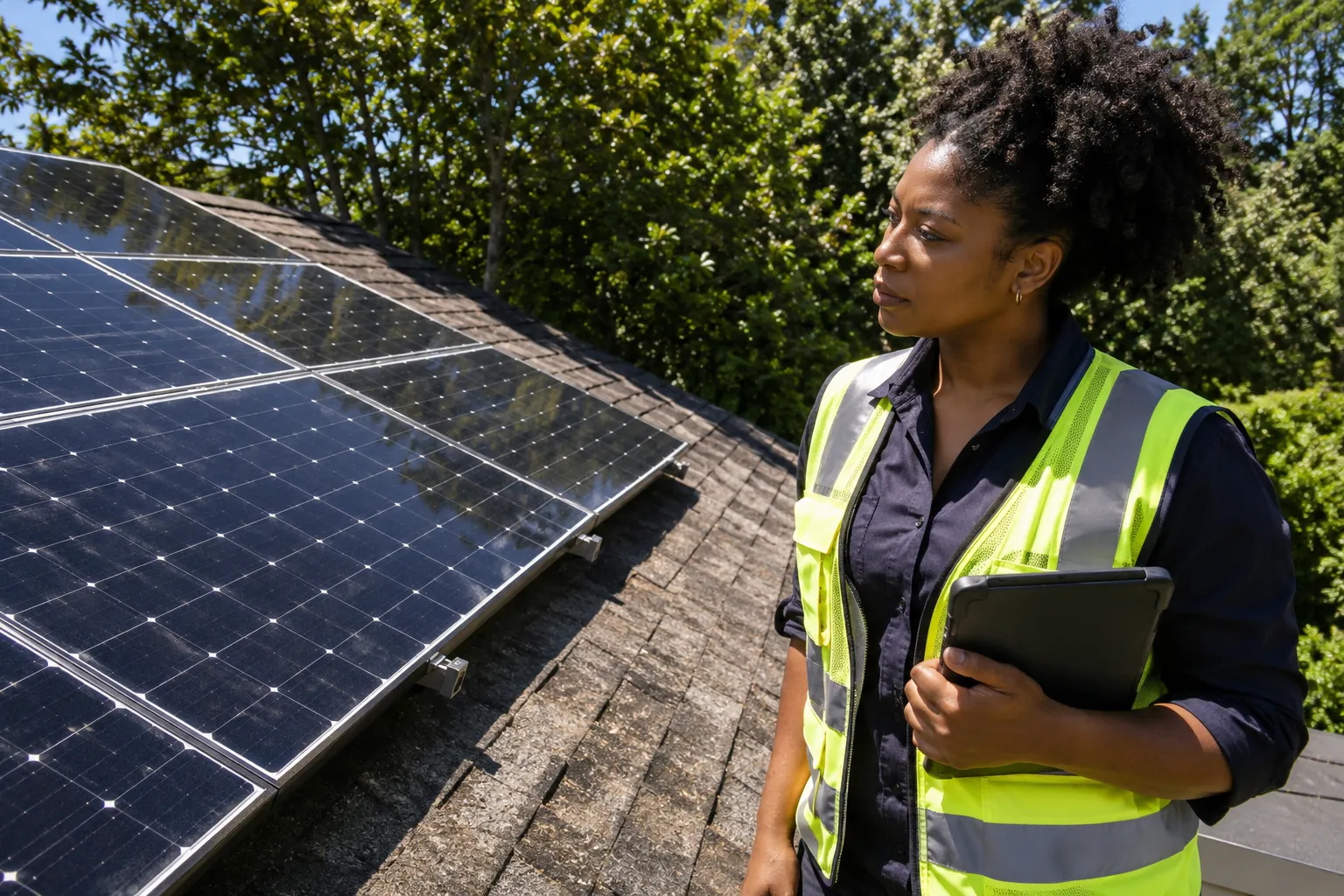
Diagnose before replacing equipment
An abrupt or persistent drop calls for diagnosis rather than an assumption of normal ageing. Several causes produce similar readings:
- Site conditions: New shade or lingering snow cover.
- Soiling: Dirt or debris building up on the glass.
- Data problems: A monitoring fault that misreports production.
- Electrical faults: Damaged wiring or a failed inverter.
A repairable inverter or wiring fault leaves sound panels in place, and a damaged module can be assessed for selective replacement. Before you replace solar panels or the whole array, compare measured output, component availability, household needs, roof condition and removal costs. Any new module must be electrically compatible with the retained equipment.
Plan around the roof’s remaining life
A roof assessment before installation should cover structure, flashing, drainage and any planned re-roofing. Toronto’s guidance treats a roof over 10 years old as a condition-dependent screening concern, not an Ontario-wide expiry rule.
Re-roofing under a productive array follows a set sequence: safe shutdown and disconnection, panel removal, roof work, remounting, electrical checks, reconnection and renewed production testing. Ontario’s Electrical Safety Authority requires an ESA electrical notification when an array is removed and reinstalled for roof-structure repair.
Apply Ontario rules and choose an end-of-life route
Under the Electrical Safety Authority’s October 2026 solar bulletin, a comparable panel or inverter repair does not automatically trigger a full Code update, while full replacement or substantial redesign can. The 2024 Ontario Electrical Safety Code took effect on 1 May 2025. For hired work, verify an ECRA/ESA Licensed Electrical Contractor, who files the notification before work begins; keep the resulting Certificate of Acceptance.
Retirement needs a plan as well. Solar panel recycling can recover glass, silicon, aluminum and other metals from retired modules. Arrange a suitable route for both panels and batteries rather than assuming household recycling accepts them.
Frequently Asked Questions
Can replacing or expanding an existing array qualify for Ontario’s Home Renovation Savings solar rebate?
No. Ontario’s Home Renovation Savings programme excludes replacement or expansion of an existing array from its new-installation rebate. For an eligible project, the rebate and net metering are alternatives: rebate recipients cannot also enter a net-metering agreement for that same project.
What should you ask before expanding, selling or decommissioning a solar panel system?
Ask about disconnection, revised utility approval, warranty transfer, and removal and reconnection requirements. Before expanding a grid-connected system, also ask your local distribution company whether the proposed design can connect, since grid constraints can block approval or require a revised proposal.
Do industrial and institutional solar installations need a formal maintenance plan?
Large industrial and institutional installations normally require a documented preventive maintenance plan. Its content depends on component instructions and site conditions, including panel tilt, roof design, nearby trees, road dust, inverter type and battery chemistry.