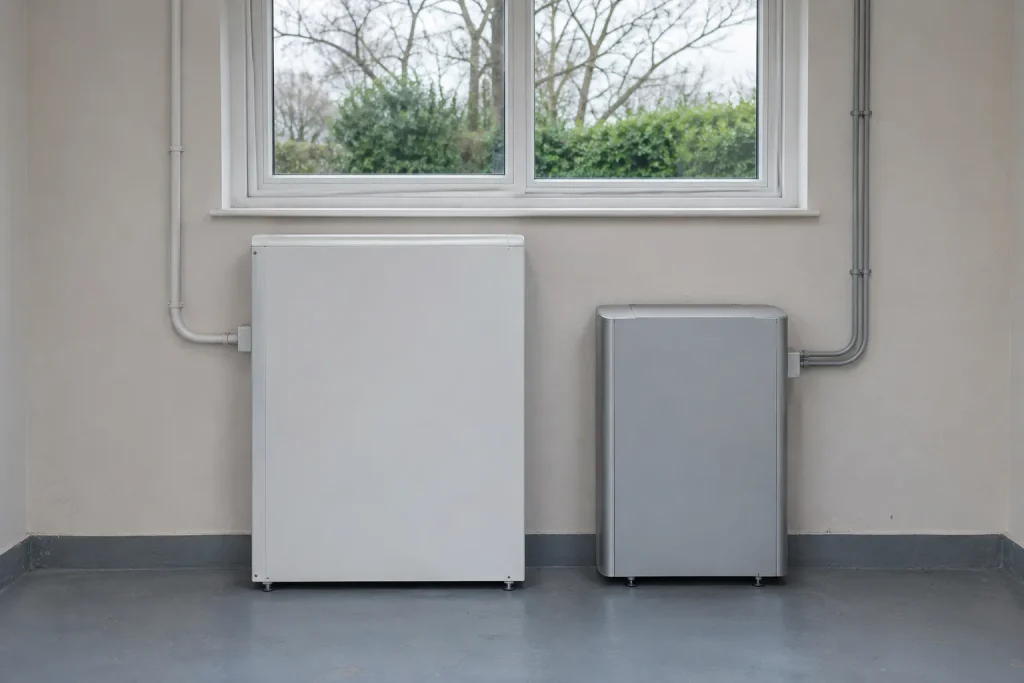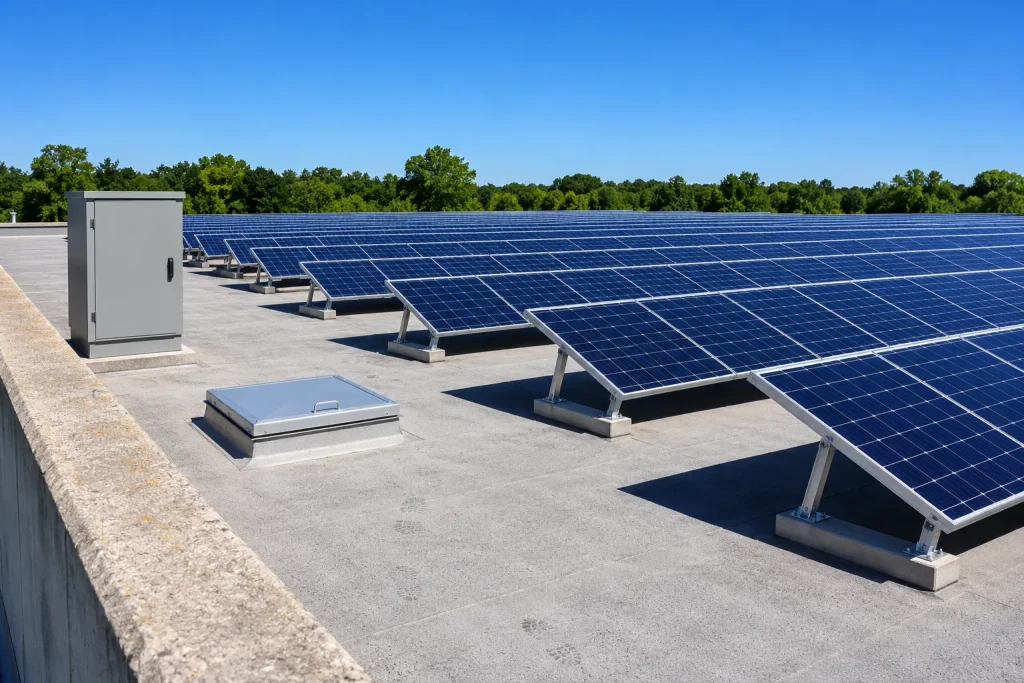
Comparing a lithium iron phosphate battery with other lithium-ion batteries comes down to cycle life, safety, energy density, cold-weather charging and lifetime cost. This comparison sets LFP against NMC, NCA and other chemistries using Natural Resources Canada benchmarks, Ontario installation rules and our own solar storage work, so you can choose the chemistry that suits your home, business or microgrid.
How lithium iron phosphate differs from other lithium-ion batteries
LFP is a lithium-ion battery. The real question is which lithium-ion chemistry suits your installation. Each chemistry pairs a cathode material with trade-offs in voltage, weight and charging behaviour. Those trade-offs decide whether a battery belongs on a garage wall, in a vehicle or in a phone.
A chemistry within the lithium-ion family
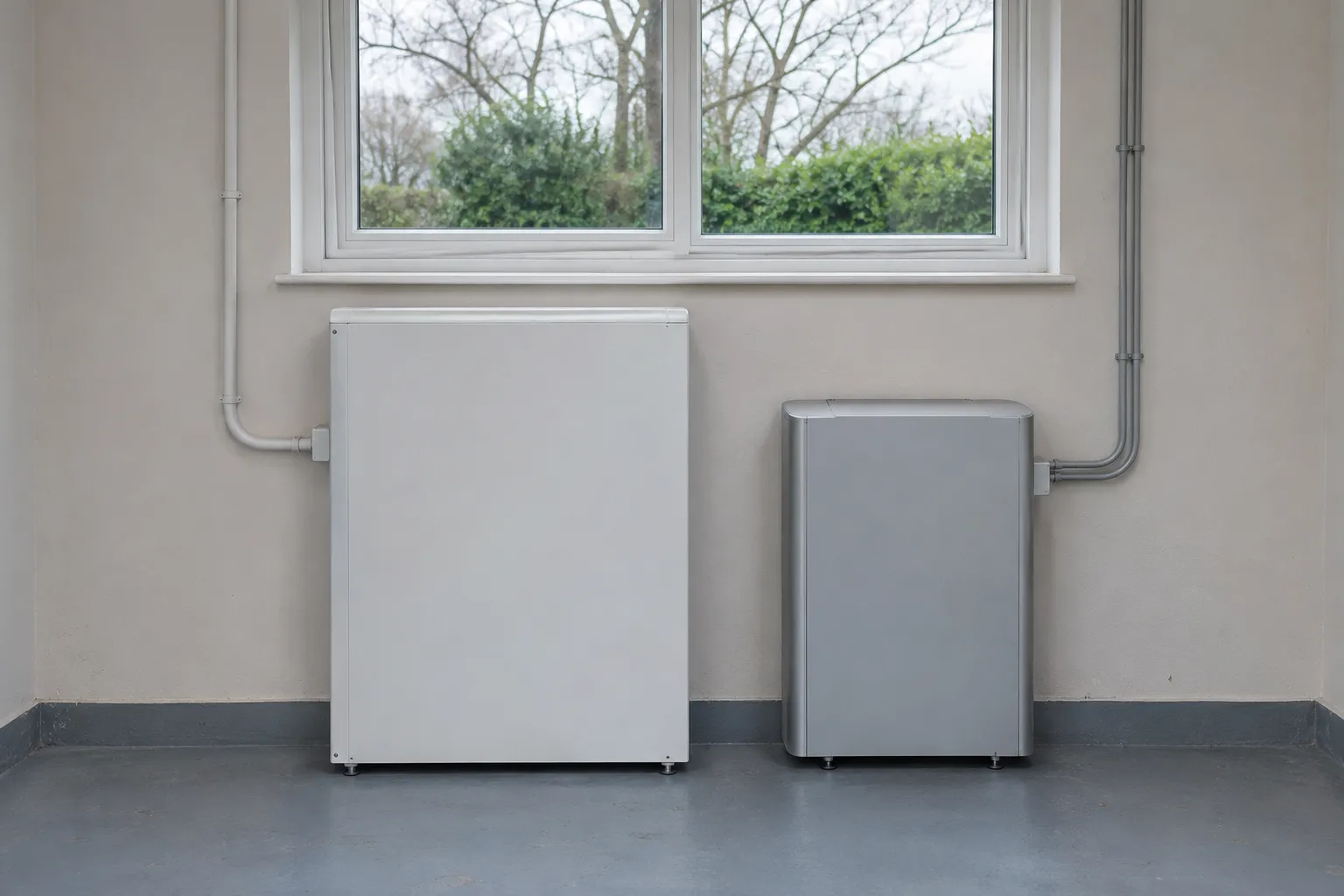
A lithium phosphate battery, more precisely a lithium iron phosphate battery, also goes by the names LFP or LiFePO₄. It belongs to the lithium-ion family. That means it should be compared with its siblings, not with lithium-ion as a separate category.
In this comparison, battery chemistry refers to the cathode, the positive electrode that releases lithium ions during discharge. The cathode material sets each chemistry apart:
- LFP: iron phosphate, with no nickel or cobalt in the cathode.
- NMC: a blend of nickel, manganese and cobalt.
- NCA: nickel, cobalt and aluminium.
Other lithium-ion options serve different markets. Lithium cobalt oxide powers compact electronics such as phones and laptops. NMC and NCA appear in electric vehicles, where stored energy relative to battery weight shapes driving range. We compare these options in our guide to common solar battery types, from lead-acid to the various lithium-ion families.
Energy density, size and cell voltage
Natural Resources Canada reports cell-level energy density of approximately 175 Wh/kg for LFP. Nickel-based NMC cells range from approximately 200 to 325 Wh/kg.
That gap means NMC can store the same capacity in less mass or volume. Cell figures do not describe a finished cabinet, though. Enclosures, cooling and electronics all add weight, so the cell number cannot be read as installed-system energy density.
| Specification | LFP | NMC |
| Cell energy density (Natural Resources Canada) | About 175 Wh/kg | About 200–325 Wh/kg |
| Nominal cell voltage (comparative research review) | 3.2–3.3 V | 3.6–3.7 V |
| Typical charging voltage per cell | About 3.65 V | About 4.2 V |
These different voltages mean different charging equipment.
Charging profiles and discharge ratings
Lithium cobalt oxide cells share the higher charging voltage of many NMC cells. Swapping one chemistry for another therefore requires compatible chargers, battery management system (BMS) settings and inverter configuration. During discharge, LFP holds a relatively flat voltage. That keeps equipment voltage steady but makes remaining charge harder to read from voltage alone.
Capacity and current are separate ratings. A 100Ah LiFePO4 battery is not necessarily rated for 100 A continuous output. For LFP and NMC alike, continuous and peak current depend on cell design, the BMS and thermal management, so check the current rating on the specification sheet rather than inferring it from amp-hours.
Which chemistry lasts longer and costs less?
Longevity and price pull in different directions until you look at the full life of the system. A battery that costs less per kWh can cost more over two decades. The numbers below separate cell benchmarks from what an Ontario installation actually involves.
Cycle life versus service life
Natural Resources Canada gives approximate cell-level end-of-life benchmarks of 6,000–8,000 charge cycles for LFP and 500–1,000 for nickel-based NMC. Neither figure guarantees how long an installed system will last.
A cycle-life rating only means something alongside its test conditions. When you compare specification sheets, look for:
- Depth of discharge: how much of the capacity each tested cycle used.
- Temperature and charge rate: the conditions under which the cells were cycled.
- Operating voltage: the voltage window applied during testing.
- End-of-life definition: the remaining capacity at which the test stopped counting.
At one equivalent cycle per day, a rating converts into years of cycling, not predicted service life. Calendar ageing continues even when a battery rarely cycles, especially under elevated temperature or prolonged high state of charge. A backup battery that sits mostly full cannot be judged by its cycle count alone, so its storage conditions deserve the same scrutiny.
Cell price versus lifetime value
Natural Resources Canada sets approximate cell-cost benchmarks at US$110/kWh for LFP and US$160/kWh for nickel-based NMC. These are United States dollar cell figures, not installed prices in CAD. They frame the price gap between LFP and NMC at the cell level only.
LFP’s advantages in replacement frequency must be weighed against usable energy, service-year or throughput limits and remaining end-of-life capacity. Inverter, controls, temperature management and installation also shape your total cost. Lead-acid batteries may cost less initially, but they generally deliver fewer cycles and less usable depth of discharge than LFP.
Ontario fees, tax and incentives
ESA’s fee schedule effective April 1, 2026 lists $172 CAD for the first contractor-installed residential approved ESS assembly. Each additional related item installed at the same time adds $30 CAD. Contractor-installed solar PV generation of 10 kW or less is listed at $336 CAD, and a combined solar-plus-storage project needs its own applicable fee classification. Ontario HST of 13% applies to taxable supplies, a rate in effect since July 1, 2010.
Ontario’s Home Renovation Savings solar-and-storage stream requires a grid-connected, owner-owned home with new rooftop solar. Under requirements dated October 2025, battery-only, off-grid, self-installed and net-metered projects are ineligible. The contractor must secure written program pre-approval and distributor approval before purchase or installation. Approved work must finish within 12 months of pre-approval, with the post-installation application submitted within 30 days of installation.
Is LFP safer than NMC?
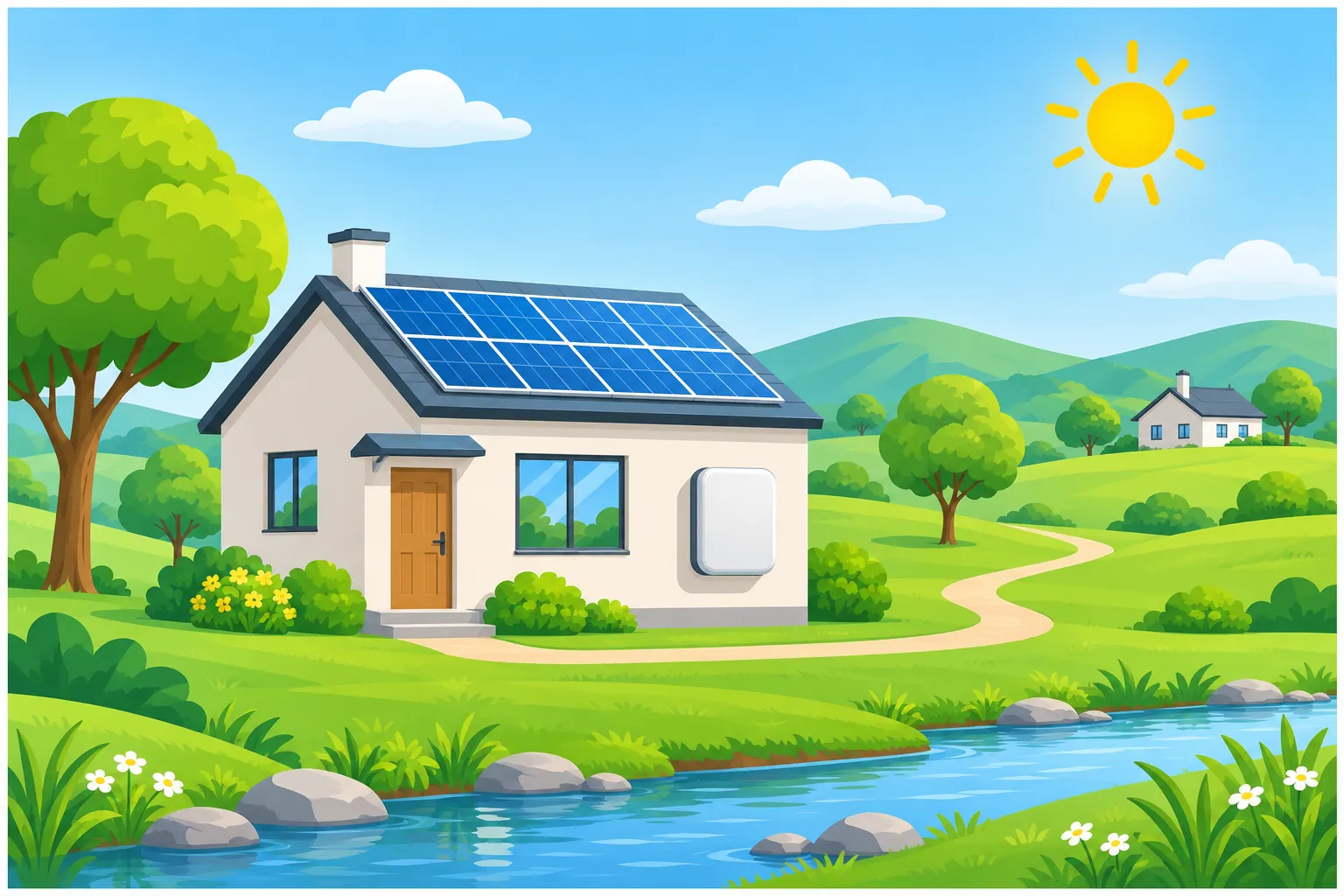
Chemistry shapes how a cell behaves under stress, but safety comes from the whole system. Cathode stability, certification, battery management and installation location each add a layer.
Thermal stability and failure behaviour
LFP’s phosphate cathode resists heat-induced decomposition and oxygen release better than nickel-rich cathodes, which gives it stronger thermal stability. Better stability is not fireproofing: internal shorts, damage, overcharging or external heat can still trigger thermal runaway, a self-accelerating heating reaction that may release hazardous gases, smoke and fire. In a direct comparison, a 2021 study of large-format commercial cells under identical overcharge conditions found the tested LFP cell entered runaway earlier but reacted less severely than the NMC cells, which caught fire or exploded. No single thermal runaway temperature applies across all cells and test methods.
System approval and protective controls
Three safety standards cover different things. ANSI/CAN/UL 1973 addresses batteries, ANSI/CAN/UL 9540 addresses complete energy storage systems, and ANSI/CAN/UL 9540A is a fire-propagation test method rather than a system certification. ESA Bulletin 64-7-3, issued May 2025, describes Ontario approval routes including ANSI/CAN/UL 9540 product certification or accredited field evaluation using SPE-1000 and applicable UL 9540 requirements.
Certification covers the product; the battery management system protects it in daily use. A BMS should guard against overcharge, over-discharge, short circuits, overheating and, where applicable, low-temperature charging. Confirm those protections are listed before you compare chemistries on paper.
Ontario home installation limits
Under ESA Bulletin 64-8-2, a residential-use ESS has a maximum of 20 kWh per single storage unit. Attached-garage or exterior residential installations carry an 80 kWh aggregate limit under the applicable provisions. Units need at least 1 m from windows and doors other than vehicular access doors, and 1 m between ESS units.
Ontario prohibits residential ESS installations in sleeping areas and requires a smoke alarm or detector in any dwelling-unit room containing one. Basement and multiple-dwelling installations face additional room conditions. Ontario’s 29th edition Electrical Safety Code took effect May 1, 2025, and an installed ESS requires electrical notification even when off the grid, although ESA may accept a notified, code-compliant installation without an on-site visit.
How do these batteries handle Canadian winters?
A battery that tolerates heat well does not automatically charge well in the cold. In Ontario, the winter question is about charge limits, heating and controls. Getting those right protects both the cells and your backup capacity.
Charging below freezing
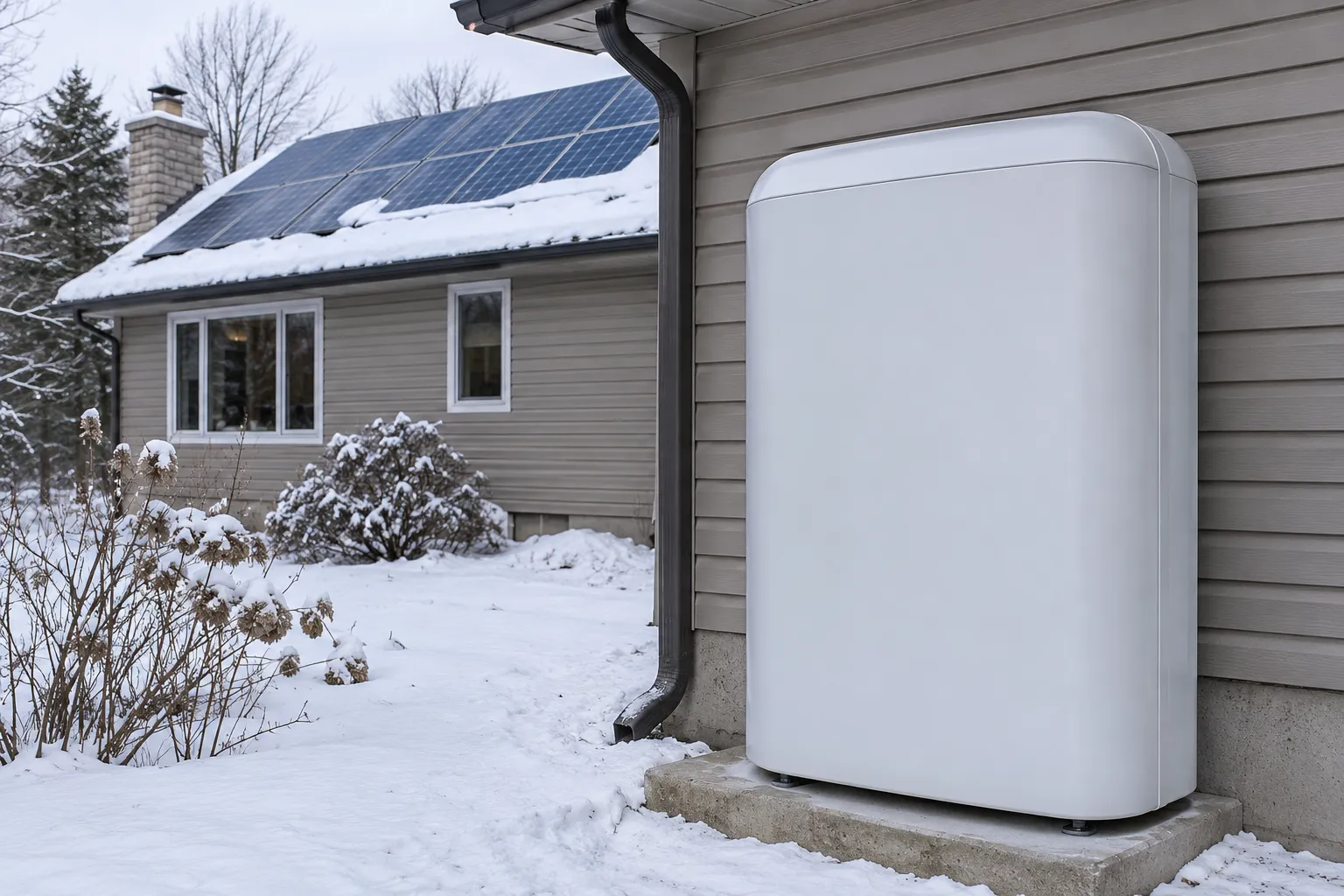
Thermal stability describes resistance to heat-induced failure. It says nothing about the temperature range in which a battery may safely charge. Many ordinary LFP cells should not be charged below 0°C without protection or heating, because lithium plating at the graphite anode can damage the cell and raise safety risk.
Health Canada advises against charging a lithium-ion battery below freezing and recommends following the manufacturer’s charging instructions. A battery may still be allowed to discharge below freezing while charging stays restricted. Check the charge and discharge ratings separately on every specification sheet.
Controls that determine winter performance
An advertised operating range such as −20°C to 60°C does not mean the battery can charge at −20°C. The separate charging, discharging and storage limits govern what the system actually does in January.
Battery heaters, preheating controls, BMS charge inhibition and a conditioned enclosure decide whether an LFP system accepts a charge during a Canadian winter. Heaters draw power, though. Count their consumption in storage planning, since it reduces the energy left for your other loads.
Summer matters too: high heat can accelerate ageing despite LFP’s generally stronger heat tolerance than NMC. The same logic applies on the road. Winter range and charging in electric vehicles depend on battery heating, preconditioning and vehicle efficiency, so chemistry alone never settles cold-weather performance.
Which chemistry suits Ontario solar storage and backup?
The right chemistry follows the job. Stationary storage, tight-space devices and institutional systems each weigh cycle life, size and controls differently. Once the chemistry is chosen, sizing energy and power correctly determines whether the system delivers.
Match chemistry to the application
An LFP battery is often a strong candidate when space is adequate and long lifespan matters. We use LFP in solar storage designed for daily use or outage backup. The fit depends on where the battery goes:
- Residential and commercial solar energy storage: frequent cycling rewards LFP’s longer cycle life, and spare wall or floor space absorbs its larger footprint.
- Mass- or volume-constrained uses: NMC or NCA can be preferable; lower energy density is one of LFP’s disadvantages there, though it matters far less in stationary storage.
- Frequently cycled microgrids: daily charge and discharge make replacement frequency a central cost factor.
For industrial and institutional energy storage systems, cell energy density rarely decides the project. Critical-load separation, inverter redundancy, monitoring, emergency shutdown, fire compartmentation and maintenance access can matter more. Our solar battery storage installation in Ontario serves homes and businesses.
Size energy and power separately
Capacity in kWh sets potential runtime. Continuous and peak power in kW or kVA decide whether simultaneous and starting loads can run. A 1.7 kW average load running for six hours needs 10.2 kWh before losses and reserve limits.
A nominal 10 kWh battery does not necessarily deliver 10 kWh of usable AC energy, because depth of discharge, reserve settings and conversion efficiency all trim output. Inverter sizing must cover maximum simultaneous load, motor-starting current, surge duration, power factor and phase requirements. For independent operation, the inverter may also need grid-forming capability.
Design backup and microgrid operation
We design Ontario residential and commercial solar storage around energy use, backup requirements and budget. Configurations range from selected essential loads to whole-home or whole-building backup. Our residential LFP solar battery storage systems track solar production, battery charge, electricity use and grid power through an app, with operating modes for backup or peak-rate periods.
An off-grid microgrid needs seasonal load and generation profiles, winter solar reserves and a generator strategy. Grid-connected Ontario designs instead require the serving distributor’s technical connection decision. Settle which path your site takes before you finalize battery capacity.
Frequently Asked Questions
Are lithium iron phosphate batteries safe?
LFP offers better thermal stability than nickel-rich chemistries, but it is not fireproof: internal shorts, damage, overcharging or external heat can still cause thermal runaway. Health Canada advises against using damaged or modified lithium-ion batteries. Stop using any battery that swells, leaks, vents, smells unusual or runs unusually hot, and use charging equipment matched to the battery.
What should be tested when a battery storage system is commissioned?
Commissioning should test charging, discharging, backup transfer, alarms, monitoring, cold-charge protection and emergency shutdown, with performance and owner instructions documented. The evaluation should also confirm usable AC energy, continuous and surge output, inverter pairing, BMS communications, temperature controls and disconnects.
Can the Canada Greener Homes Loan still help pay for a home battery?
No new applications are possible: the Canada Greener Homes Loan is closed. Funding approved before closure remains subject to its existing terms.