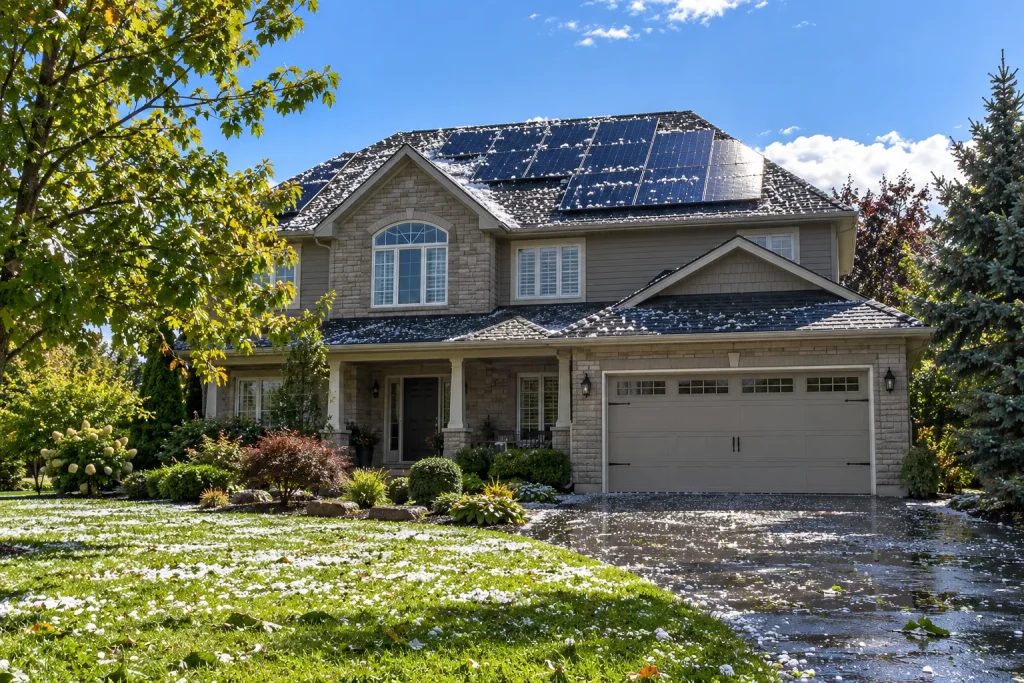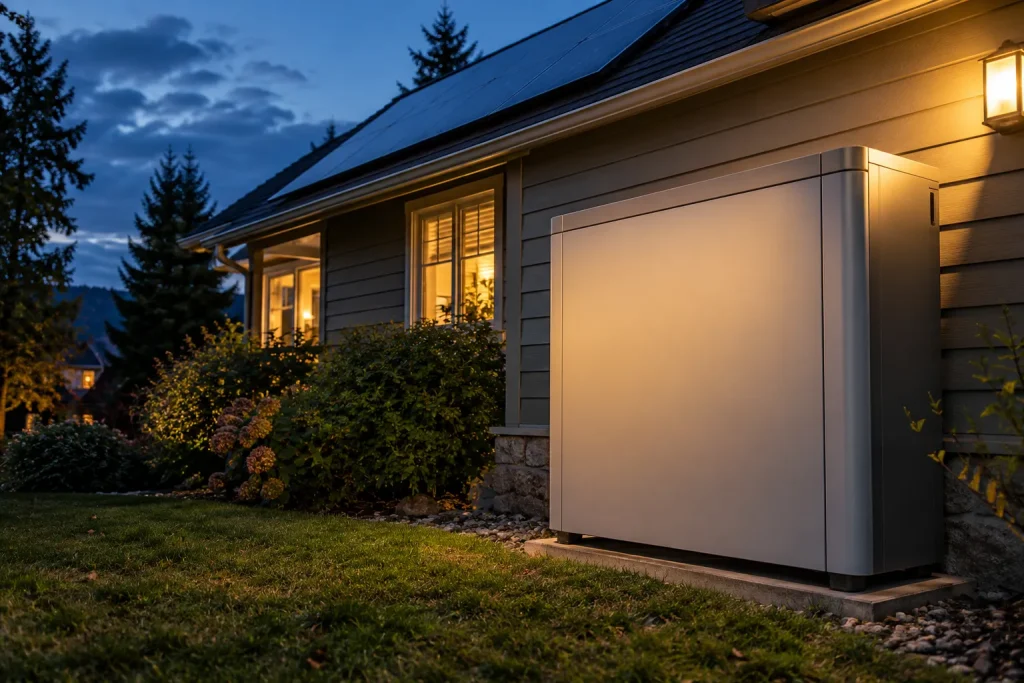
Hail, heavy snow, falling branches, hidden cell cracks, failed seals and installation faults can all damage solar panels. Some of this damage stays invisible from your driveway.
What weather and impacts damage solar panels in Ontario?
Most physical damage starts outdoors. Ontario systems face hail, snow loads, ice, wind uplift and falling debris, and each one stresses a different part of the array. Some hits break the front glass. Others leave the surface intact and crack the solar cells underneath, or strain the racking and the roof.
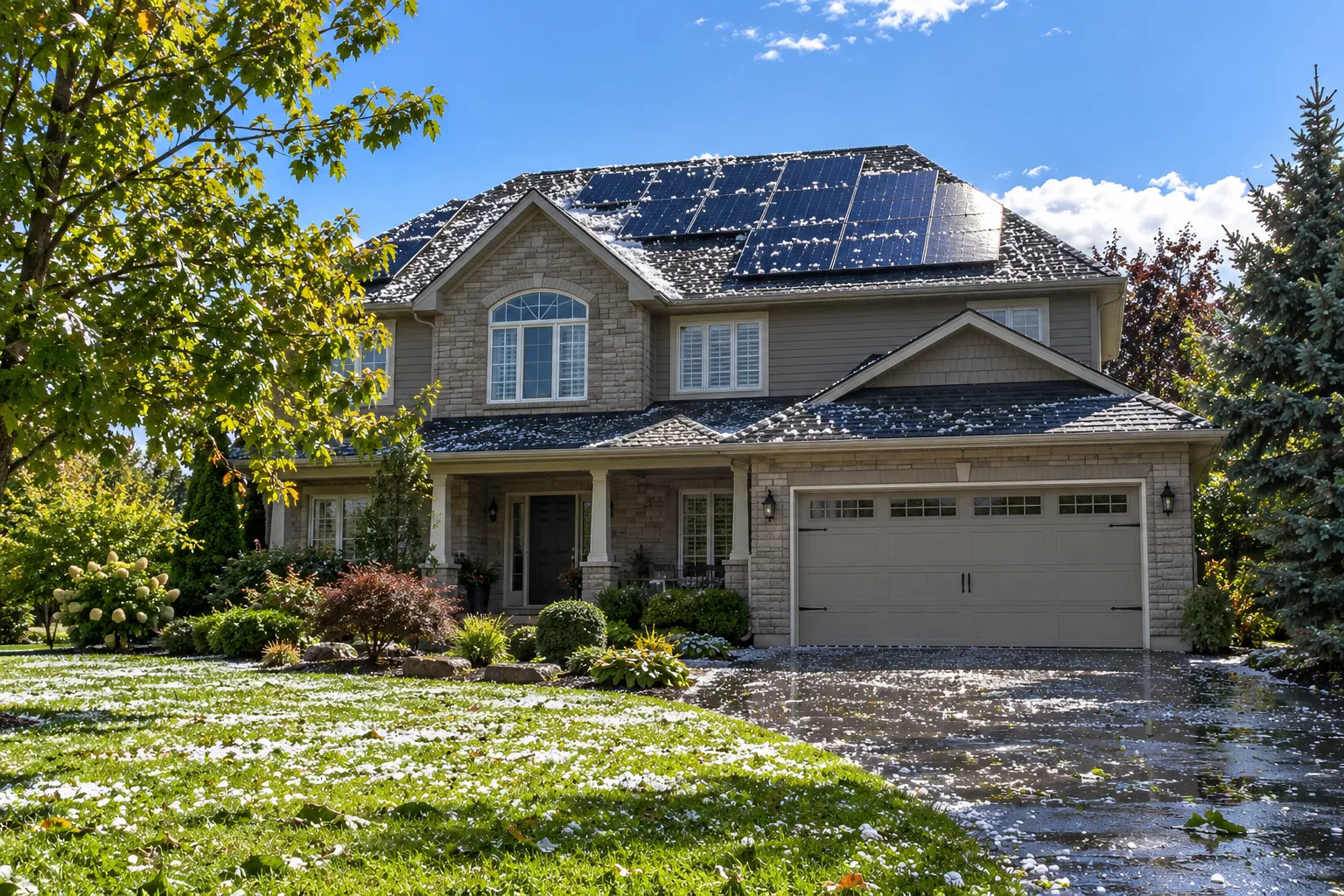
Hail and hidden impact damage
A hailstone does not have to shatter the glass to cause harm. The impact can fracture the cells underneath while the surface looks fine, and a damaged module may keep producing electricity. Continued output does not mean the panel is safe. A professional should still assess it.
- Hail size: a 2023 study linked higher performance-loss rates to hailstones of at least 25 mm. Not every panel is damaged at that size.
- High-risk category: the U.S. Department of Energy uses hail larger than 44 mm as an illustrative high-risk category, not a universal damage threshold.
- Measured loss: in a 2024 U.S. National Renewable Energy Laboratory study, the most-cracked hail-exposed modules first produced 3–4% less power than the least-damaged ones.
- Over time: that same gap did not keep widening over six years of follow-up.
A look from the ground cannot rule out cracked cells after a significant storm. The U.S. Department of Energy recommends imaging within one month of a hail event. If a severe storm hits Vaughan or Brampton, book that assessment early instead of waiting for output to fall.
Snow, ice and wind loads
Heavy snow adds weight to panels, rails, roof attachments and the building itself. Ontario’s 2023 rural-rooftop guidance says the usual assumption that snow slides off a roof must be reassessed once panels are installed. Wind works in the other direction. Uplift can loosen clamps, pull on roof attachments and bend racking, while roofing debris thrown around during storms can strike the modules.
Ice can block drainage and let water get in. Snow or ice sliding off an array can also endanger anyone standing below. Cold by itself is not a sign of damage, though. A frosty January morning in Newmarket does not hurt healthy modules.
Falling objects and animal activity
Falling branches, dropped tools and foot traffic can crack a panel surface or bend its frame. Once the glass is broken, dust and moisture can reach the cells and reduce the light they receive.
Growing trees add a slower risk, because each season brings branches closer to the array. Wildlife causes a different kind of harm. Squirrels and other rodents chew exposed wiring, and birds nesting beneath panels can damage components over time.
What defects and installation faults damage panels?
Not every problem comes from the sky. Common solar panel defects start inside the module or in the way the system was built. They include cell cracks, layer separation, seal failures, electrical faults, and mistakes in mounting and wiring. Several of them stay hidden while production slowly slips.
Microcracks and hot spots
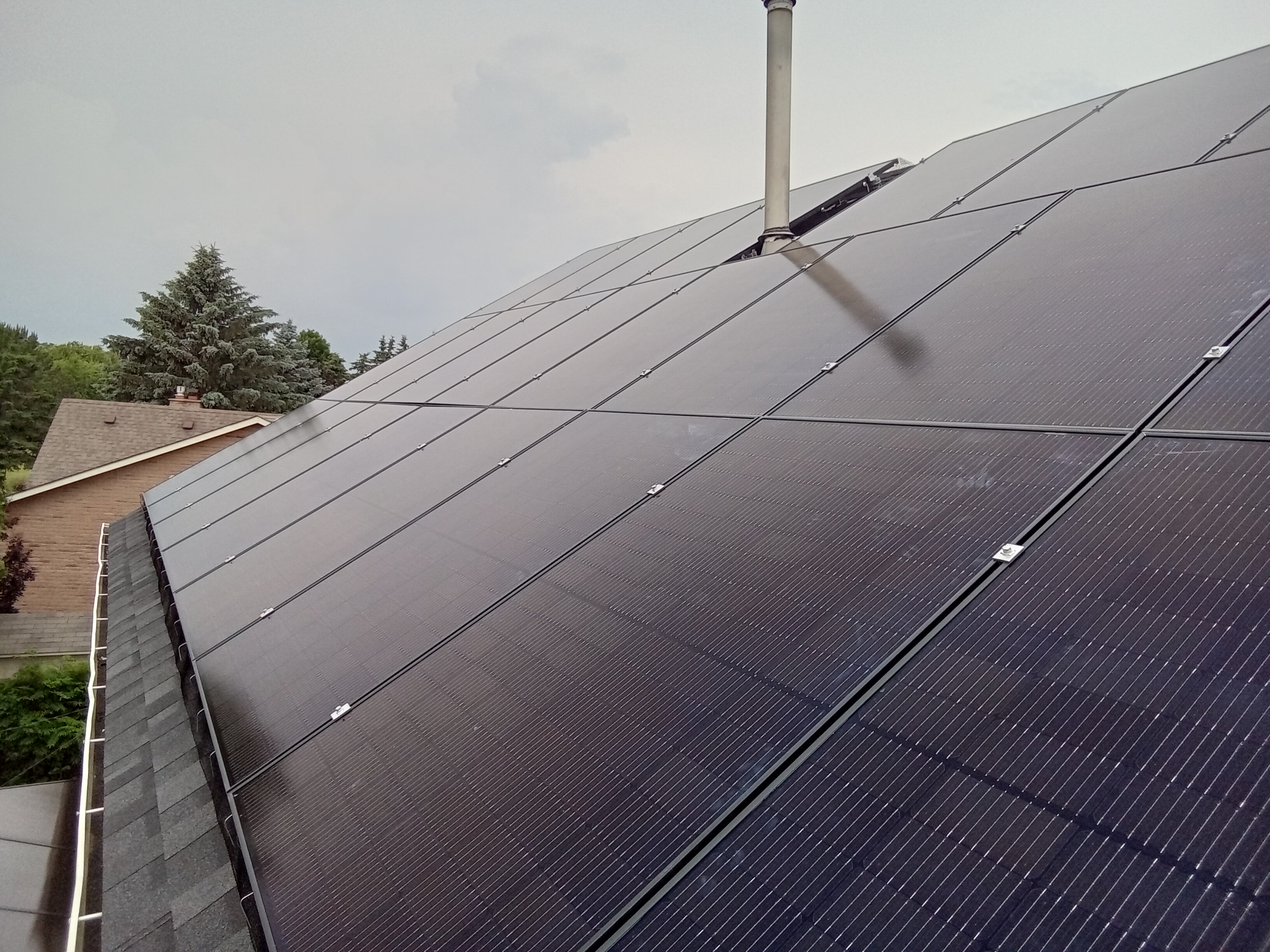
Microcracks are tiny fractures in the cells. They can form during manufacturing, shipping, installation or later mechanical stress. They are often invisible to the eye, and at first they may barely affect output.
The risk grows over time. Microcracks can interrupt current flow inside cells or leave parts of a cell electrically inactive. A 2023 study found 0.5 percentage points more average degradation in cracked-cell modules than in uncracked ones over 21 months. That is a study average, not a forecast for your roof.
- Hot spot: a part of the panel that runs hotter than the cells around it.
- Accelerated wear: local overheating can speed up damage in the affected cell.
- Fire risk: in severe cases, an overheating area can become a fire hazard.
The size of the crack matters. Research shows that cracks affecting 11% to 34% of a cell can develop hot spots. This is one reason a cracked module calls for a diagnosis rather than a wait-and-see approach.
Layer, seal and electrical defects
Solar panel delamination means the internal layers of a module are separating. It may show up as bubbling or cloudiness, and widespread separation generally cannot be repaired in the field. Solar panel discoloration can point to an encapsulant (the protective layer around the cells) breaking down. A cracked backsheet can let moisture in and weaken electrical insulation. Neither sign alone tells you how much output has been lost.
Water can also get in through failed edge seals or a damaged junction box, the sealed enclosure on the back of the module. The result can be corrosion, shorts or insulation faults, even when the outside looks intact. Some electrical defects never crack the glass at all. Potential-induced degradation comes from voltage differences between the cells and the frame. On a module with three bypass diodes, one shorted diode can bypass about one-third of the cells.
Mounting and wiring faults
Quality of installation affects how long a system lasts. Wrong clamps, loose fasteners, weak structural support or poor roof waterproofing can let modules shift, cause leaks or lead to damage under wind and snow loads.
Wiring mistakes carry their own risks. Poor cable routing and mismatched connectors can cause abrasion, overheating or arcing. A May 2025 notice from the Ontario Electrical Safety Authority described fire investigations involving reversed PV DC wiring. Electrical faults therefore need to be assessed across the whole system, not just at the inverter or a single panel.
How can you recognize damaged or underperforming panels?
Warning signs come from two places: what you can see on the array and what your production data shows. Reading both together helps you separate real damage from snow, dirt or seasonal dips.
Visible signs and hidden faults
Visible damage includes cracked glass, bubbling, discolouration, bent frames, corrosion, loose clamps, damaged wiring and scorch marks.
A clean, intact surface does not prove the panel is healthy. Cracked cells, corrosion under the glass and electrical faults can all hide behind it, so a visual check alone cannot confirm a panel is undamaged. Your data often catches what your eyes miss.
- Unexpected production drops: output falls without a weather or seasonal explanation.
- Repeated inverter shutdowns: the system keeps stopping and restarting.
- Insulation-fault alerts: the equipment reports a possible wiring or moisture problem.
Any of these can point to damaged solar panels, or to a fault somewhere else in the system. A technician’s role is to find out which.
Production changes that may not mean damage
Lower output does not always mean a defect. Snow cover, dust, bird droppings and new shade can all cut production for a while, and in severe cases soiling can reduce production by up to 20%. Ageing is slow by comparison. The City of Toronto gives about 0.5% average annual panel degradation as a general benchmark, so a sudden drop in performance does not fit normal wear.
Context helps you read the data. We include online monitoring with every solar or solar-plus-storage system we install. Historical production and system-status data, down to individual panels where the equipment allows, help separate seasonal patterns from a lasting problem. Our solar production and system-status monitoring lets you compare this month with the same month last year.
Diagnosis, coverage and repair scope
A complete outage does not prove the modules are damaged. A technician may review inverter logs, string measurements, insulation resistance and connectors, then use infrared or electroluminescence imaging where appropriate. Coverage depends on what failed. Product and performance warranties cover different issues. The City of Toronto describes typical panel performance warranties of 25 years. Typical equipment warranty terms run 10–12 years. String inverters are usually covered for 5–12 years, depending on the actual terms. There is no single repair price. The work depends on whether the glass, cells, wiring, mounts, inverter or roof is affected, plus roof access and compatible replacement parts.
How can you prevent damage and maintain panels safely?
Prevention starts with design, continues with routine checks and careful cleaning, and ends with the right response after a storm. Each step lowers the chance that a small problem becomes an expensive repair.
Design and site conditions
A roof array designed for its geometry, exposure and local wind and snow loads is less exposed to mechanical damage. Large flat commercial roofs in Mississauga or Oakville also need attention to snow drifting around parapets and rooftop equipment.
- Secure mounting: limits module movement under wind and snow.
- Sound roof interfaces: keep water from collecting around attachments.
- Protected cable routes: keep wiring away from sharp edges and animals.
Together, these choices reduce the chance that the solar modules will shift, trap water or be chewed by animals over the life of the system.
The site keeps changing after installation. Trimming branches that reach toward the array reduces new shade and the risk of limbs falling onto the panels.
Routine checks, cleaning and service
We recommend reviewing your production data monthly and checking your panels regularly from the ground every six months for cracked glass, loose hardware, pests and debris. When cleaning is needed, follow the module manufacturer’s instructions. Clean water and a soft, non-abrasive cloth or brush protect the panel surface. Sloped roofs that require working at height call for professional access.
We also recommend professional servicing every two to five years, or sooner after an alert. A visit covers electrical diagnostics, an inspection of connections and a written report. Our solar panel service schedule in Markham sets out how these visits fit around your own checks.
Safe action after severe weather
After hail, high winds or an ice storm, check from the ground for shifted panels, impact marks, roof damage or leaks, and review your monitoring alerts. If production stays unexpectedly low, call a qualified technician.
Ordinary snow cover stops generation only for a while and does not signal damage. We advise against clearing it by hand, because climbing onto an icy roof carries more risk than the short production loss. Panels in sunlight can still carry dangerous DC voltage after the inverter is switched off. Stay away from exposed wiring, arcing, smoke or burning smells, and call qualified help, or emergency services if the danger is immediate.
Frequently Asked Questions
Are solar panels easily damaged?
Not in everyday conditions. How much damage hail causes depends on the impact, the module’s construction, the mounting and the storm. Passing a hail test does not guarantee a panel survives every storm, so compare its impact-test results and load ratings with your site’s exposure. Cold alone is not a sign of damage, and Natural Resources Canada notes that PV cells can perform better at lower temperatures.
Which cleaning and snow-removal methods can damage solar panels?
Metal shovels and hard scrapers can scratch or crack the glass. Avoid chipping ice, hot water or de-icing chemicals unless the manufacturer approves them. Pressure washers, abrasive brushes, harsh detergents and unapproved chemicals can damage panels or compromise maintenance requirements. We advise washing early in the morning or in the evening to avoid thermal shock on hot glass.
What should you document when filing a claim for damaged solar panels?
First establish the cause, because storm impact, wear, installation faults and manufacturing defects can fall under different terms. Gather safe photos, monitoring history, model and serial numbers, purchase and installation records, commissioning results and past inspection reports. Keep damaged equipment for inspection where safe, and record emergency fixes separately from permanent repairs. If your claim is rejected, ask for the technical basis and the exact policy wording.