How often do business solar panels need to be replaced in Ontario? Usually far less often than owners expect. Many arrays can keep working well past their warranty period. Commercial panels typically last 25–30 years, while inverters and other parts may need replacing sooner. Confirming a real fault and checking Ontario rules should come before any work starts.
How long do commercial solar panels last in Ontario?
A well-built array is a multi-decade asset. Its output declines slowly, and the panels do not suddenly stop working at a fixed age. To plan replacement, you need to know three things: the typical service life, the rate at which output fades, and what the warranty documents actually guarantee.

Typical lifespan and replacement decisions
A commercial solar panel typically lasts 25–30 years. Reaching that age does not stop it from generating electricity. The City of Toronto says solar panels in Ontario can remain useful for more than 30–40 years, even though many carry 25-year production guarantees.
Age is therefore not the trigger for replacement. A module that remains safe and still meets your production needs can stay on the roof. Replace it when a diagnosis confirms that it is unsafe, has failed or keeps underperforming.
How quickly does output decline?
Degradation is the gradual loss of a panel’s ability to convert sunlight into electricity. It is different from an equipment failure. Commercial modules commonly lose about 0.5%–1% of their output each year, and the rate varies from one installation to another.
The City of Toronto uses an illustrative rate of 0.5% per year. At that rate, about 95% of original output remains after 10 years and 91% after 20 years. About 88% remains at 25 years, 86% at 30 years and 82% at 40 years. However, a 2025 meta-analysis of 80 studies and 610 observations found a median annual degradation rate of 0.94%. A single rate cannot predict every array.
What do panel warranties actually cover?
A performance warranty covers the panel’s rated power capacity. It does not promise that annual energy production will stay the same. Manufacturers’ performance guarantees commonly run for 25 years or more. Some 25-year guarantees specify 80%–85% of original rated output.
A product warranty covers defects, not output levels. The City of Toronto gives 10–12 years as a general example for panel product warranties, which is much shorter than the panels’ expected service life.
When a performance warranty expires, you are not required to replace anything. Usable panels can keep operating, and their real production still depends on site conditions. Our guide to solar panel efficiency loss and lifespan explains what lowers efficiency over time and how this affects panel lifespan and longevity.
Why do other components need replacing sooner?
Panels are only one part of a solar power system. Inverters, wiring, mounting and monitoring equipment each wear out at their own rate. If you know which components are likely to fail first, you can plan targeted repairs instead of assuming the whole array needs replacing.
Inverters can wear out first
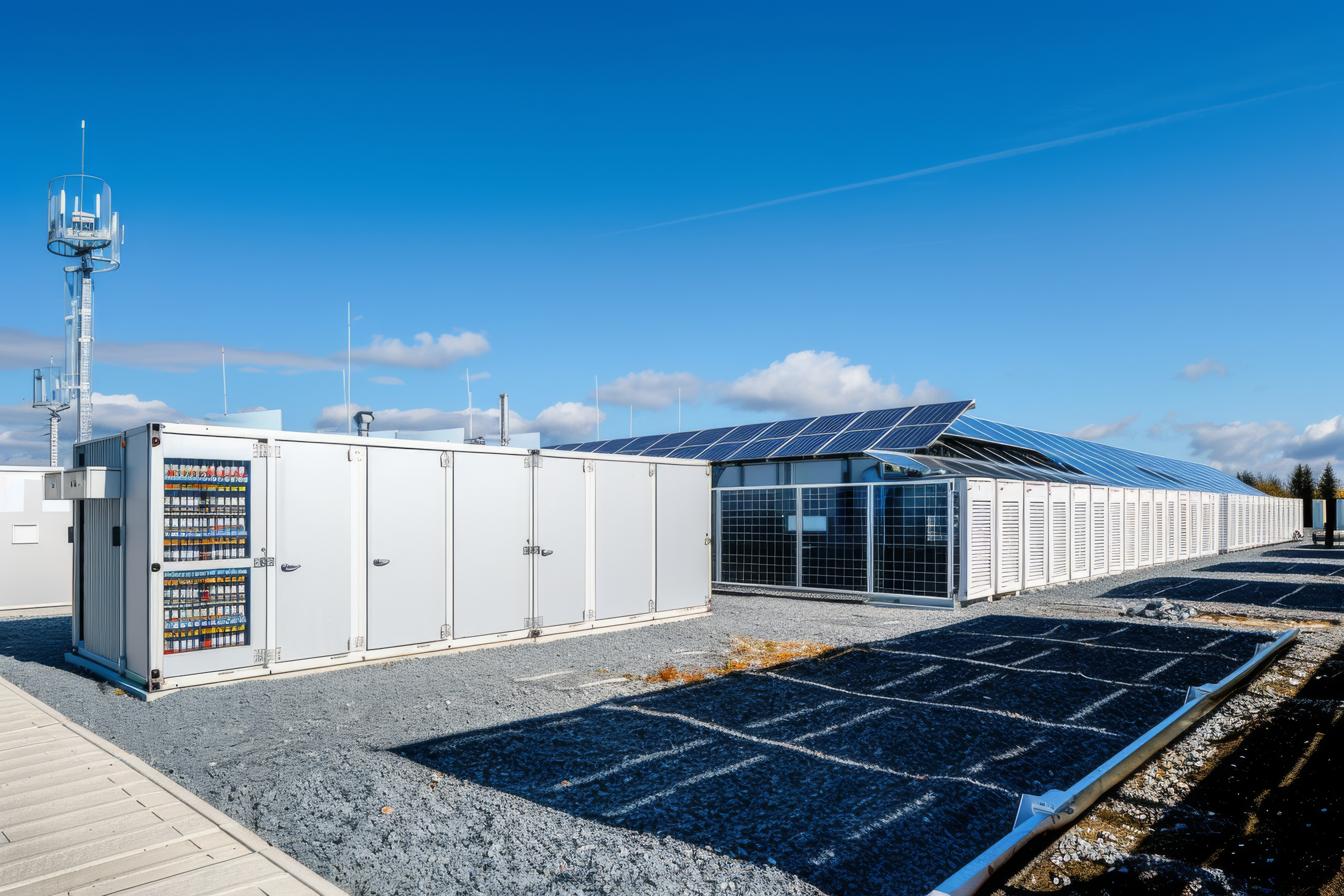
An inverter converts the direct current produced by the panels into the alternating current your building uses. String and central inverters typically need replacing after 10–15 years. On a long-lived array, that can mean one or more inverter replacements.
The International Energy Agency PV programme published guidance in 2022 for plants expected to last more than 25 years. It anticipates an inverter replacement about halfway through that operating life. The actual timing depends on faults and on how easily the unit can be maintained.
When an inverter fails, production can stop even though the panels are still sound. Fault codes that keep returning, repeated shutdowns or weaker conversion performance call for a diagnosis. The usual fix is to repair or replace that unit, not the panels.
Connections, mounting and monitoring equipment
None of these parts has a single replacement age. Inspect the affected item and replace it only when it is damaged or defective.
- DC connections and wiring: Loose, corroded or overheated connectors and damaged insulation cause electrical issues that are fixed at the faulty part.
- Mounting structures: Racking can last as long as the panels. However, corrosion, loose fasteners or structural damage may require earlier repair to keep the panels and roof safe.
- Monitoring and protection equipment: These devices can fail or become obsolete on their own, regardless of the panels’ condition.
A gap in monitoring data needs particular care. The reporting can stop while the panels keep generating electricity, so check the communication link before you assume the array is down.
Batteries and replacement-part compatibility
Solar batteries are optional, so their replacement timetable does not apply to a business without storage. For systems that have batteries, New Dawn Energy Solutions’ component guidance lists a lifespan of 10–15 years. Charge cycles and extreme temperatures affect battery condition. The same guidance lists 25 years for a microinverter, with thermal stress and moisture ingress as the main risks.
When several parts fail, base the replacement decision on measured condition, repeated failures, spare-part availability, compatibility and the manufacturers’ warranty terms. An assumed failure rate is not a sound basis.
| Component | Typical life | What justifies replacement |
| Commercial panels | 25–30 years, often useful beyond | Confirmed unsafe, failed or persistently underperforming module |
| String or central inverter | 10–15 years | Persistent faults, shutdowns, reduced conversion |
| Microinverter | 25 years | Thermal stress or moisture damage confirmed |
| Solar battery (if installed) | 10–15 years | Condition loss from charge cycles and temperature extremes |
| Wiring, mounting, monitoring | No single age | Damage, defect or failure found on inspection |
How can a business confirm replacement is needed?
A drop in production tells you that something has changed. It does not tell you which part is responsible. Before you replace any panel, confirm the cause with three tools: production data, a structured diagnosis and inspection findings.
Watch production trends and alerts
At New Dawn Energy Solutions, we include online monitoring with every solar and solar-plus-storage installation. Depending on the equipment, the platform shows production, electricity use, battery status and alerts, and in some cases panel-level performance. Compare each month’s production with the same month last year. This keeps a normal seasonal change from being mistaken for a failure.
- Slow, steady decline: Can point to soiling building up on the modules.
- Losses at certain hours: Suggests shade falling on part of the array.
- Sudden drop: Can be linked to an inverter or string fault.
Each of these patterns points you toward a possible cause. Monitoring data alone cannot prove that cause, so the next step is a diagnosis.
Diagnose a drop before replacing panels
Follow these steps in order. First, keep your generation history. Next, check the monitoring connection and the meter readings. Then compare periods with similar weather and review the inverter and string alarms. Finally, arrange qualified electrical testing.
Seasons distort comparisons. In winter, shorter days and snow cover lower output for a while, and production resumes once the snow melts or slides off. Cloud, temperature and shade also matter. During testing, thermal imaging can reveal hot spots. Voltage and current measurements can identify weak modules, while electrical checks can find loose connections, corrosion or inverter faults.
Use inspections and maintenance findings
We recommend a visual check from the ground every six months. We also recommend a professional inspection every year, or at the interval your equipment specifies, and sooner if a problem appears. Dust, bird droppings and other debris can reduce energy production without damaging the panels. As part of regular maintenance, cleaning is worthwhile when soiling is shown to affect output. Have a professional assess cracked glass, burn marks, exposed wires, displaced mounts, pest activity or roof leaks. After severe wind, hail, ice or heavy snow, check for both damage and lasting performance loss. Our guide to solar panel maintenance in Ontario covers these inspections in more detail.
What must Ontario businesses plan for replacement?
Once you have confirmed a fault, the next decisions are practical. How much of the system should be replaced? Who is allowed to do the work? Does the change affect your grid connection or contract? Each answer affects both cost and compliance.
Choose the scope of replacement
Along with the criteria set out earlier, the extent of confirmed defects and the remaining roof life decide whether targeted repairs, refurbishment or full repowering best protects a commercial solar investment.
- Targeted repair: Replace only the confirmed faulty module, connector or inverter.
- Refurbishment: Address wider sections where measured condition and repeated failures justify it.
- Roof-coordinated removal: Lift and reinstall usable panels when the roof needs work.
- Full repowering: Replace the array when defects, parts support and warranty terms make repair impractical.
Reroofing can force an array to come off even when its panels are still usable. The City of Toronto advises reviewing roof maintenance records or a reserve study so the array does not have to be removed twice. Before anything comes off, record the number of modules and their condition, so reusable panels can be separated from damaged ones.
Arrange safe, compliant electrical work
Ontario’s Electrical Safety Authority requires business operators to keep operating electrical equipment safe. Defective equipment must be fixed or permanently disconnected. Panels and their cables can stay energized whenever light reaches them.
Almost all electrical installation work in Ontario requires a notification before it begins. The specific repair or alteration determines whether competent employees may do it or whether a licensed electrical contractor is required. Before you book the job, confirm which applies with your installers.
The rules were also updated recently. The 2024 Ontario Electrical Safety Code, 29th edition, took effect on May 1, 2025 for work subject to it. In May 2025, the Electrical Safety Authority issued a new solar bulletin that replaced the previous one.
Check connection and contract requirements
Ask your local electricity distributor whether the replacement changes your approved connection. Since May 1, 2026, Ontario Energy Board procedures govern qualifying new or modified distributed-energy connections. A like-for-like repair may be handled differently from a change to capacity. Settle this question before any commercial solar installation for Ontario businesses work goes ahead.
microFIT facilities have extra conditions. The Independent Electricity System Operator requires written consent for material alterations and does not allow an increase in nameplate capacity. If disconnection is allowed to replace faulty equipment, the supplier files a disconnection form beforehand. A reconnection form follows within 10 business days of reconnection, with the required Electrical Safety Authority documents.
Frequently Asked Questions
Should a business clear snow off its solar panels during an Ontario winter?
Routine snow removal is not recommended. The U.S. Department of Energy warns that shovels, standing on modules and careless clearing can damage an array. Production resumes once the snow melts or slides off. If you suspect heavy snow loading or damage, arrange a competent site assessment instead of risking dangerous roof work.
Will the Electrical Safety Authority inspect a solar component replacement after it is notified?
Not necessarily. The Electrical Safety Authority decides which notified installations require an inspection, and filing a notification does not guarantee an on-site visit. Keep the applicable acceptance or connection documents before re-energizing the system where required. These regulatory inspections serve a different purpose from your routine annual maintenance inspections.