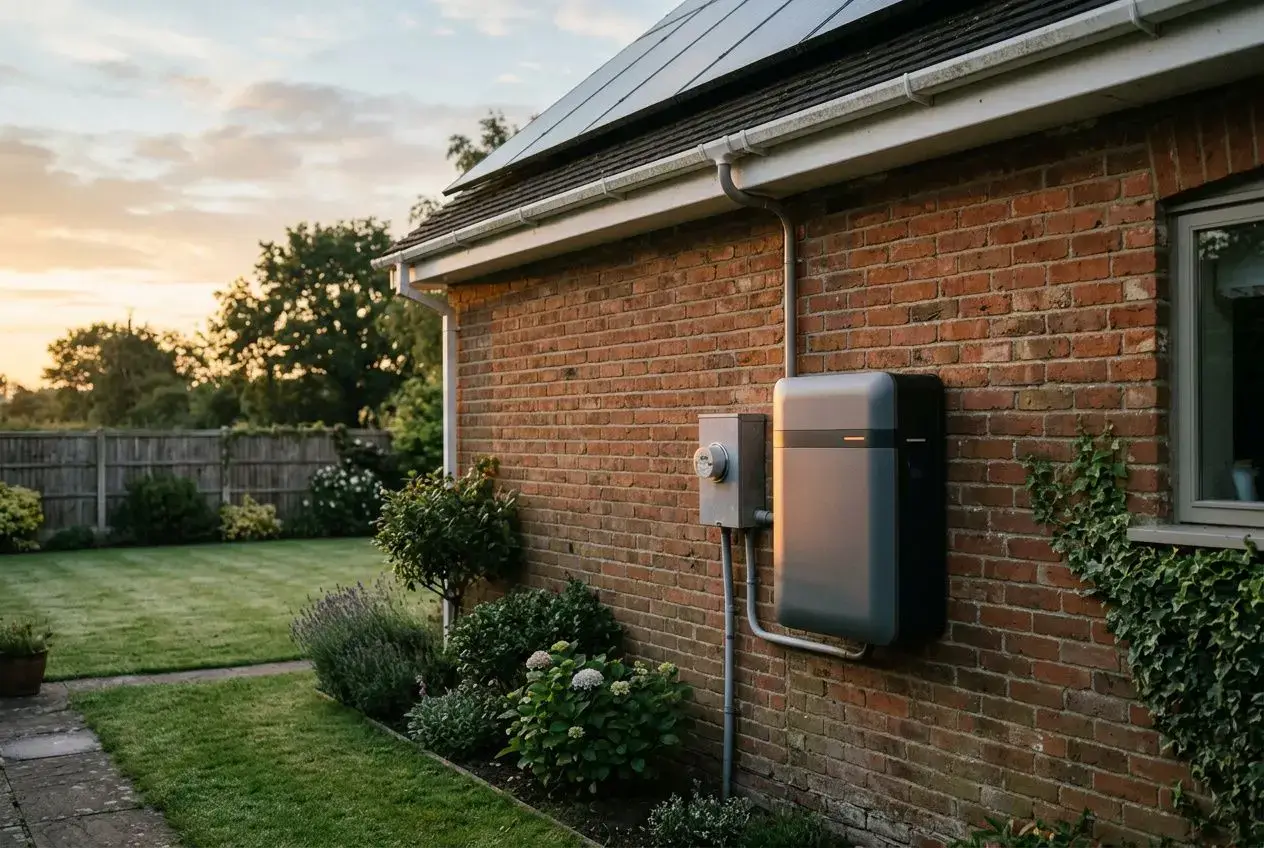
Commercial solar panels in Ontario do not get damaged easily. A correctly engineered array handles rain, snow and seasonal temperature swings without trouble. The real risks come from large hail, heavy snow loads, freeze-thaw moisture, installation errors and careless cleaning. Each of those risks can be controlled by design and maintenance, which gives you clear criteria to judge a system before or after you buy it.
Are commercial solar panels fragile in Ontario?
No. Ordinary rain, snow and temperature changes should not normally harm a system that was correctly specified, engineered and installed. That said, a durable panel is only one part of the picture. Roofs, racking, wiring and inverters face their own stresses, and these components decide how well the whole system holds up over decades of Ontario weather.

What durability means for the panels
Solar modules have no moving parts, so they need relatively little routine attention. Module qualification gives you a reference point. CSA C61215-1:2025 adopts IEC 61215-1:2021 with Canadian deviations, while the IEC 61730 series covers module safety. Passing these tests confirms a sound design, but it does not guarantee a set lifetime.
Lifespan and warranty are separate questions. The City of Toronto uses about 0.5% annual average degradation as a planning figure. It describes 25-year performance guarantees as common and says useful service life can exceed 30–40 years. For solar panels in Ontario, a well-built module can outlast the guarantee attached to it.
What can fail besides the modules
A commercial solar system can develop faults elsewhere while its modules keep producing. Hidden damage is possible too: after an impact, a module may still generate electricity with cracked cells inside. Intact-looking glass and steady output therefore do not prove the equipment is defect-free.
- Roof penetrations: attachment points through the roof can let water in if poorly sealed.
- Mounting hardware: clamps, rails and fasteners can loosen, bend or carry too much stress.
- Wiring and connectors: cables and DC connections can degrade, overheat or develop faults.
- Inverters: the equipment that converts DC to AC power can fail independently of the panels.
How likely is any of this? Risk depends on storm severity, module design, roof geometry, site exposure, installation quality and maintenance history. No single Ontario-wide damage rate has been established. That makes the quality of the design and the installer far more telling than any general statistic.
These factors shape every project, from grid-tied rooftops to solar parking structures. Each one deserves attention when you plan commercial solar services for Ontario businesses.
How wind and soiling affect an array
Wind can throw branches and other objects against glass or exposed equipment. Debris that collects beneath solar arrays causes slower harm. It can rub against cables and block roof drainage, so the area under the racking deserves the same attention as the top surface.
Soiling is mainly a matter of lost energy savings. Dust, pollen, bird droppings and industrial residue cut the sunlight reaching the cells. Rain clears some loose dirt, but sticky deposits and buildup along module edges often stay put.
The pattern of the dirt matters. A uniform dust layer lowers output gradually across the array. Concentrated bird droppings or debris shade only part of a module, which can sometimes cause localized performance or thermal problems. Check for patchy buildup during routine visits, since it calls for a closer look than general dust.
Can Ontario hail damage a commercial panel?
Yes, but it takes unusually large or repeated hail. Modules are tested against impacts, and most survive the storms they meet. Knowing what the test proves, and what it does not, helps you judge a module’s real exposure on your site.
What hail testing actually demonstrates
The IEC hail test fires 11 impacts from 25 mm ice balls. Each one travels at 23 m/s, roughly 83 km/h, and acceptance depends on the applicable test requirements. A pass does not make a module hail-proof, because larger stones, repeated strikes, other impact points and mounting support change the outcome. A commercial solar panel’s wattage says nothing about impact strength either. Glass construction, frame dimensions, cell layout, module size and support all shape impact performance.
What an impact can break
Hail damage ranges from obvious to invisible. Some effects show from the ground, while others only appear in test data.
- Front glass: large hail or repeated strikes can break it, and moisture reaching the electrical parts behind it can create shock or ground-fault risks.
- Solar cells: microcracks can isolate portions of cells and lower output while the module keeps operating.
- Frames and mounts: impacts and the loads that come with them can deform frames or stress mounting points.
Microcracks are the hardest case, which is why production data and diagnostic imaging matter after a major storm.
How often does severe damage occur?
Rarely. The US Department of Energy reports that PV modules have survived most hail events they have faced, though very large hail can cause significant damage. A US study of 170 systems, Extreme Weather and PV Performance, found a median annual production loss of about 1% from severe weather. It linked hailstones at least 25 mm across to higher long-term losses, without setting any Ontario failure rate.
Extreme events look different. A 2025 analysis of more than 11,300 PV sites followed a September 2023 storm in Austin, Texas, with exceptionally large hail. About 5.5% of the identified sites were damaged. That single event does not estimate annual risk in Ontario, but it shows why exposure belongs in module selection.
How does Ontario winter affect solar systems?
Winter changes production far more often than it damages equipment. Cold, snow and freeze-thaw cycles each act differently. Telling a seasonal dip apart from a real fault keeps you from worrying about the first and missing the second.
Winter output versus winter damage
Panels keep generating in winter whenever sunlight reaches the solar cells. Natural Resources Canada notes that lower temperatures can improve cell performance. Shorter days and cloud cover still reduce total winter output.
Snow has the sharpest effect. A covered module produces little until enough surface is exposed again. On tilted modules, snow sliding off may let output recover without any manual removal.
- Site factors: location, orientation, tilt and shading set the baseline.
- Snow cover: depth and how long it stays on the modules change production.
- Equipment: module technology and system losses shift results further.
For these reasons, no single winter-output percentage applies to every Ontario commercial solar system. Ask for monthly estimates built on your own site rather than a provincial average.
Snow loads across the roof
Snow rarely settles evenly. It drifts at raised panels, array edges and roof obstructions, creating heavy spots. Excess weight can crack modules, deflect frames, bend rails or overstress attachments. The load travels through modules, clamps, rails, attachments, roof deck and supporting structure, so a panel’s published rating covers only one link in that chain.
Ontario’s 2024 Building Code Compendium addresses this directly for rooftop solar. Article 4.1.6.16 covers snow accumulation for flush, raised and tilted panels. It requires designers to use the more critical of its panel-specific rules or the ordinary-roof rules. Article 4.1.6.14 bars planned snow removal from reducing design loads, so the structure must carry winter weight on its own.
Freeze-thaw and moisture pathways
Water does its damage slowly. When it enters a defective roof joint, it freezes, expands and widens the flaw over repeated cycles. Temperature swings add stress of their own, because modules, aluminium rails, steel fixings and roofing materials expand at different rates. Joints that cannot move with them take the strain.
Moisture inside connectors or cable entries can lead to corrosion, insulation breakdown and electrical faults. Leaks often show first at a roof joint or inside the building, not on the panels. Include penetrations and drainage points in every roof inspection.
How does design protect systems from Ontario weather?
Many weather risks are settled by decisions made before installation. Roof condition, structural capacity, mounting choice and wiring details determine how a system copes with hail, snow and water for decades.

Assessing the roof before design
New Dawn Energy Solutions recommends an in-person roof assessment before pricing any commercial solar installation. A qualified engineer then confirms the structure can carry modules, racking, installation equipment, snow and wind.
- Roof age: the City of Toronto advises a roofer’s condition assessment when a roof is more than 10 years old.
- Load screening: Toronto gives about 2–4 lb/ft² as a typical solar roof load, and ballasted systems may impose more.
- Structural calculation: that screening figure never replaces an engineer’s site-specific calculation.
- Replacement timing: a roof due for replacement should be redone alongside the solar work.
Timing matters because a later reroof may mean removing the panels and reconnecting the system. The same roof checks appear in our guide to comparing commercial solar installers, since each installer should perform them.
Mounting and wiring against weather
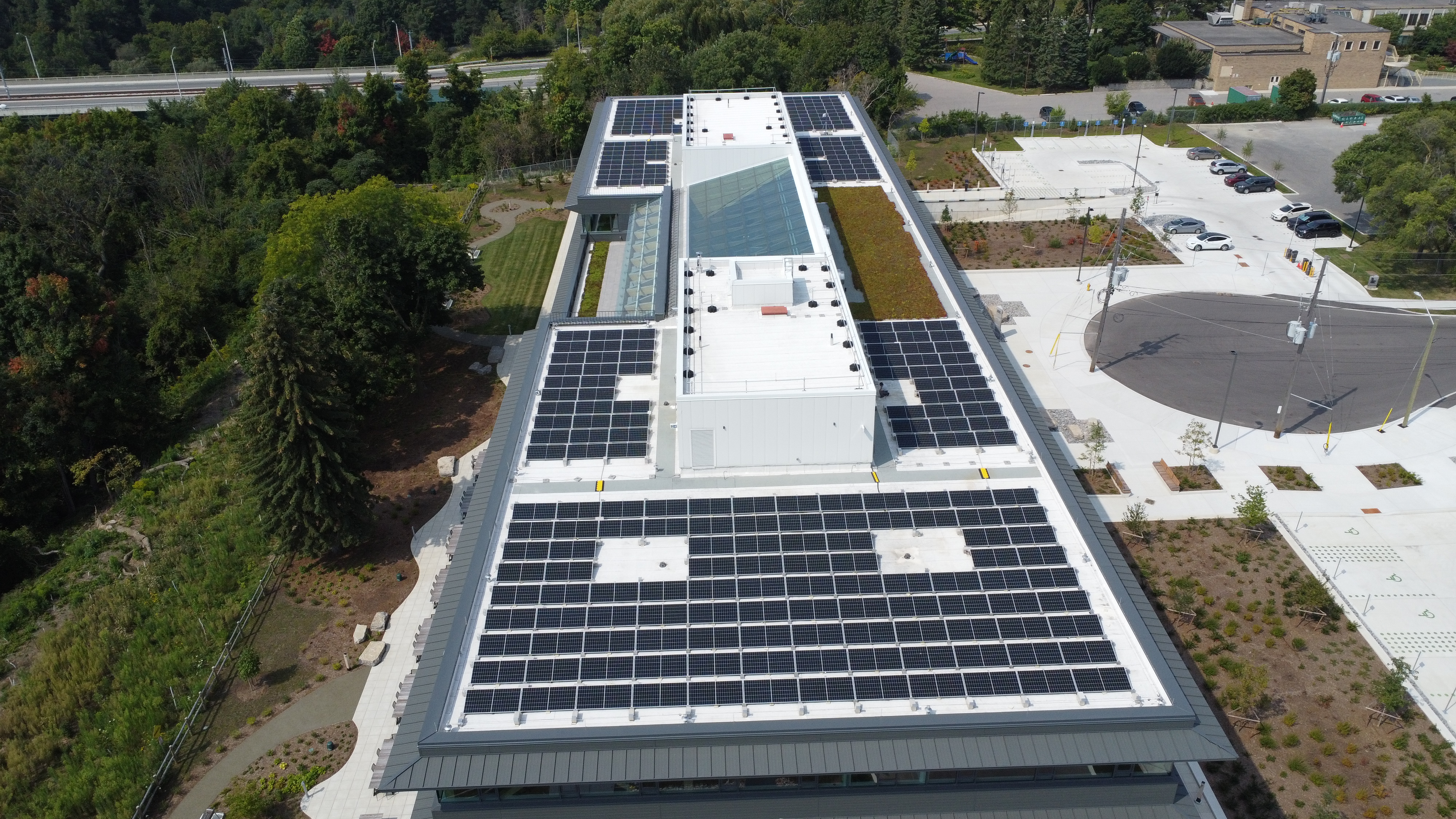
The mounting method must keep the roof watertight and protect its membrane. At 60 Mobile Drive in Toronto, we selected non-penetrating supports to preserve the roof beneath the array.
- Penetrating mounts: need watertight flashing and attachments that engage the designed supporting structure.
- Non-penetrating mounts: avoid roof holes but bring different loading considerations.
- Clamps and fasteners: permitted clamp locations and specified torque prevent concentrated stress, loosening and component damage.
- Cables and connectors: insulation needs protection from abrasion and water, with sealed entries and compatible DC connectors.
Connector choice deserves particular care. Visually similar DC connectors from different manufacturers should not be mixed without express approval, because a poor contact can overheat or arc. During our installations, modules are secured to the racking with hardware tightened to specification.
What should an installer document?
Ask your installer for structural calculations, approved clamp positions, attachment and flashing details, and electrical drawings. Ontario’s 2024 Building Code took effect on 1 January 2025, subject to transition provisions. Its Article 4.1.7.13 addresses wind loading for roof-mounted panels, so the records should show which edition applies to your permit.
Approvals run in parallel. Ontario electrical work generally requires an Electrical Safety Authority notification before work starts, while a municipal building permit and the distributor’s connection approval are separate. Our commercial solar installation process runs from assessment and tailored design through mounting, wiring, testing and authorized grid connection, followed by monitoring and long-term maintenance.
How can maintenance catch or prevent damage?
Good maintenance finds hidden faults early and avoids creating new ones. It rests on three habits: watching production data, inspecting after severe weather and cleaning only when the evidence supports it.
Monitoring changes in output
Monitoring is only as useful as its reference point. Commissioning records set that baseline, and later data shows how far the system has drifted from it.
- Baseline generation: the production recorded at commissioning.
- Inverter status and alarms: the starting condition of the conversion equipment.
- String- or module-level data: finer detail, where the system provides it.
- Weather-matched comparison: current output against historical and expected production under similar conditions.
A drop in output does not automatically mean dirty panels. Shading, inverter faults, wiring damage, module defects, monitoring errors and downtime can each explain it. Find the cause before you send anyone onto the roof.
Inspecting after storms
The City of Toronto describes regular remote monitoring and annual site visits as parts of a service approach. An annual professional visit is a sensible starting point, not an inspection interval set by Ontario code.
After significant hail, a structured record speeds diagnosis. Each method below reveals a different kind of damage.
- Storm record: date, reliably measured hail size, alarms and production changes.
- Visual inspection: finds broken glass and obvious defects.
- Electroluminescence and infrared imaging: reveal hidden cell cracks and abnormal heating.
- Electrical tests: investigate insulation, grounding and suspected faults.
Safety comes first. Damaged solar arrays can remain electrically hazardous in daylight even when the inverter is not exporting. Keep people away from broken glass, wet equipment and exposed conductors, and let qualified personnel decide on shutdown and re-energisation.
Cleaning without creating damage
Clean only when the data justifies it. Review monitoring, inspect the array and confirm that soiling explains the underperformance. Then clean and verify output afterward. Rainfall and a module tilt of at least 15° may reduce cleaning needs, though no universal schedule exists.
Method matters as much as timing. Walking on modules, scraping dry dirt or using abrasive tools can crack or scratch the surface, so rinse first and use manufacturer-approved soft tools. Pressure-washing seals or connectors, harsh chemicals and water far colder or hotter than the glass can also harm modules. Snow removal likewise needs a safe method, never chipping ice or walking on panels.
Frequently Asked Questions
What should you check in a commercial module’s specifications for hail resistance?
Look at the submittal for the actual hail-test diameter, impact speed, impact count and results, rather than a generic hail-resistant label. Where your site warrants it, the US Department of Energy recommends considering enhanced hail testing, stronger module frames and rear support bars.
What warning signs of damage should you look for after severe winter weather?
Watch for bent rails, displaced clamps, roof deformation, leaks and unusual snow accumulation. Compare what you find with commissioning records or baseline images where available, and document it for warranty or insurance review.
Will a warranty cover damage to a commercial solar system?
It depends on the coverage. Product, performance, workmanship, inverter, roof and insurance policies address different failures and may carry different exclusions. Any claim rests on its terms and evidence, and improper cleaning, unauthorised modification or unmet maintenance requirements may affect coverage.