Understanding what causes solar panels to lose efficiency over time helps you protect your investment, preserve energy savings, and make sound decisions about your system. This article examines the environmental, physical, and maintenance-related factors that reduce solar output, along with practical responses for each.
Environmental factors affecting solar panel efficiency
Solar panels operate outdoors in demanding conditions year-round. Temperature swings, UV exposure, precipitation, and atmospheric pollutants place cumulative pressure on panel materials, electrical connections, and protective coatings.
Heat and temperature losses
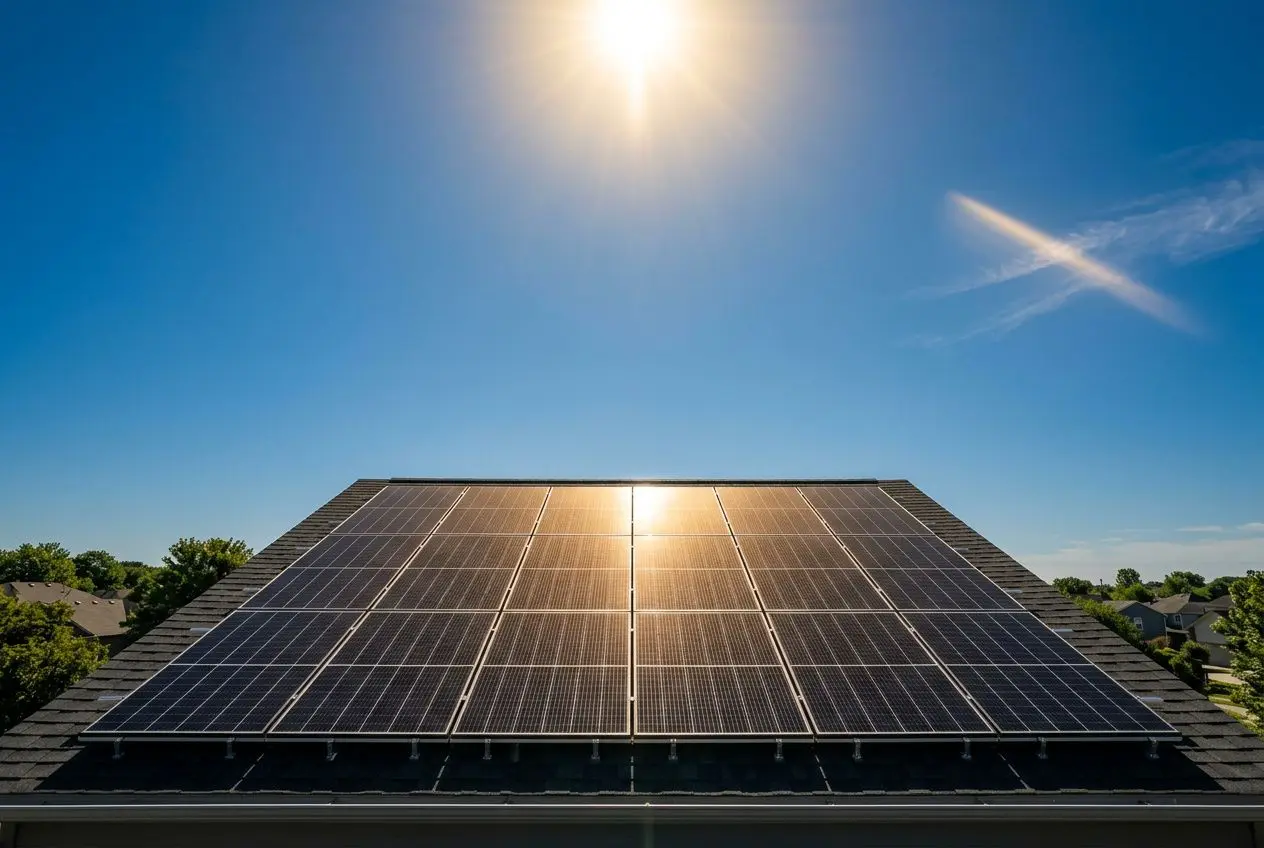
Heat is one of the most important factors affecting solar panel efficiency because its effect is immediate and measurable. Most crystalline-silicon panels have a temperature coefficient between -0.3% and -0.5% per °C above 25°C, so output decreases as the module warms. Panels installed on dark roofs with limited rear ventilation can operate much hotter than the surrounding air, especially during peak summer hours in Ontario.
- Temperature coefficient For every 1°C rise above 25°C, a standard crystalline-silicon panel loses approximately 0.3% to 0.5% of its rated power output. Electricity generation therefore falls during the hottest, sunniest periods.
- Roof surface and ventilation Dark roofing materials absorb heat and transfer it to the array. Insufficient clearance beneath the modules restricts convective cooling and increases operating temperatures.
- Thermal cycling stress Expansion during summer heat and contraction during winter cold place mechanical stress on solder joints and cell interconnections. Over time, these cycles can initiate microcracks that become more serious with repeated seasonal movement.
- Humidity and moisture ingress Prolonged humidity, especially under damp-heat or humidity-freeze conditions, can separate insulating materials and weaken junction-box adhesion. This accelerates electrical degradation inside the module.
A detailed review of the environmental factors affecting solar photovoltaic output identifies heat, dust, atmospheric pollutants, terrain, and long-term climate shifts as dominant influences on generation losses. This context helps Canadian system owners set realistic production expectations across the seasons.
Natural degradation over time
Solar panels gradually lose a small portion of their rated capacity each year as UV exposure, weathering, and material wear accumulate. Research from the National Renewable Energy Laboratory on monocrystalline modules produced after 2000 found an average degradation rate of about 0.4% annually, notably below the 1% figure used in many warranty calculations. High-quality panels may still deliver roughly 90% of their original output after 20 years, while many continue operating near 80% capacity after 25 years.
Do solar panels lose efficiency with heat? Yes, but the temperature coefficient describes a temporary output drop, while long-term damage from repeated thermal cycles causes a separate, permanent capacity loss. Four main factors contribute to long-term degradation: light-induced degradation (LID), UV-induced changes, potential-induced degradation (PID), and thermal stress. Their effects vary with panel quality and climate exposure.
Weather and atmospheric exposure
Canadian winters create freeze-thaw cycles that repeatedly stress panel frames, seals, and mounting hardware. Hail, ice accumulation, and high winds add dynamic mechanical loads that can flex modules. Well-designed mounting systems reduce the risk, while lower-quality frames remain more vulnerable.
UV exposure can cause discoloration of the backsheet, the protective layer on the rear of the panel. This weakens its insulating performance and may indicate deeper material breakdown that requires professional inspection.
Atmospheric aerosols, fog, wildfire smoke, and air pollution can reduce available solar irradiance on a given day. Acidic urban pollutants may also corrode exposed metal surfaces and panel edges, contributing to frame deterioration. Pairing a well-maintained solar system with those incentives can improve long-term returns for Canadian homeowners investing in clean energy; see how Ottawa’s expanded retrofit program should kickstart energy affordability for households investing in clean energy.
Common solar panel problems that reduce output
Beyond gradual degradation, specific physical and environmental issues can cause sharp, unexpected drops in production.
Soiling, snow and shade
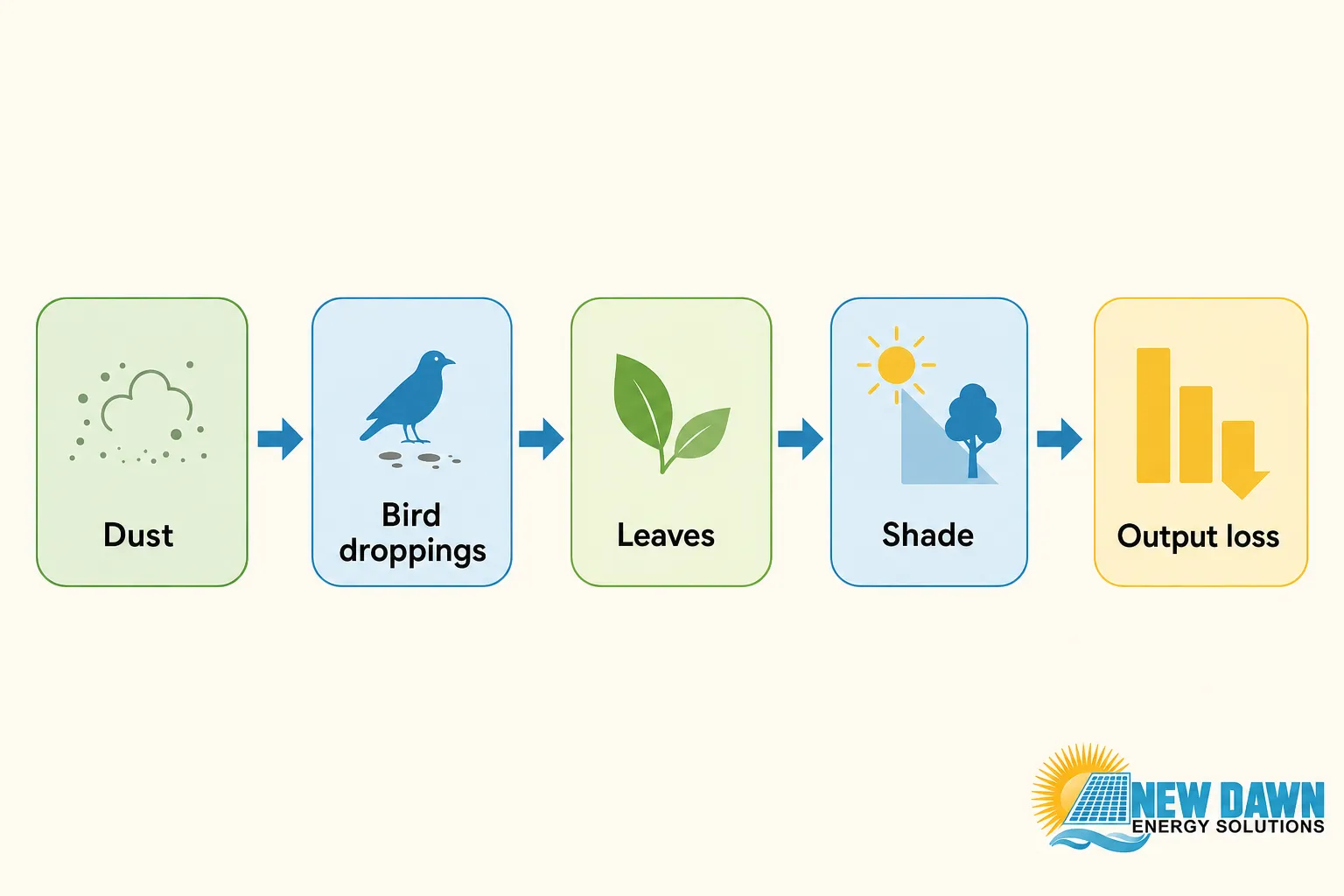
Soiling ranks among the most common problems affecting solar panels and is one of the easiest to correct. Dirty panels can produce up to 20% less electricity than clean modules. Bird droppings, pollen, tree sap, and grime block sunlight from reaching the photovoltaic cells, while air pollution and fog reduce available irradiance. Acid rain can also degrade the panel surface over successive seasons.
- Dust and dirt accumulation A layer of dust can substantially reduce output. Research indicates losses of up to 25% in high-particulate environments, making regular cleaning a direct investment in energy savings.
- Bird and organic debris Bird droppings concentrate soiling in dense, opaque spots. They can also create localized hotspots that accelerate cell degradation beneath the affected area.
- Partial shading Even 10% shading on a single panel can reduce system output by up to 50% on installations without power optimizers.
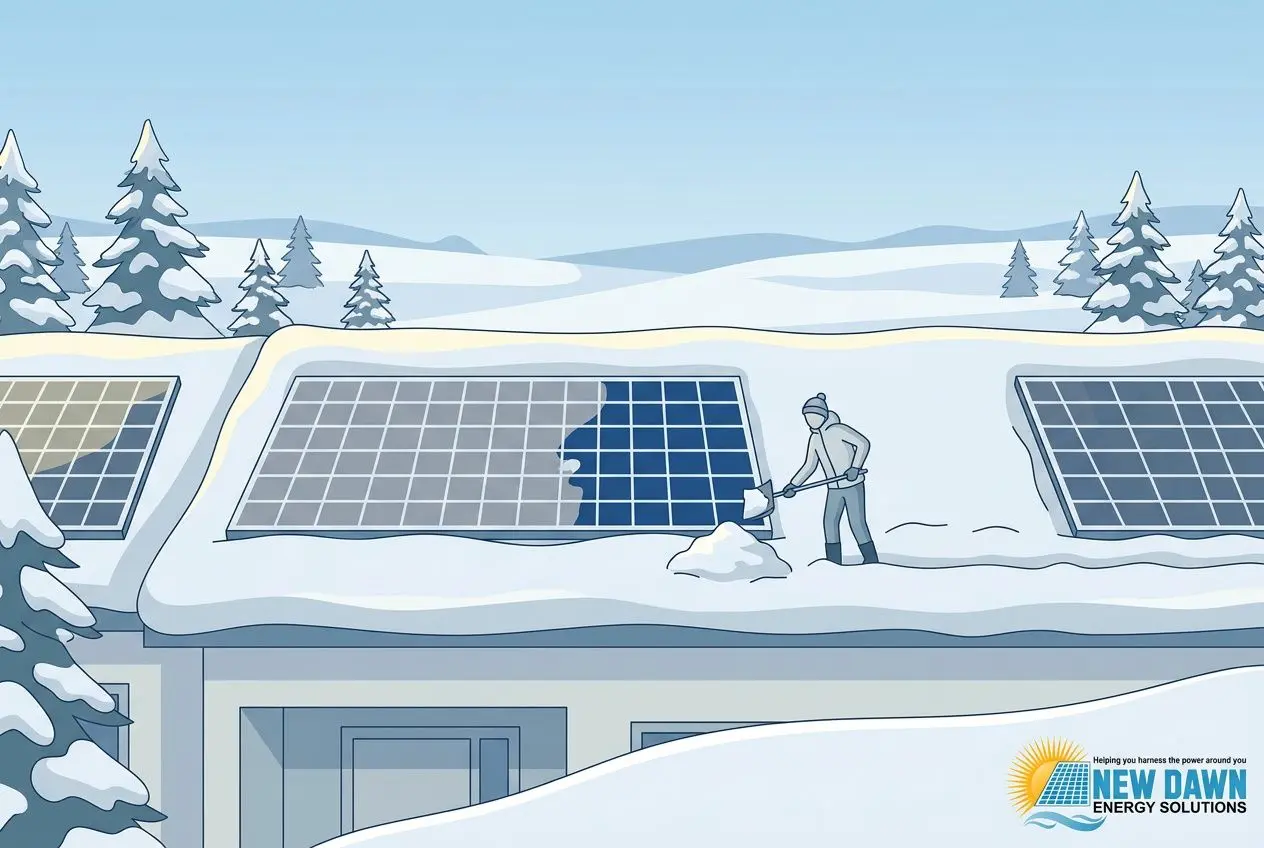
- Snow accumulation From December through February, snow build-up can temporarily halt electricity generation. Although cleared snow may reflect additional light onto adjacent panels, obstruction remains the dominant effect during Ontario winters.
New shading sources can be difficult to detect. Growing tree branches or leaf debris may create production shortfalls lasting several weeks without triggering an inverter error code. Reviewing performance data alongside the array’s physical surroundings helps identify these losses early. For Markham-area guidance, the solar panel service frequency guide outlines recommended inspection and cleaning intervals for local conditions.
Cracks, hotspots and weather damage
When asking what are the five most common problems with solar systems, microcracks, hotspots, moisture ingress, pest intrusion, and weather damage consistently appear in field reports and technical studies. Microcracks can form in the silicon of solar cells when thermal cycling, hail, or poor installation handling creates stress fractures. Cells with approximately 20% cracking produced only 2.051 W, compared with 2.571 W for intact cells in controlled testing. At 58% crack area, output fell to 0.9708 W, showing how one damaged cell can reduce panel productivity.
- Hotspot formation Cracks covering between 11% and 34% of a cell area can create zones of localized overheating. These hotspots accelerate surrounding cell degradation and introduce a potential fire risk requiring prompt professional assessment.
- Moisture and frame corrosion Damaged seals allow water to enter the module laminate. Corrosion at frame edges or terminals, along with displaced mounting hardware, signals physical degradation and justifies immediate inspection by a licensed technician.
- Pest intrusion Squirrels chewing wiring beneath exposed arrays, or birds nesting under mounted modules, can cause electrical and structural damage that a ground-level inspection may not reveal.
Microcracks, handling scratches, and improperly torqued connections can worsen as thermal cycling and wind loading stress already weakened components. A qualified, experienced installer provides the strongest protection against these avoidable faults during a turnkey installation, supporting reliable long-term performance.
Wiring and component faults
Electrical losses can occur after the panel produces power. Undersized or excessively long cables create resistive voltage drop between the array and inverter, reducing the energy that reaches your home or the grid. Inverter efficiency typically ranges from 95% to 98%. Poorly sized wiring and loose connections increase those losses, which is why professional commissioning and periodic electrical inspection matter.
Inverters can also degrade and fail. String and central inverters commonly carry warranties of 10 to 15 years, so one or more replacements may be required during a typical 25- to 40-year panel lifespan. Recurring error codes, warning lights, or monitoring alerts that the system cannot clear are reliable signs that a licensed technician should assess the inverter and associated wiring. Prompt repairs protect the system payback period and support grid resilience through dependable generation.
Protecting long-term solar energy production
Preventing avoidable losses requires consistent oversight rather than intensive hands-on intervention. Routine data reviews, periodic visual checks, and professional maintenance at suitable intervals help preserve system performance for decades without disrupting daily life or inflating operating costs.
How to increase solar panel efficiency
Cleaning panels every 12 to 18 months removes accumulated dust and soiling that can decrease output by up to 20%. Properties near industrial areas, busy roads, or the coast may need more frequent service. Reviewing the optimal solar panel orientation for your roof also helps the array capture more useful irradiance, because the optimal solar panel orientation now involves more than maximizing midday sunlight. It should also reflect time-of-use utility rates and net metering rules, which influence actual financial returns. Trimming overhanging branches reduces unnecessary shading, while checking that mounting hardware remains secure limits the mechanical stress that can promote microcracks over time.
Monitoring performance changes
When homeowners notice an unexpected efficiency drop, a structured monitoring routine provides more reliable answers than anecdotal comparisons. Panel-level monitoring can identify an individual module that is underperforming and distinguish soiling from a broader electrical fault. That precision shortens diagnostic time and can reduce unnecessary service costs. The solar monitoring guide explains how to interpret production data, establish baselines, and recognize meaningful deviations from seasonal norms.
- Year-over-year comparison Comparing daily output in your monitoring platform with the same calendar period in the previous year reveals meaningful production losses that daily weather variation might otherwise hide.
- Sustained dry-weather drops A production decrease during dry, low-rainfall periods, without new shading changes, usually points to soiling, a developing panel fault, or an electrical issue rather than normal weather variation.
- Inverter alerts New or recurring inverter error codes and monitoring warnings that do not clear themselves require assessment by a licensed technician. Ignoring them can allow minor faults to become larger output reductions.
If production remains stable and the inspection finds no visible damage, corrosion, debris, or animal activity, an emergency service call is unnecessary. When the data and physical condition agree, you have strong evidence that the system is operating as expected.
Lifespan, warranties and system losses
Solar panels continue generating electricity well past their 25-year performance warranty. Many panels operate for 30 to 40 years, although their capacity gradually declines. Most performance warranties guarantee 90% of rated output for the first ten years and 80% for the remaining 15 to 20 years. Solar batteries commonly carry warranties of 10 to 12 years, with some manufacturers offering 15-year coverage. String and central inverters typically require replacement after 10 to 15 years, so that planned cost belongs in any long-term financial analysis. Solar panels over time degrade predictably when maintained, making proactive management the most dependable way to protect system value throughout its operating life.
Installation choices also shape lifetime output in ways maintenance cannot fully correct. Roof orientation, nearby obstacles, net metering arrangements, and time-of-use rates determine whether maximizing midday generation or shifting production toward higher-value evening periods delivers the stronger financial result.
| Component | Typical warranty / lifespan | Key degradation driver |
| Solar panels | 25-year performance warranty; 30–40 years operational | UV exposure, thermal cycling, microcracks |
| String / central inverter | 10–15 years | Component wear, heat accumulation |
| Microinverter | 25 years | Thermal stress, moisture ingress |
| Solar battery | 10–15 years | Charge cycles, temperature extremes |
| Wiring and connections | Lifespan of system (with inspection) | Corrosion, resistive losses, pest damage |
Frequently asked questions
Do solar panels stop working after 25 years?
No. Solar panels after 25 years still produce electricity. Most performance warranties guarantee at least 80% of the original rated capacity at the end of a 25-year term. With proper maintenance, many panels continue operating for 30 to 40 years. The warranty expiry changes the manufacturer’s coverage; it does not end the panel’s useful life. Inverters and batteries usually need replacement during that period, so a long-term system plan in Canada should include those upgrades and their effect on the system payback period.
What is light-induced degradation, and does it permanently damage panels?
Light-induced degradation (LID) is an initial decline in efficiency that occurs during the first hours or days after a solar panel receives sunlight. It can reduce output by 1% to 3% before stabilizing. It is a normal part of early operation, not a defect, and does not permanently damage the module. After stabilization, the panel follows its regular long-term degradation rate of approximately 0.4% to 0.8% per year; LID does not continue to compound throughout the system’s operating life. Use that predictable decline to price replacement inverters and batteries before you sign a long-term contract.
How does shading affect solar panel output, and can optimizers help?
Shading can have a disproportionate effect on output. Even 10% shading on one panel can reduce total system energy production by up to 50% in an installation without power optimizers. Panels connected in series share current, so one underperforming module can limit the entire string. Power optimizers or microinverters allow each panel to operate independently, restricting the impact of partial shading to the affected module. On roofs with chimneys, dormers, or nearby trees, panel-level optimization protects long-term production.