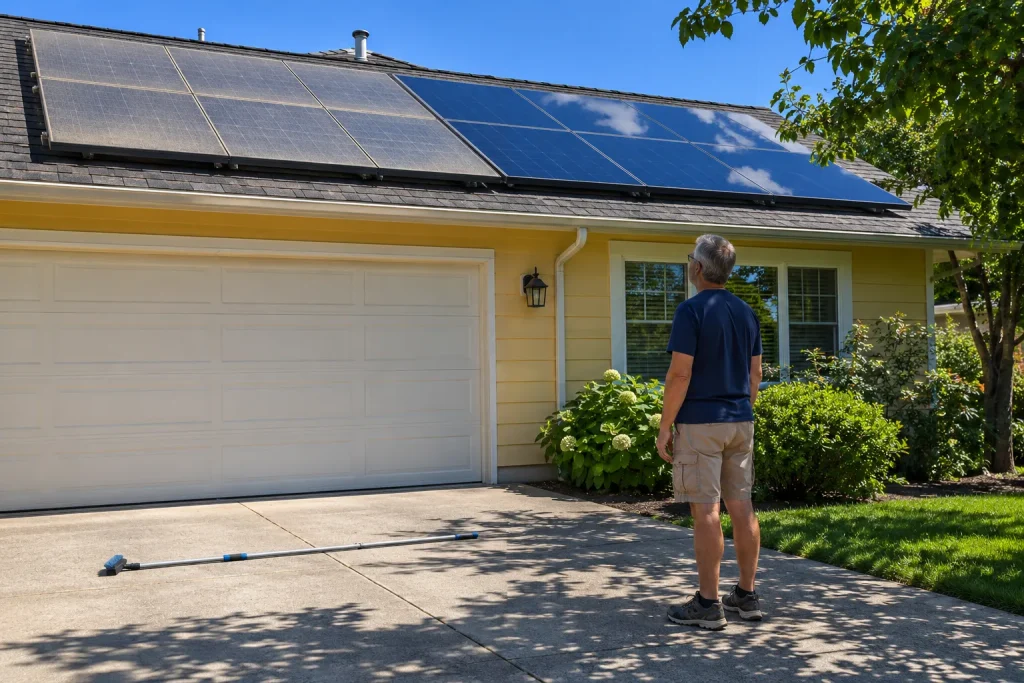
You can clean solar panels on a roof without a ladder when every soiled module is visible and within reach from firm ground. The safe approach uses three things: a gentle hose rinse, a soft brush on a pole if the module manual allows one, and clear limits that tell you when the job belongs to a qualified crew.
Should you clean rooftop panels from the ground?
Not every array needs washing, and not every array can be reached safely from the yard. Before you clean, check two things: whether the panels are dirty enough to matter, and whether you can work safely from where you stand.
Check whether cleaning is needed
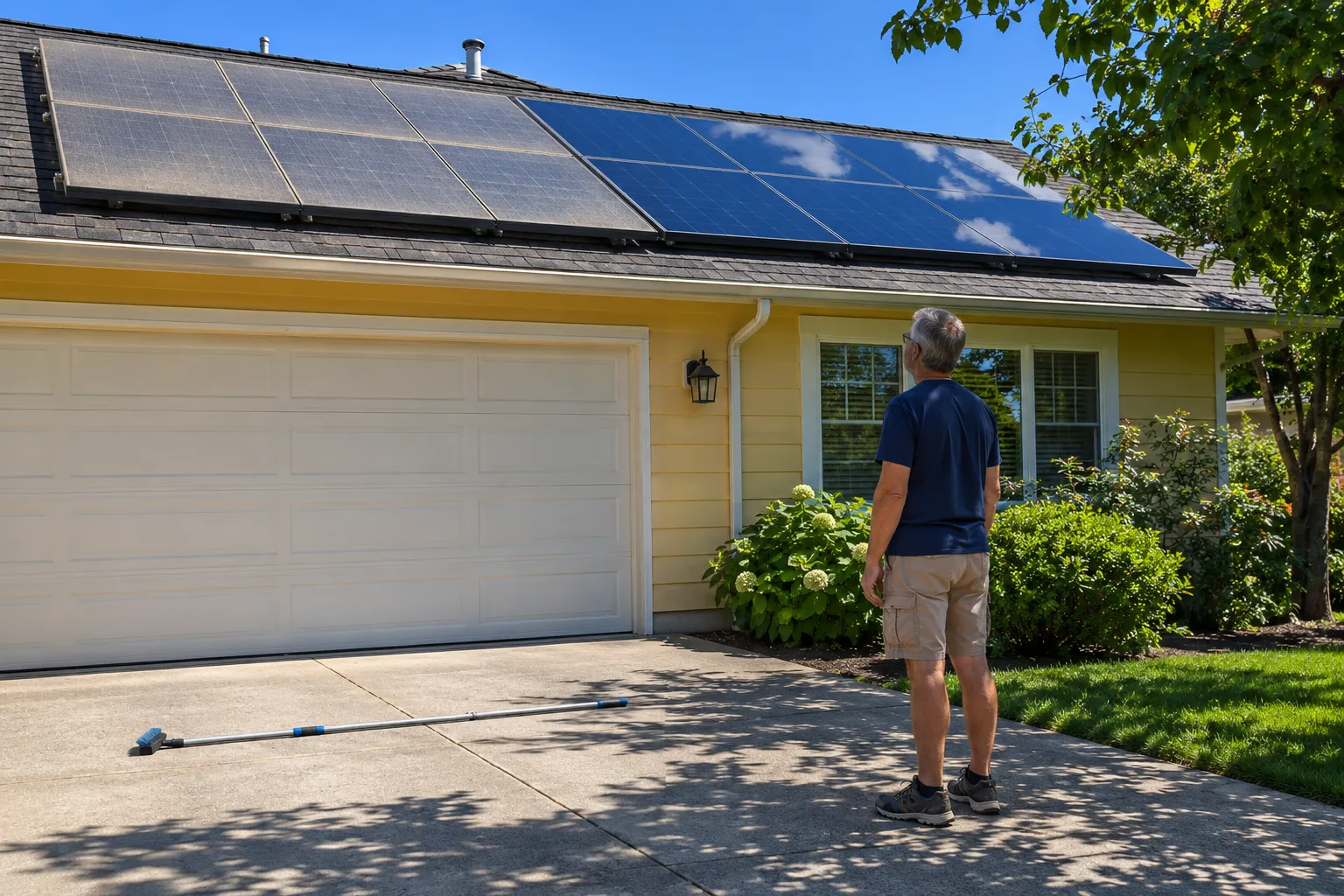
Dirty solar panels can produce less power. Dust, bird droppings, leaves and grime can block sunlight before it reaches the cells, which lowers energy output. When dirt covers only part of a module, its cells produce unevenly and can develop localized hot spots, which are small areas that run hotter than the rest of the panel.
- Panel tilt: Rain often washes loose dust off tilted modules. For the modules covered by its manual, Canadian Solar says panels tilted at least 15° may generally not need washing.
- Persistent deposits: Pollen residue and droppings can stay on the glass after rain.
- Production trend: We recommend checking your monitoring data every month and comparing a sustained decline with the same period last year, after allowing for weather and shade.
- Limits of the data: Monitoring shows that output has changed. It cannot tell you why.
No fixed rule supports regular cleaning on a set calendar. An NRCan-commissioned review dated 31 March 2010 found output 18% higher after one worst-case string was cleaned. That result does not predict the gain for your home, and it does not support a universal 20% trigger for cleaning. Our guide to solar and battery monitoring explains how to read those production trends.
Judge reach from a safe standing position
Clean solar panels from the ground only if you can see and reach the soiled faces from firm, non-slip footing. That means no ladder, no roof access, no leaning over a railing and no overstretching. At New Dawn Energy Solutions, we recommend that you inspect your solar panels from the ground every six months to spot debris and visible damage.
To estimate your real reach, measure the height from the ground to the eaves, then the distance from the eaves to the farthest edge of the array. Then add the safe distance you need to keep from the wall. Check the whole path the tool will travel for obstructions. A pole never reaches as far as its advertised length, because you hold it at an angle and must keep it under control.
Check electrical and falling-object hazards
Overhead lines are a serious hazard of ground cleaning. Ontario’s Electrical Safety Authority says people, tools and equipment must stay at least 3 metres from overhead powerlines, including lines hidden by trees. Have another adult watch that clearance while you use a long pole.
If a powerline is down or hanging low, stay 10 metres away. For a downed line, the Electrical Safety Authority says to call 9-1-1 and the local distribution company. Put the pole away if wind makes it hard to control or if you are unsure of the clearance. Keep everyone out of the area where water, debris or snow can fall. Working from the ground removes the risk of a fall from the roof edge, but your safety still depends on these checks.
Choose a safe ground-cleaning setup
Your equipment decides how much control you keep. The module manual decides what the glass will tolerate. Choose a pole, brush, water and cleaner that meet both requirements before you rinse.
Select a controllable pole and brush
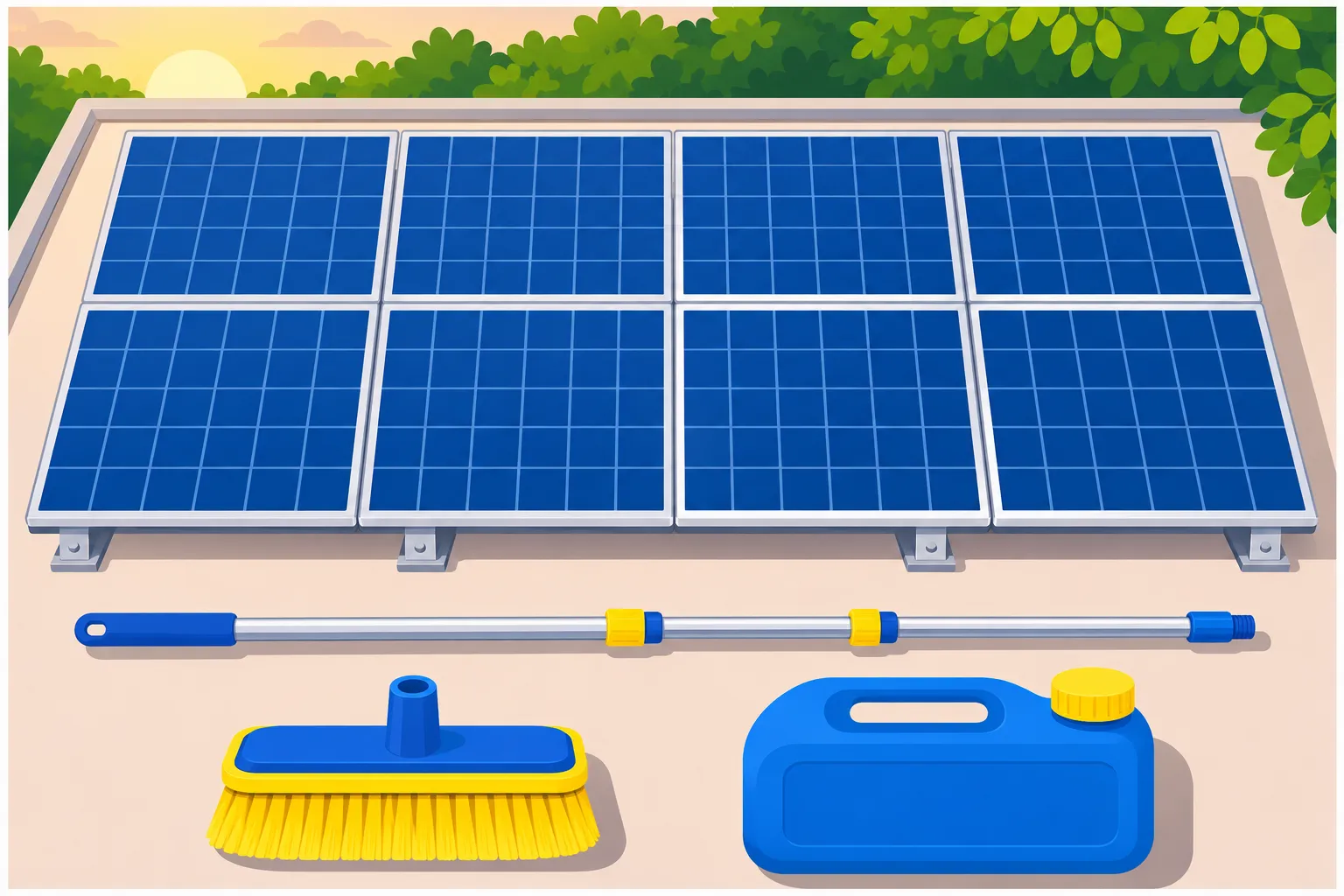
If your exact module manual permits brushing, a controllable extension pole can carry a clean soft brush or a non-abrasive pad. For the modules covered by its manual, Canadian Solar requires cleaning tools that are non-conductive and non-abrasive. Keep grit out of the brush head and touch the wet panel surface lightly. Pressing with the weight of a long pole or concentrating force on one spot can cause cell micro-cracks.
A generic kit for cleaning solar panels does not replace the instructions written for your modules. The current instructions from your module manufacturer and the panel warranty take precedence over the kit, and improper cleaning can void that coverage.
Use gentle water flow
A garden hose with a nozzle gives you a gentle rinse from ground level, and the City of Toronto advises this approach for reachable panels. Use ordinary low-pressure flow, not a pressure washer. For its specified modules, Canadian Solar recommends low-mineral clean water with a near-neutral pH of 6–8.
Hard tap water can leave spots on the glass. In that case, a final rinse with low-mineral or deionized water can reduce residue. Canadian Solar sets a maximum pressure of 4 MPa (40 bar) for its specified modules. That figure is a ceiling for those modules only and does not recommend a pressure washer. Keep the spray away from module backs, junction boxes and connectors.
Check cleaners against the module manual
Do not assume that dish detergent, vinegar, glass cleaner, WD-40 or a cleaning solution labelled for solar panels is approved. Use an agent only when the instructions for your installed modules expressly allow it. Natural Resources Canada’s older general guidance mentions mild soap. Module-specific restrictions still come first, and Canadian Solar warns against unauthorized chemicals, solvents, degreasers and abrasive cleaners.
We advise against corrosive cleaners and dry scraping because both can damage the glass or its coatings. If the manual does not authorize a cleaner, wash with water only so you do not use an unapproved product. Our Ontario guide to solar panel maintenance explains how gentle methods protect the glass over the life of the system.
Cleaning solar panels from the ground step by step
The order of the steps matters. Inspect first, then rinse, then brush only if the manual allows it. Finish by checking that the system is running normally.
Inspect, prepare and set up
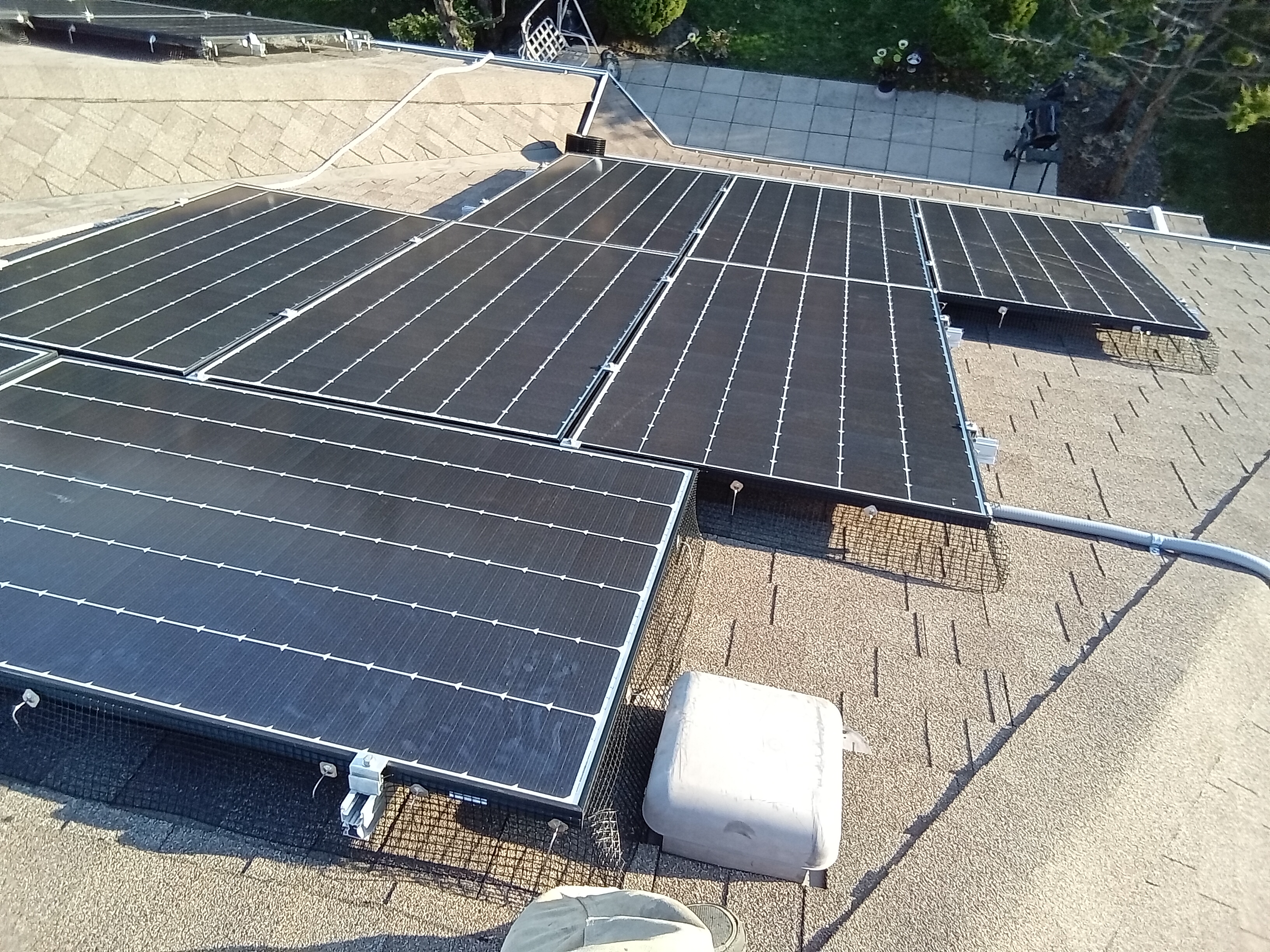
Inspect and photograph the buildup from the ground, and stop if you see damage or cannot assess part of the array. Identify your exact module model, then follow its manual and your installer’s handover instructions, including any shutdown through user controls you can reach. Panels in sunlight and their cables stay energized even after the disconnects are switched off. Pick a calm, dry period above freezing when the glass is cool, and never spray cold water on hot glass. Do not work over ice or during a thunderstorm. Environment and Climate Change Canada advises waiting 30 minutes after the last thunder before going back outside. Route the hose and the runoff away from electrical components, then test the water and the pole at a short extension before you reach toward the array.
Rinse, soften and brush
Start with a gentle rinse to move loose debris, dust and grit off the glass. This keeps grit from scratching the glass once a brush or cloth touches it.
Wet stuck-on droppings, pollen and grime and let them soften. Do not scrape them or rub dry dirt across the glass.
If the manual allows brushing, pass a clean soft brush lightly over the softened spots without pressing on frames or seals. Rinse thoroughly afterward, because loosened dirt or an approved cleaner left on the glass can leave streaks.
Drain and check operation
You can let a water-only rinse drain on its own. Use a soft squeegee only if the module instructions allow it and you can reach the panels safely. A few streaks are better than an unsafe reach.
Restore operation only as your system instructions direct, then check the inverter or monitoring app. Record the date, the weather and the work you did. If output stays abnormal, book a diagnosis instead of scrubbing harder.
When to call an Ontario solar professional
Some panels cannot be reached from the ground, and some problems should not be washed at all. In these cases, a qualified crew protects both you and the equipment.
Recognize jobs that need a professional
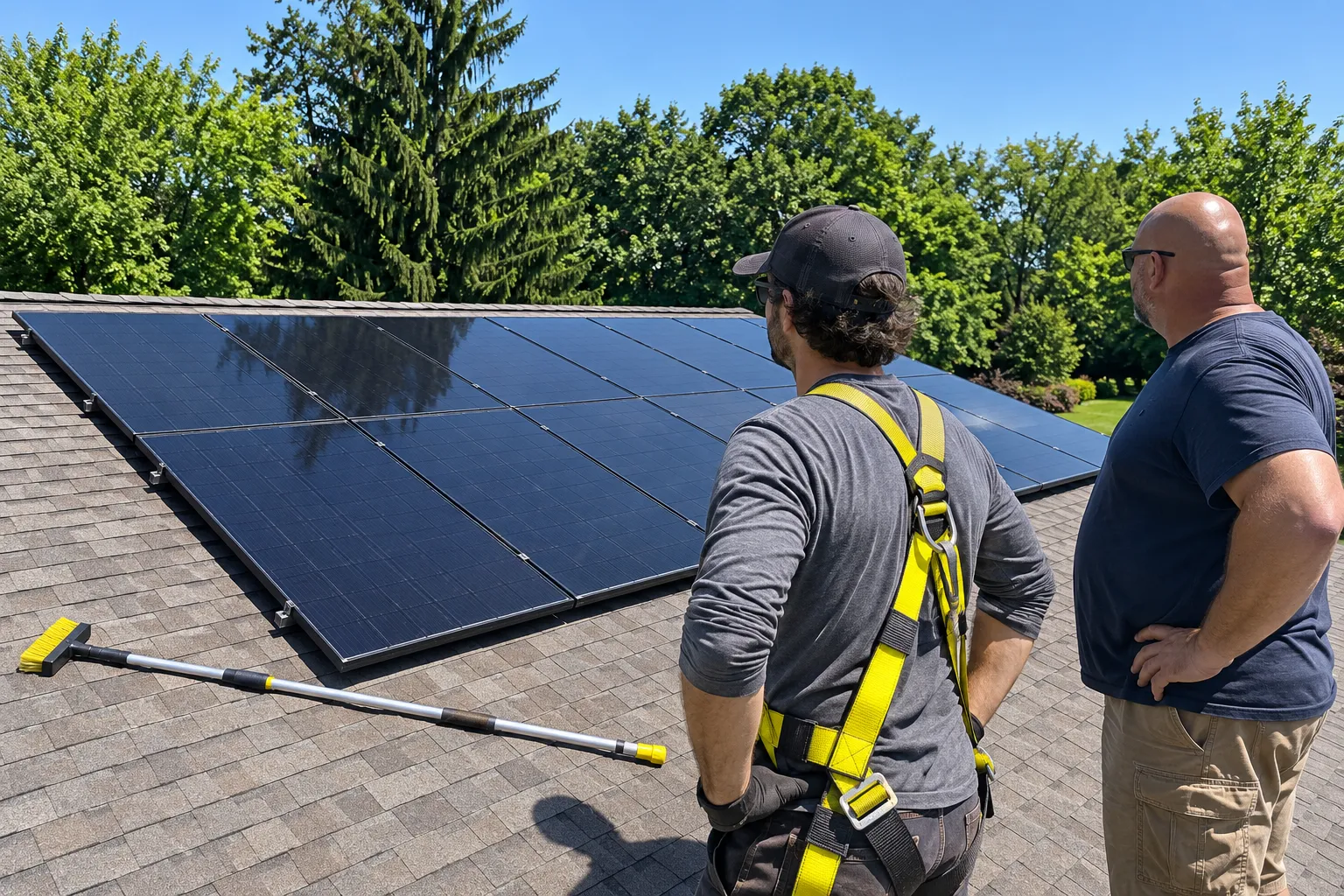
Call your installer or a solar-experienced provider when part of the array is out of safe reach from the ground, when powerline clearance is doubtful, or when a sloped roof requires work at height. Never lean out from a ladder with a pole. Book an assessment instead of cleaning if you see any of these signs:
- Glass and burn damage: Cracked glass or burn marks. Wetting a damaged module increases the risk of shock.
- Wiring: Cables that are exposed or hanging loose.
- Mounting and roof: Displaced mounting hardware, corrosion or a roof leak.
- Monitoring: A persistent fault you cannot explain.
Shading, wiring faults or damaged modules can all reduce production.
Understand the service visit
Before you book professional cleaning, ask the provider how they will access the roof and manage fall protection. Also ask how they will follow your module manual, how they treat the water and what they will do about any issue the inspection finds.
Cleaning and electrical repair require different qualifications. In Ontario, electrical work for hire must be done by an electrical contractor licensed by the Electrical Safety Authority. A solar panel cleaning provider is not licensed to repair wiring just because they clean panels.
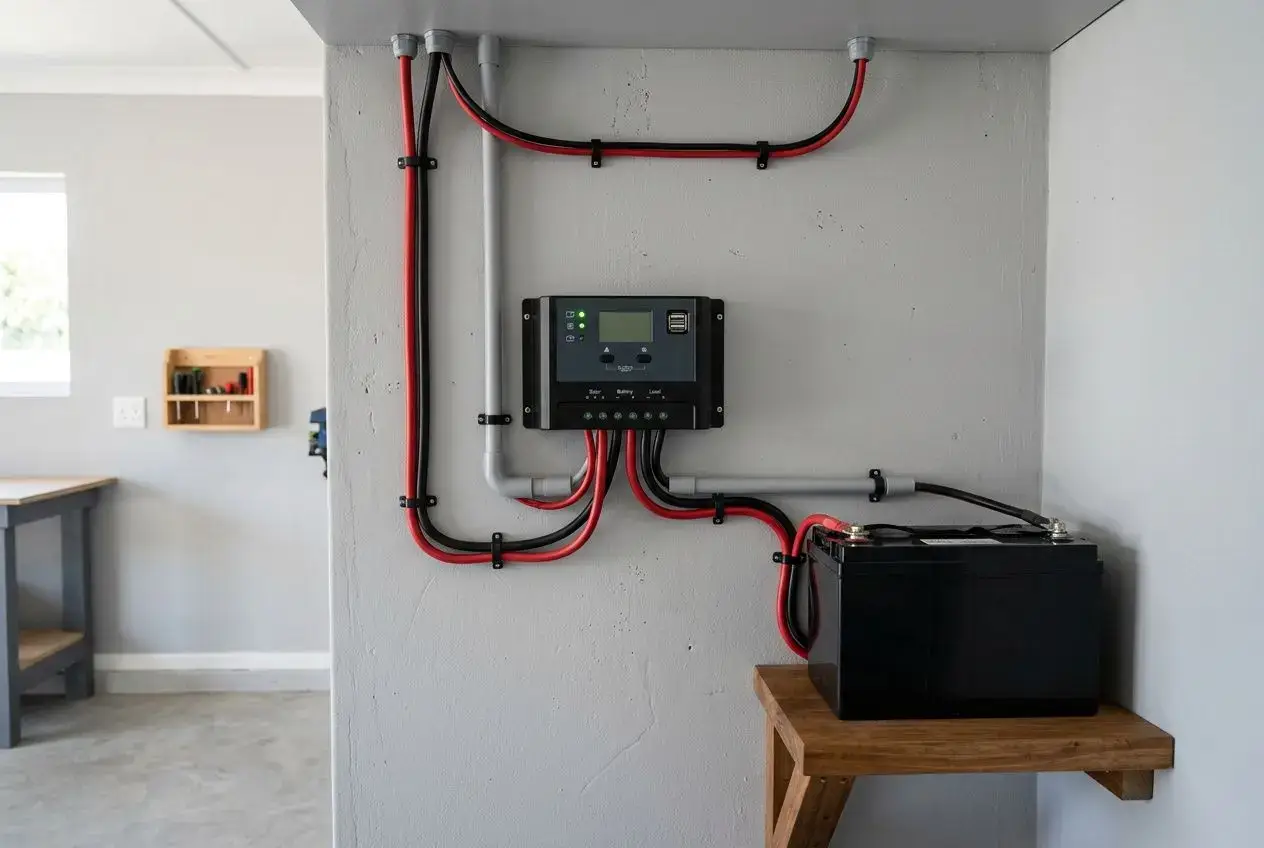
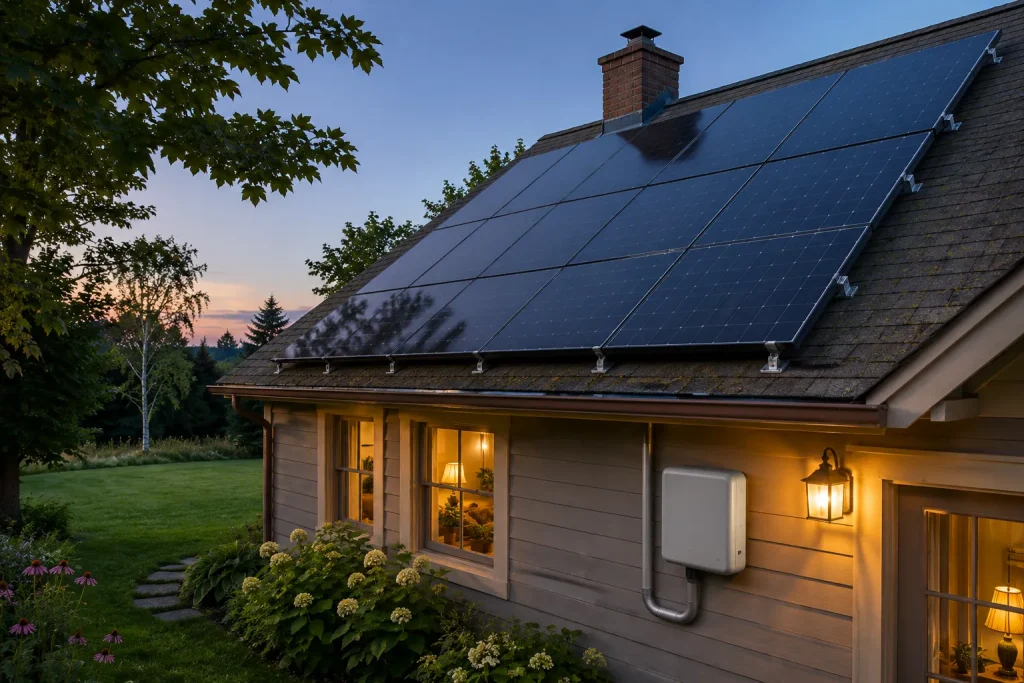
New Dawn Energy Solutions includes online monitoring with every solar or solar-plus-storage installation we complete, and we offer long-term maintenance. On systems with optimizers or microinverters, data for each panel can help pinpoint a module that is underperforming.
Check scope, charges and records
The scope and time of a professional job depend on panel count, roof height and pitch, the number of separate arrays, the type of soiling, access and water supply. No reliable fixed time per panel exists for an Ontario residential job. According to the Canada Revenue Agency, taxable cleaning equipment or services in Ontario carry 13% HST.
Keep maintenance records and review the warranty terms for your installed panels. Natural Resources Canada recommends a schedule adapted to your solar panel system and location. We advise logging every inspection, cleaning, monitoring alert and technician visit, and our solar panel service frequency guide for Markham sets out a matching schedule.
Washing the surface of an intact array is not an electrical alteration. Electrical Safety Authority Bulletin 64-5-5, issued October 2026, requires notification only when panels are removed and reinstalled. According to the WSIB, a resident who hires someone for home repairs or renovations is exempt from its clearance requirement. You should still ask the provider about their coverage and liability insurance.
Frequently Asked Questions
Can a steam cleaner be used on rooftop solar panels?
No. One module maker’s cleaning guide explicitly prohibits steam cleaners and permits compressed-water cleaning only up to a maximum of 4 MPa (40 bar). We also advise against pressure washers, because a concentrated jet can damage the modules.
Is a rotating brush safe for cleaning solar panels from the ground?
Not without the manufacturer’s approval. For the modules covered by its manual, Canadian Solar says to consult its technical service team before using a rotating brush. It also warns against unauthorized chemicals, solvents, degreasers and abrasive cleaners.
Do solar panels on a flat roof stay dirtier than those on a pitched roof?
They often can. Panels on a pitched roof generally shed rainwater better, while standing water and debris are more likely to stay on a flat roof. A flush-mounted pitched-roof array and a ballasted flat-roof array are also built differently. The City of Toronto lists roof obstructions and module-level electronics as further points to consider.