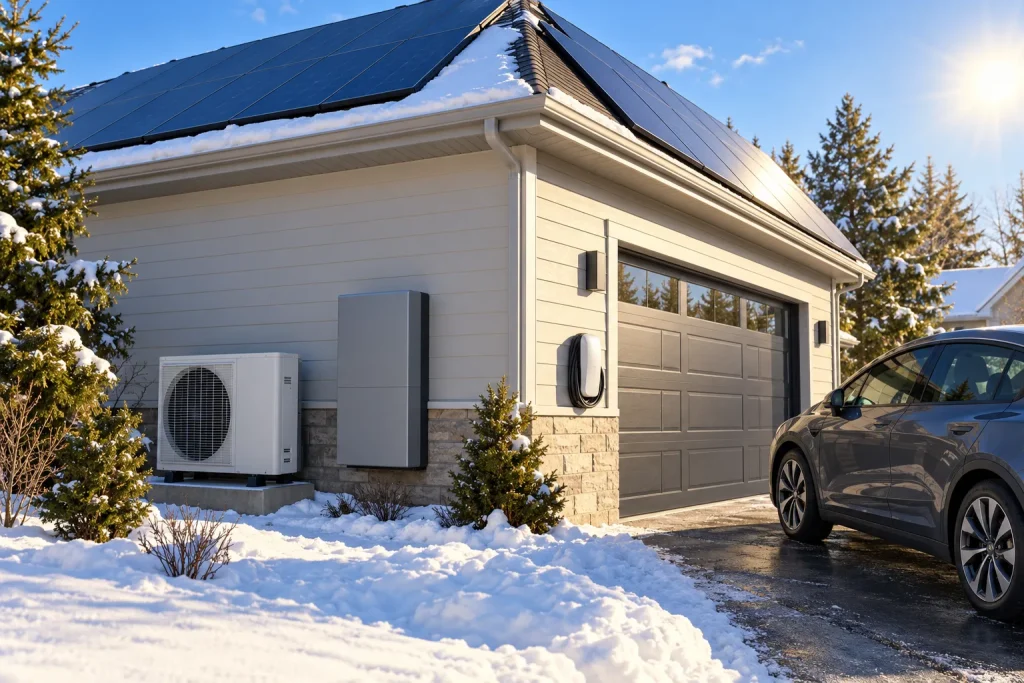
Whether solar panels work better in summer or winter is one of the most common questions Canadian homeowners ask before investing in a photovoltaic system. The answer depends on whether you are comparing monthly production, operating efficiency, or annual energy yield. This guide explains how each season affects solar panel output, what cold weather does to efficiency, and what you can realistically expect from a Canadian installation year-round.
Do solar panels work better in summer or winter?
Summer delivers more total solar energy in Canada. Longer daylight hours, a higher sun angle, and stronger irradiance combine to produce substantially more electricity each month than winter conditions allow. However, winter weather does not make solar panels ineffective, and the full picture is more nuanced than naming one season the winner.
Summer delivers more total electricity
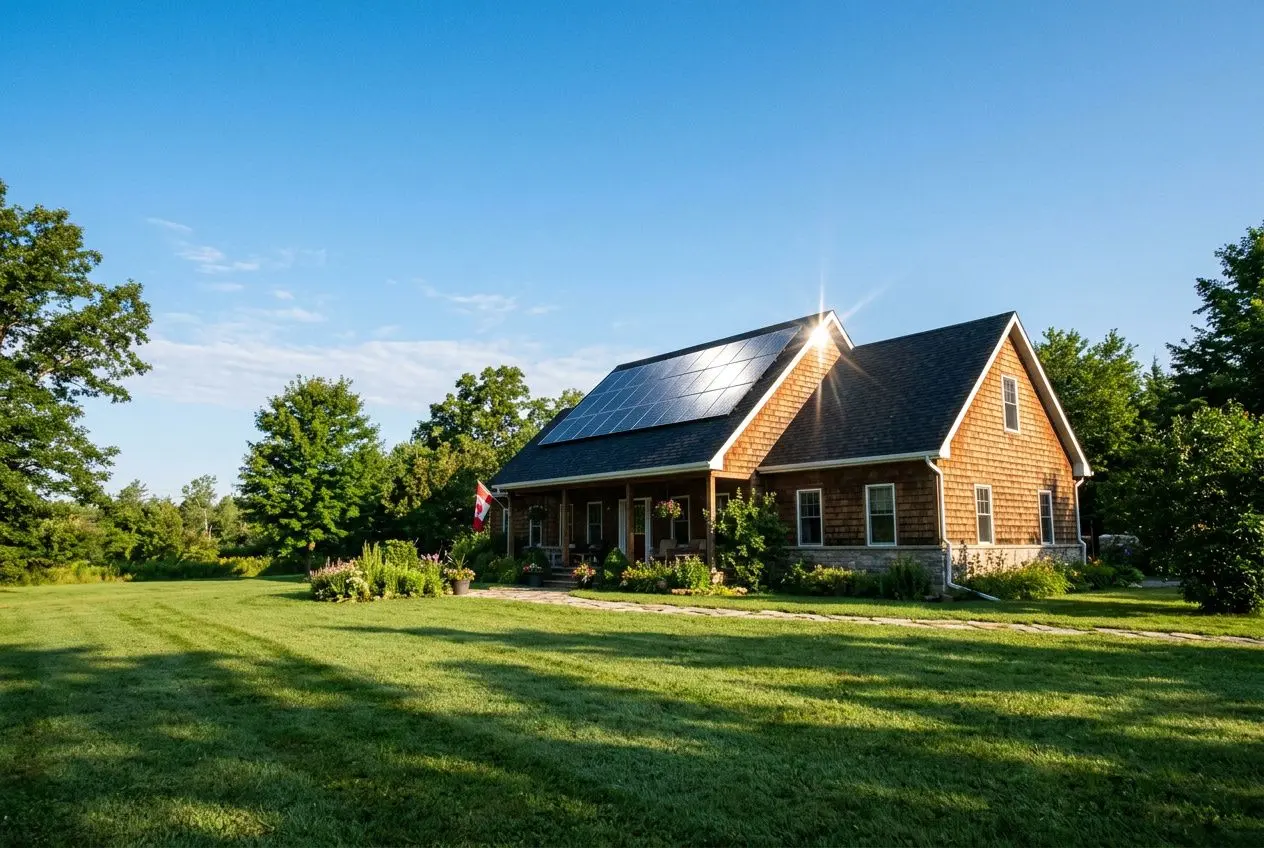
Canadian midsummer can bring more than 16 hours of daylight, pushing solar panel output to its annual peak. A typical 8 kW Alberta residential system generates 35% to 40% of its entire annual production during May, June, and July alone. When the question is whether solar panels work better in summer or winter based on total kilowatt-hours, summer is the clear answer because longer daylight hours create a much larger generation window.
Why winter solar output is lower
For homeowners across Canada, the seasonal difference comes from three factors working together. Understanding them helps explain why installers size arrays using full-year averages instead of relying on peak-month performance.
- Shorter daylight hours. At the winter solstice, daylight can fall to just over 7 hours, less than half of a long summer day. That sharply reduces the time available for generation.
- Lower sun angle. The sun’s angle above the horizon drops significantly in winter, reducing the intensity of light reaching each module and lowering effective irradiance per square metre.
- Increased cloud cover. Most Canadian regions experience more overcast days between November and February.
- Seasonal production gap. Winter output typically falls to 20%–30% of summer levels. For an Alberta system, December and January together contribute only 3%–5% of annual generation.
February and March recover gradually, contributing roughly 8%–10% of annual production, while October and November account for about 8%–12%. This seasonal pattern matters during the clean energy transition because it helps you set realistic expectations and determine whether battery storage or grid backup is appropriate.
Canada’s seasonal production pattern
A south-facing 5 kWp system shows the contrast clearly. It produces roughly 600–700 kWh in June but only about 90–130 kWh in December. The difference reflects shorter days, a lower sun angle, and winter weather rather than a defect in photovoltaic technology.
Solar panels work better when they receive strong sunlight and remain relatively cool, so cold temperatures themselves do not reduce panel efficiency. Snow coverage, cloud, shading, and limited daylight hours are the main winter constraints. Proper tilt angle and a clear array can help winter solar production, while summer production still provides the largest share of annual energy.
Net metering programs available in Ontario and other provinces help manage this seasonal imbalance. Surplus summer production flows back to the grid and creates credits that offset winter electricity bills. That arrangement keeps the system payback period predictable, even when winter output reaches its seasonal low.
Why solar panels are efficient in winter
Cold temperatures do not stop solar panels in winter from operating. In fact, they can improve panel-level efficiency. To understand how solar panels work in winter, separate per-watt conversion efficiency from the total energy delivered over a day.
Cold weather improves panel efficiency
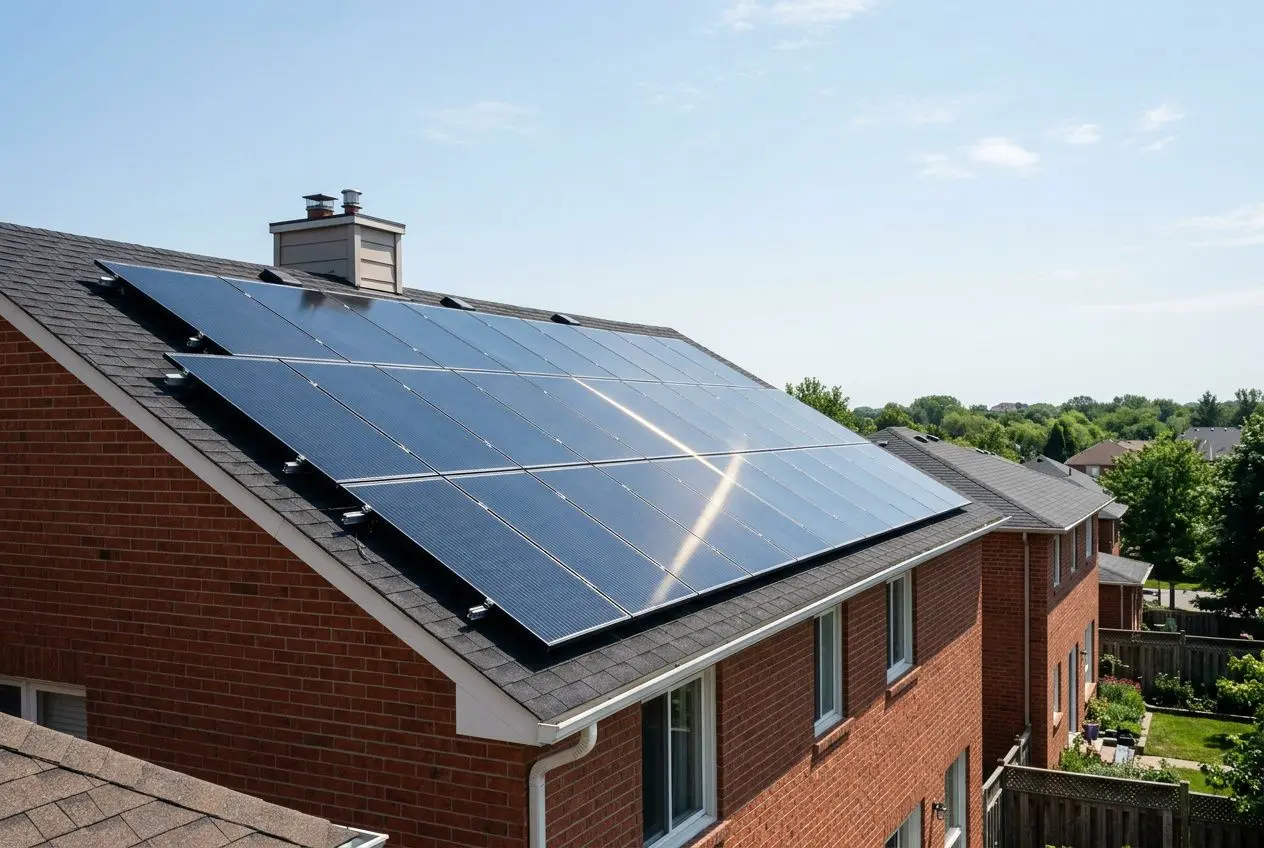
Solar panels generate electricity from sunlight, not heat. Crystalline silicon modules are rated at 25°C. Below that temperature, electrical resistance drops, electrons move through the circuit more freely, and voltage increases. A 400 W panel rated at 25°C can produce approximately 410–415 W on a clear −5°C winter morning in Calgary, exceeding its nameplate rating.
Every degree Celsius above 25°C reduces output by roughly 0.3%–0.4%; every degree below 25°C provides an equivalent gain. However, solar panels produce less energy in winter overall because fewer daylight hours limit total generation, regardless of how effectively each photon is converted while sunlight is available.
Premium modules from manufacturers such as LONGi list temperature coefficients between −0.30% and −0.34% per °C, retaining more output in both heat and cold Canadian winters.
Solar in winter still means less energy
Solar panel efficiency at the cell level and total energy harvested during a day are different measurements. Ontario homeowners often notice this distinction after their first winter with a system. Whether solar panels work better in summer or winter in Ontario depends on local cloud patterns and roof orientation, but monthly production is still higher in the warmer months because summer provides more available sunlight.
Ontario’s shorter winter days and frequent cloud cover cause monthly generation to fall substantially, even when individual clear-sky hours are productive. A well-designed, grid-tied system accounts for this seasonal pattern by sizing the array to meet annual targets. Summer surplus can then offset the winter shortfall through net metering credits, improving energy savings and supporting grid resilience.
What the 33% rule means
The “33% rule” sometimes appears in online discussions about solar panel output and seasonal planning, but it is not a standardized solar industry metric. A more useful planning benchmark is that winter production in Canada typically reaches 20%–30% of summer production. The actual figure varies by province, roof pitch, and local weather patterns throughout the season.
For system sizing, professional installers focus on annual generation targets rather than one seasonal rule. A turnkey installation is designed to meet your household’s full-year energy demand, accounting for the predictable low-output months of December and January alongside the high-output period from May through July.
Cloud, snow and solar production in Canada
Cloud cover and snow are two common concerns for Canadian homeowners assessing year-round solar energy potential. Both can reduce output temporarily, but neither stops generation completely. In some conditions, snow can even improve sunlight exposure.
Do solar panels work in cloudy weather?
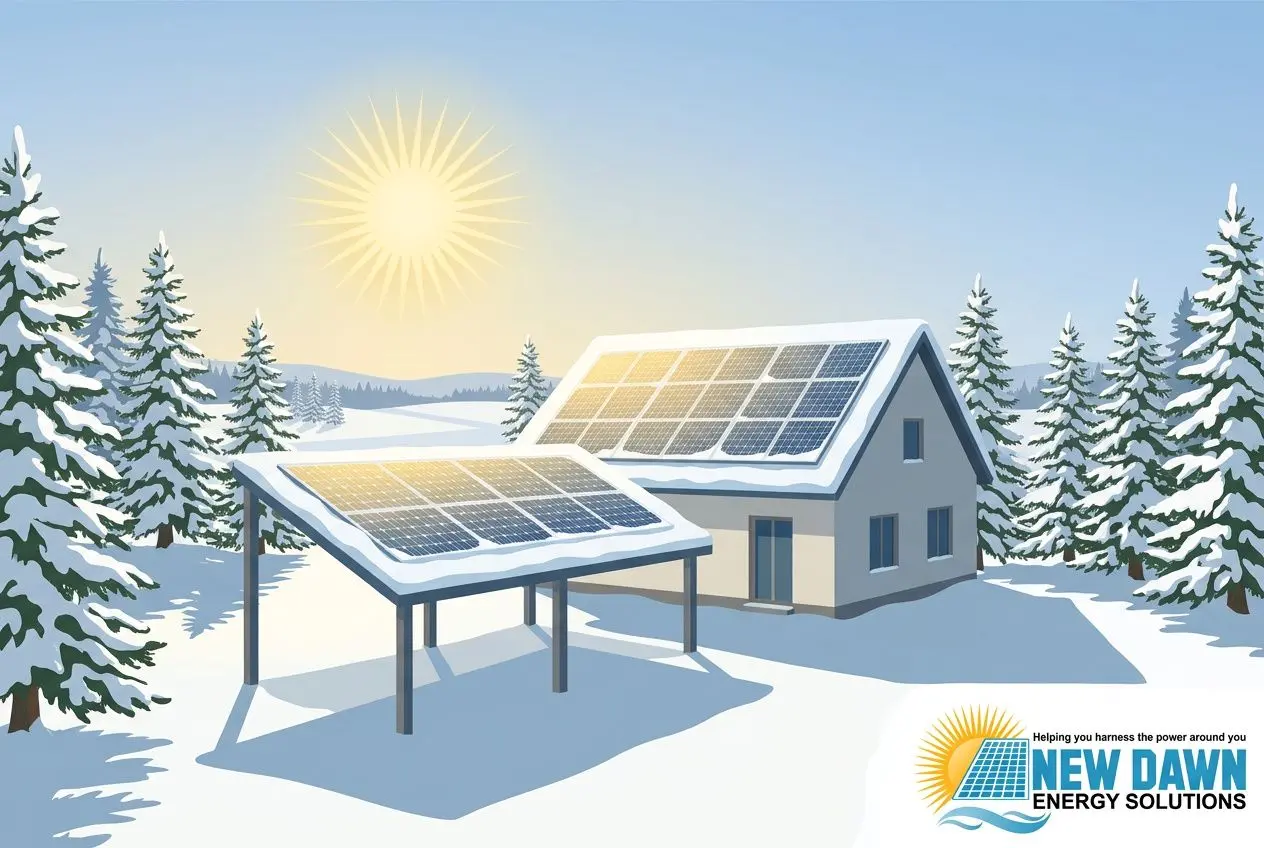
Photovoltaic modules use both direct and diffuse sunlight, so they continue producing power under an overcast sky. Do solar panels work in cloudy weather? Yes, although their efficiency depends on cloud density and the amount of irradiance reaching the surface.
- Light cloud cover: Output typically reaches 40%–60% of clear-sky generation, enough to support daily consumption on partly overcast days.
- Heavy overcast: Production falls to roughly 20%–30% of peak clear-sky levels. The array remains active but supplies a smaller share of household demand.
- Dark storm clouds: Output declines to approximately 10%–15%. These conditions are also short-lived in most Canadian regions.
- Low irradiance periods: Research shows that irradiance below 100 W/m² occurs during 38.4% of the time but contributes only 3.4% of total annual solar energy. Low-light hours therefore have less impact than their frequency suggests.
For homeowners in Ontario and the Prairies, cloudy-day losses are already included in professional yield estimates. A correctly sized grid-tied system uses realistic weather assumptions, so overcast conditions are a known seasonal variable rather than a planning failure. That improves the accuracy of your projected system payback period.
Snow losses and reflected light
Canadian installers and homeowners with experience using solar in winter generally find that snow losses are smaller than expected. A three-year study in Edmonton and Grande Prairie found that panels cleared manually generated only 1%–5% more annually than panels left uncleared.
Fresh snow reflects 80%–90% of incoming sunlight, compared with roughly 20%–30% for green grass. On bright winter days, this albedo effect can increase light exposure and raise generation by up to 30%. Residential solar panels are usually installed at an angle between 20° and 45°.
Safe winter panel care
Solar panels are designed to withstand substantial snow loads. Standard modules can support up to approximately 5.4 kPa (113 psf) of snow load, so structural concerns are rarely justified under the National Building Code of Canada. Never climb onto a snowy or icy roof to clear the array.
For accessible ground-mounted systems, use only a soft brush or foam-padded roof rake. Metal scrapers, plastic shovels, and abrasive tools can scratch the tempered glass and should not be used. In most cases, the panel angle, residual heat, and natural sunlight clear snow without intervention, helping preserve solar panel efficiency through the season.
Frequently asked questions
What time of year are solar panels most efficient in Canada?
Solar panel efficiency at the cell level peaks on cold, clear days in late winter and early spring, particularly in February and March. Temperatures remain below 25°C while sunlight and daylight hours begin to recover. Total energy production, however, reaches its highest point in June and July, when longer days and strong irradiance support greater output. If you measure efficiency per photon, cold sunny days perform best. If you measure total kilowatt-hours delivered to your home, summer production is the annual high point for most Canadian systems.
How does cold weather affect solar panel performance?
To understand how cold weather affects solar panels, start with the temperature coefficient published by each manufacturer. For standard crystalline silicon modules, output increases by roughly 0.3%–0.4% per degree Celsius below the 25°C test standard. A panel rated at 400 W can deliver 410–415 W on a −5°C Calgary morning.
Canadian winters do not prevent strong module-level performance. The primary constraint is the number of available daylight hours, not the temperature itself. In cold, clear weather, solar panels can produce more power during each hour of sunlight.
Is solar energy worth it in Canada given the shorter days in winter?
Yes. The financial case depends on year-round averages rather than winter-month results alone. Net metering allows homeowners in Ontario and Alberta to bank surplus summer production as bill credits, which can offset winter electricity costs. Even in December and January, solar panels generate electricity and reduce grid consumption.
Alberta’s prairies combine strong sunshine totals, cold-weather performance, and a dry climate, making the region well suited to year-round solar energy. A properly sized turnkey installation accounts for seasonal variation and supports a reliable system payback period based on total annual output.