Choosing a local solar company in Pickering means more than finding a five-star rating. Reviews and local evidence, required approvals, proposal quality, costs, savings and long-term support all deserve scrutiny before you go solar with a well-reviewed installer you have actually checked.
How should Pickering homeowners assess installer reviews?
A high star rating is a starting point. It reflects how customers felt about their projects, but it says little about the technical quality behind them. A careful comparison sets online reviews beside proof of local projects, valid licences and insurance coverage.

What ratings can and cannot establish
Online ratings show customer experience. They do not confirm installation quality, grid-connection performance or after-sales service. Look at the pattern behind the average rather than the number alone.
- Volume: A rating built on hundreds of reviews is a broader evidence base than one built on a few dozen.
- Recency: Recent feedback describes the crews and processes the company uses today.
- Recurring complaints: Problems that appear again and again, such as delays or slow service, carry more weight than one isolated grievance.
- Business responses: A clear, factual reply shows how the company handles problems after the sale.
Directory snapshots have shown one regional installer at 4.6/5 from 528 reviews and a Durham Region provider at 4.4/5 from 34 reviews. Both figures change over time. Neither one is an independent audit of workmanship, so treat each as one data point among several.
Evidence of nearby residential work
Check local experience. Ask each installer for two or three recent residential projects in Pickering, Ajax or Whitby, along with permission to speak with those homeowners.
For every project an installer cites, request the neighbourhood, system capacity, equipment models and commissioning date.
We report installing more than 5,000 kW of residential solar. Our customers describe design and permit support, on-schedule installation, battery storage and EV charging. You should still confirm that any installer, including us, has experience that matches your own project.
Licensing, coverage and complaint checks
Paperwork tells you who is legally accountable. Request these documents from every company on your shortlist before you sign.
- Electrical licence: The Electrical Safety Authority (ESA) requires Licensed Electrical Contractor to perform electrical work in Ontario. Verify the licence of the legal entity doing that work, including any subcontractor.
- Liability insurance: Ask for evidence of the liability coverage that applies to the project.
- Worker coverage: Request WSIB clearance or other coverage documentation appropriate to the job.
Ontario’s searchable Consumer Beware List can flag certain unanswered complaints or enforcement actions. It does not hold a complete complaint history, and an allegation is not an independent finding. Read each entry together with the company’s response before drawing conclusions.
Which approvals does a Pickering installation require?
A rooftop solar project in Pickering needs three separate approvals: a municipal building permit, ESA electrical acceptance and authorization from your electricity distributor. Each one covers a different requirement. Knowing which party handles each approval helps you avoid delays before the system goes live.

The municipal building permit
The City of Pickering lists rooftop solar panels among the projects that require a building permit. The City also states that the property owner remains ultimately responsible for building compliance, even when a contractor files the paperwork.
Pickering began applying the 2024 Ontario Building Code on January 1, 2025. After a transition for qualifying older drawings, that code became mandatory for new permit applications on April 1, 2025. Section 4.1.7.13 of the 2024 Compendium covers wind loads on roof-mounted solar panels, so the racking design should address it.
Electrical acceptance and grid authorization
Electrical safety and grid connection follow their own tracks. Local connection limits can affect eligibility to connect to the local distribution network. Eensure securing distributor connection approval before buying or installing a renewable-energy system, .
- ESA notification: Confirm who files the electrical notification with the ESA.
- Certificate of Acceptance: Obtain this ESA document once the electrical work is complete.
- Distributor approval: Ask the distributor about eligibility, available capacity and any limits that apply before equipment is ordered.
Finishing the installation does not authorize export to the grid. Your panels can sit on the roof fully wired and still wait for distributor sign-off before any surplus electricity flows out.
Solar panel installation milestones
We handle permits and installation for our residential projects. Even so, confirm in writing who submits the municipal, ESA and distributor applications before construction starts. A turnkey installation still depends on clear responsibility for each filing.
- Racking and modules: Mounting hardware is fixed to the roof, then the panels are secured to it.
- Inverter and protection: The inverter and protective devices are installed and connected.
- Wiring and labels: Circuits are run and labelled to meet inspection requirements.
- Inspections: Required inspections can reveal deficiencies, which must be corrected before acceptance.
Before activation, the distributor’s metering and connection conditions should be confirmed. This final step links your solar panel installation to the grid on approved terms.
No universal turnaround time applies in Pickering. Approvals, inspections and corrections vary from one project to the next, so treat any fixed promise of completion with caution.
How should a home solar proposal be designed?
A strong proposal starts from your household, not from a standard package. It links your electricity use, roof and electrical service to a design you can check line by line. That level of detail is what separates installers when their ratings look alike.
Household demand and site suitability
Sizing begins with your last 12 months of electricity use. From there, the design should account for planned changes, such as adding an electric vehicle or a heat pump, which raise future demand.
The roof comes next. We assess roof size, angle and sun exposure during our free consultation. A roof in good condition with minimal shading is generally a better candidate, while an older roof may need repairs before panels are mounted.
- Service capacity: Confirms whether the existing electrical service can accept the new system.
- Breaker space: Shows whether the panel has room for the solar connection.
- Inverter rating: Must suit both the array and the home’s electrical service.
- Disconnect arrangements: Defines how the system can be safely isolated.
These electrical checks matter most when future electrification is planned. An electric vehicle charger or heat pump may require an upgrade, and planning for it now avoids rework later.
What the design should show
Rated panel wattage is not the electricity you will receive. A credible design predicts annual generation in kWh and explains how it reached that figure.
- DC and AC capacity: Module capacity (DC) and inverter output (AC) are listed separately.
- Roof-plane layout: Trees, vents, chimneys, orientation and shading assumptions are identified.
- Electrical documents: An inverter specification and a single-line diagram, a simplified drawing of the circuit, are included.
- Loss assumptions: Expected system losses are stated rather than hidden.
Natural Resources Canada’s photovoltaic potential maps give location-specific generation estimates, which still need adjusting for your roof. On a shaded or complex roof, look closely at the shade modelling and inverter configuration behind the forecast.
Matching system options to the home
Our tailored solar design and proposal includes cost and savings estimates. The system type should follow your priorities, whether that means lower bills, outage backup or charging a vehicle.
- Grid-tied solar: Connects to the utility network for everyday production and bill credits.
- Solar with storage or EV charging: Adds a battery or a car charger to the array.
- Off-grid and pool heating: Serves homes without a grid connection or heats pool water.
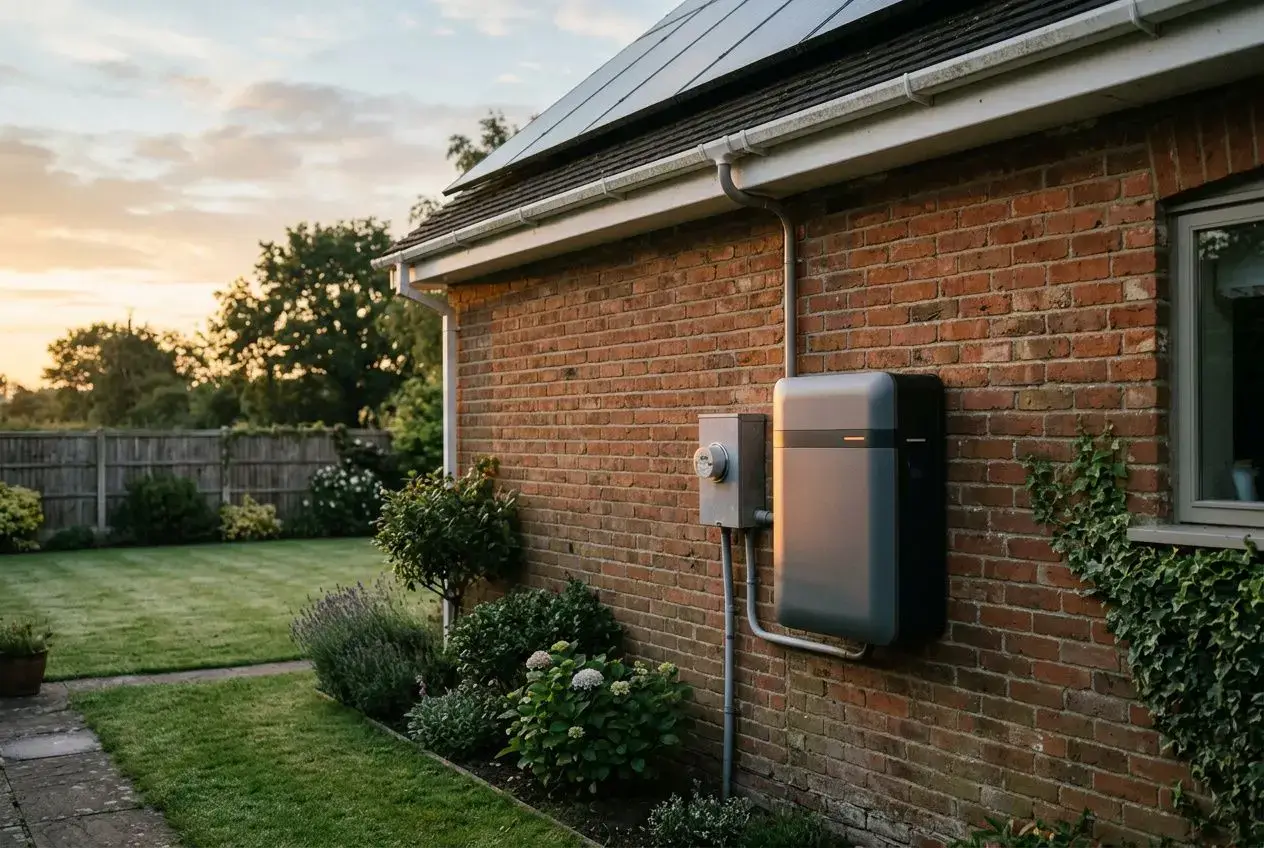
Conventional grid-tied solar generally shuts down during an outage unless suitable backup equipment and controls are installed. We pair panels with storage for both grid-tied and off-grid homes, as our overview of solar and storage solutions explains, and our residential solar installation service covers each option. Our lithium iron phosphate (LFP) solar battery storage system can reserve power for selected appliances or shift stored energy away from expensive time-of-use periods. Its usable capacity and transfer arrangements determine the actual backup scope, which supports grid resilience at home and a steady clean energy transition.
What will the project cost and save?
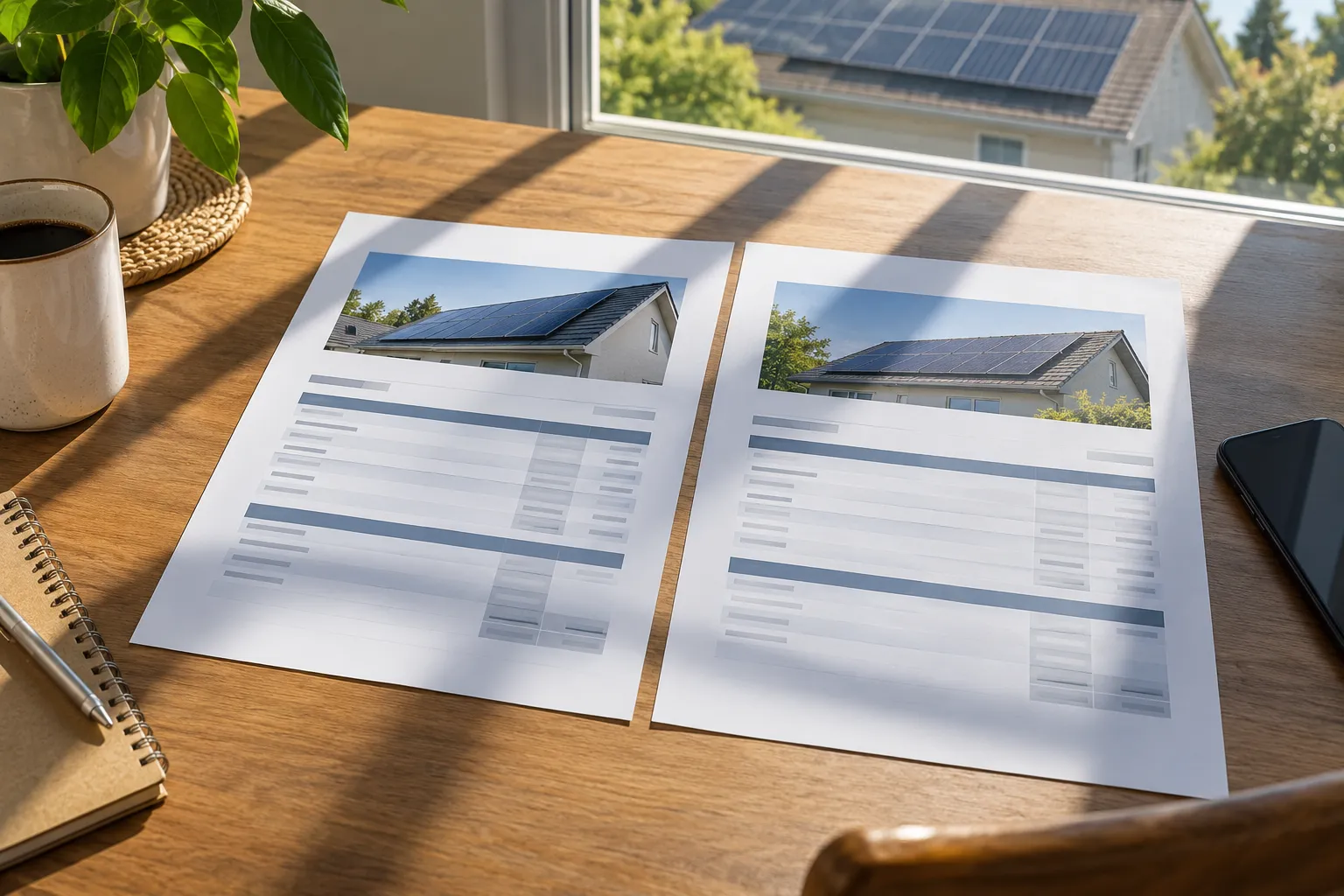
Price and savings only make sense when proposals are compared on the same basis. That means the same system capacity, the same scope and realistic production assumptions. A disciplined comparison shows which offer delivers real energy savings and a credible system payback period.
Comparable quotes and extra charges
Obtain at least two or three written proposals. Compare the total installed price in CAD, HST treatment, DC and AC capacities, equipment, monitoring hardware and production assumptions using the same method for each.
An Ontario directory has published an installed-solar benchmark of $2.42 to $3.50 CAD per watt. It is not an independently verified survey of Pickering quotations. Use the table below to separate standard installation from the extra costs that can push a quote higher.
| Cost item | Reference point | What to check |
| Installed solar system | $2.42–$3.50 CAD per watt (Ontario directory benchmark) | Same DC capacity and scope across quotes |
| HST | 13% on taxable supplies in Ontario | Whether the quote includes or excludes it |
| ESA electrical notification | Minimum residential fee of $88 CAD | Not a universal solar inspection fee |
| Roof work and structural review | Project-specific | Listed separately from installation |
| Electrical upgrades, permits and utility costs | Project-specific | Who pays and whether each item is included |
Financing and currently available support
Federal support has changed. Natural Resources Canada states that the Canada Greener Homes Loan closed to new applicants after October 1, 2025. The Canada Greener Homes Grant set December 31, 2025, as the final document deadline for existing participants. Neither program should be counted on to reduce your price.
We offer flexible financing for solar with storage and guidance on incentives that may apply, though availability and eligibility must be checked for each project. A home-equity loan should be judged on its interest, fees and risk to your home, and an unsecured loan on its borrowing cost and term. Leases and power-purchase agreements need close review of ownership, escalation, roof-removal, transfer and buyout terms.
Realistic bill savings and payback
Under Ontario net metering, solar electricity you use immediately reduces grid purchases. Eligible exports earn bill credits that can carry forward for up to 12 months, but those credits do not necessarily offset every charge on the bill. A credible estimate separates home consumption from exports and applies your actual bill structure, seasonal output, winter snow and fixed charges without counting the same kWh twice.
Simple payback divides the net upfront cost by the annual net benefit. That benefit equals avoided electricity costs plus applicable export credits, minus annual operating costs. A fuller model also includes financing, equipment degradation, replacement costs and the time value of money. Ask each installer to show this calculation in their proposal.
What long-term support should the installer provide?
A solar system produces for decades, so the installer’s commitment has to last longer than installation day. Monitoring, warranties and service terms decide how quickly a problem is found and who pays to fix it.
Monitoring and fault response
Monitoring shows whether the system performs as promised. Settle these points at handover, before you rely on the data.
- Account control: Who owns and can access the monitoring account.
- Measurement scope: Whether it tracks generation only or household consumption as well.
- Fault alerts: Who receives alerts and who acts on them.
- Baseline: A commissioning baseline set against the proposal’s monthly or annual prediction.
That baseline gives you a reference point. When actual output falls below the forecast, the gap can be investigated instead of being missed.
A monitoring outage may be a communications failure or a real generation fault. Get remote-diagnosis availability, call-out and travel charges, and expected response times in writing.
Equipment and workmanship warranties
Manufacturer warranties cover products. The installer’s workmanship obligations cover the work. Keep the two separate when you compare offers.
- Failure costs: Confirm who pays for labour, shipping, removal and reinstallation after an equipment failure.
- Product versus performance: A panel product warranty and its power-performance warranty make different promises. Manufacturer documents describe 25-year coverage for certain modules and covered Canadian microinverter models, so the exact models and terms matter.
- Roof-leak responsibility: Agree on flashing, waterproofing and leak repairs before installation.
Later roof repairs may require removing and reinstalling the panels. The cost of that work and its effect on warranties should be clear before the array goes up.
Handover and continuing service
Keep approved and as-built drawings, equipment identifiers, permit and inspection records, ESA acceptance, distributor authorization, warranties, monitoring access and shutdown instructions. Ask who files manufacturer claims, sources parts and services the system if the original installer stops supporting it or closes. We work across assessment, design, installation, monitoring and long-term maintenance. Routine care follows manufacturer instructions, while roof access, snow removal and electrical troubleshooting require safe procedures.
Frequently Asked Questions
Does a larger residential solar system need an ESA electrical plan review?
On July 6, 2026, the ESA announced that the Rule 2-010 electrical plan-review threshold would rise from 10 kW to 12 kW. A system below that threshold is still subject to electrical-safety requirements.
Do Pickering homeowners have to own their solar system outright to use net metering?
Not always. Since July 1, 2022, Ontario rules have allowed eligible third-party ownership arrangements for net metering, including certain leasing and financing structures. Eligible exports earn bill credits that can carry forward for up to 12 months.
Can the GST/HST New Housing Rebate be claimed for adding solar panels to an existing home?
No. The CRA’s GST/HST New Housing Rebate applies to qualifying housing transactions. It is not a general refund for adding solar to an existing home.