Yes: adding battery storage to a grid-tied solar system makes sense in Canada when outage protection is a priority, because grid-tied panels shut down during a blackout and cannot power your home without a battery. In Lawrence Berkeley National Laboratory modelling, a 10 kWh battery paired with solar panels covered 100 % of essential loads, such as the refrigerator, lighting, Wi-Fi router and sump pump, through a 72-hour outage when heating and cooling were excluded. Installed costs typically range from CAD $12,000 to $20,000, and if outages are rare and net metering credits your exports at the full retail rate, panels alone may be enough.
Deciding whether to add a battery energy storage system to your solar installation means weighing outage protection, self-consumption, time-of-use savings and future flexibility. You might install solar panels first and add storage later. At New Dawn Energy Solutions, we deliver tailored solar and battery systems for homes and businesses, starting with an assessment of your electrical loads and backup needs before we propose a battery.
Should you add a solar battery to your solar panels?
A battery energy storage system holds the surplus electricity your solar panels generate during daylight. It then supplies that power at night, on cloudy days, during peak-price periods or when the utility grid goes down. Understanding the solar battery storage advantages specific to Ontario shows when battery storage earns its place and when panels alone are sufficient.

How a solar battery changes energy use
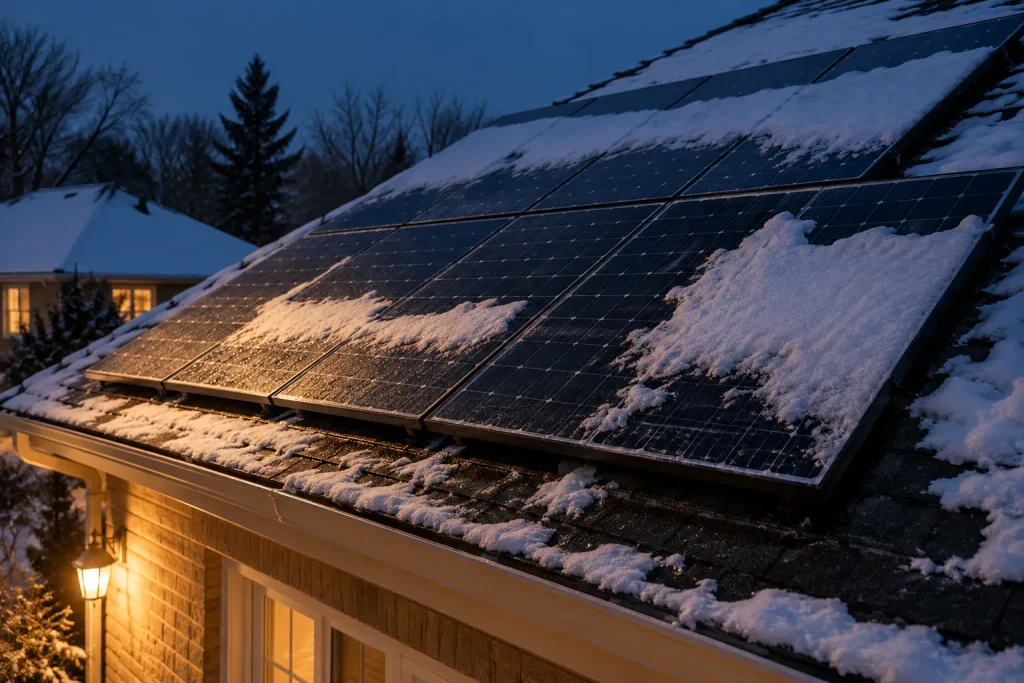
Grid-tied solar panels must shut down during a blackout to protect utility workers, so their power output stops at the moment you need it most. Without a home battery, they cannot supply your home during an outage. The value of battery backup therefore depends on how much you prioritize continuous electricity, energy independence and control over when you use the power you generate.
Our systems use lithium iron phosphate (LFP) batteries, and you can choose which appliances stay powered during an outage at initial setup. The stored power can be used daily or kept in reserve for blackouts, as shown in our overview of solar battery storage configurations.
- Evening self-consumption Instead of exporting surplus electricity to the grid for credits, you can store solar energy produced at midday and use it after sunset. That reduces grid purchases.
- Peak-rate management Ontario’s time-of-use pricing makes grid power more expensive during morning and evening peaks in winter and during the midday peak in summer. You can select a savings mode in the app to keep stored energy for these hours and lower your bill without changing household comfort.
- Outage resilience A solar battery backup system disconnects your home from the grid during a blackout and keeps selected circuits running; it can switch to backup power with no manual startup and no fuel. Those circuits may include refrigeration, lighting, internet equipment, sump pumps and security systems.
- Flexible capacity Home energy storage is scalable. Most households need one or two batteries for essential circuits, and additional units can expand the battery bank as demand grows.
A 2022 Lawrence Berkeley National Laboratory study found that a 10 kWh battery paired with solar panels covered 100 % of essential appliances through a 72-hour outage in virtually every US county, when heating and cooling were excluded. With 30 kWh of battery capacity, homes met an average of 96 % of their critical loads over three days, heating and cooling included. These results give Canadian households concerned about winter disruptions a useful benchmark.
When solar battery backup matters most
Not every household needs a battery. Where the utility provides full-retail, one-to-one net metering, storage may add little bill-saving value because surplus generation already earns strong credits. Deciding whether a battery is worthwhile requires a clear look at local tariffs, outage frequency and the equipment you cannot afford to lose.
- Frequent outages Communities in Cape Breton and other areas with aging grid infrastructure experience more interruptions. In these locations, backup power can become a practical requirement rather than a luxury.
- No full-retail net metering If exported electricity earns less than the retail rate, a battery that retains that energy for later use can produce a stronger financial return.
- Essential medical or business equipment Homes that rely on powered medical devices, and small businesses protecting sensitive equipment, have a compelling case for backup solar capacity.
- Energy independence goals Homeowners who want less dependence on the utility grid, and not only lower bills, gain a level of control that net metering credits cannot provide.
For power outages, sizing comes first: we size each system according to energy use, available solar generation and the loads the household wants to keep running during an outage. In Richmond Hill, we completed a residential installation that pairs photovoltaic panels with energy storage to provide backup power during grid failures. We also design whole-home backup systems that store energy from the panels or the grid and switch over automatically. Through our battery energy storage installation service, we assess electrical loads and backup needs before proposing a battery, then handle design and installation.
A nationwide assessment of more than 500,000 US households found that 60 % could lower electricity costs with solar-plus-storage, with average savings of 15 % among those who benefited. The remaining 40 % saw no cost reduction. Local tariff design remains the most decisive economic variable when you evaluate a home solar battery.
Grid credits versus stored power in a solar battery
Under Ontario’s net metering program, surplus solar electricity you export earns bill credits that apply to future consumption. Where those credits match the retail rate, the financial gap between a grid-tied system and one equipped with a battery narrows. Under net billing, exports receive a lower rate, so keeping the surplus in a battery and using it during peak hours can increase your solar savings. Export tariffs affect the system payback period; A Guide to Batteries for Solar Panels (The Eco Experts) provides more detail. Some North American utilities now offer solar battery backup incentives, a sign that grid operators are beginning to reward stored solar power during peak demand events.
Start solar battery-ready or retrofit later
Many recent solar installations can accept a battery later. However, adding storage to a system not designed for it can mean more labour, new permits and extra electrical work. If you plan to add a battery later, we recommend choosing a compatible hybrid inverter from the start when planning a battery-ready solar system.
- Compatible inverter selection A hybrid inverter installed at the outset lets the array run as a grid-tied system now and accept a battery later without major modifications.
- Simultaneous installation savings Completing electrical work, permitting and inspection for solar panels and a battery together reduces combined labour costs compared with two separate projects.
- Scalable architecture A battery-ready design makes room for additional solar energy storage as household needs expand, which protects the original investment over the life of the system.
A home solar battery typically costs between CAD $12,000 and $20,000 installed. A critical-loads sub-panel can add CAD $1,000 to $2,000 in some configurations. The solar–battery economic and backup viability assessment can help set realistic expectations before you add a battery to an existing or planned system.
We handle system design, permits, installation, financing and guidance on solar incentives. Grid-tied, solar-plus-battery and off-grid configurations are all part of our residential solar systems offer in Ontario.
The right battery backup system depends on your load profile, tariff, outage risk and installation plan, not on a universal rule that every solar home needs storage.
Frequently asked questions
Do lithium-ion batteries make solar backup worthwhile for Canadian homes?
Lithium-ion batteries lead today’s residential solar battery market. They offer reliable cycle performance, a compact footprint for garages or utility rooms, and silent, maintenance-free operation without the noise and exhaust of generator-based backup. Lithium iron phosphate variants generally last longer and tolerate heat better, while nickel manganese cobalt chemistry stores more energy in less space.
Most home solar batteries have a useful life of 10 to 15 years and retain roughly 70–80 % of their capacity after several thousand cycles. For a Canadian household facing winter outages, that service life can support a defensible long-term investment, provided net metering credits recover enough of the system cost to make the investment worthwhile. Comparing warranties, energy use, available solar generation and the desired system payback period helps confirm the right installation.
What can a home battery backup actually power during an outage?
A well-designed solar setup with battery backup does not need to supply the entire home to deliver meaningful value. A battery connected to selected circuits can protect the refrigerator, interior lighting, Wi-Fi router, sump pump and security equipment, the loads most households need during an interruption.
Research from Lawrence Berkeley National Laboratory shows that a 10 kWh battery paired with solar panels met 100 % of homes’ essential loads across a 72-hour grid outage in virtually every US county when heating and cooling were excluded. For longer disruptions, a 30 kWh battery covered 92 % of a home’s load over ten days, with the solar array continuously recharging it during daylight hours. This approach improves energy resilience without requiring a larger system than the property needs.
How much does solar battery backup cost in Ontario?
A residential solar battery typically costs between CAD $12,000 and $20,000 installed, and a critical-loads sub-panel can add CAD $1,000 to $2,000 in some configurations. Under Ontario’s time-of-use rates, using stored solar power during winter morning and evening peaks or the summer midday peak can add bill savings on top of outage protection.
Can I add a battery to my existing solar panels later?
Many recent systems can accept a battery later, but a retrofit on a system not designed for storage may require more labour, new permits and extra electrical work. Ask your solar installer whether your current solar inverter is battery-compatible. If you are still planning, a hybrid inverter chosen from the start keeps the upgrade simple.
Do I need a battery if I have net metering in Ontario?
Not necessarily. Ontario’s net metering program credits exported solar electricity against future consumption, so a battery may add little bill saving where exports earn the full retail rate. Outage protection, powered medical devices or sensitive business equipment remain reasons to add storage in that case.
Is solar backup better than a generator for outage protection?
A solar and battery combination can switch over automatically when a grid outage occurs. There is no manual startup, no fuel run and no exhaust fumes. The battery stores excess solar electricity generated during the day for use when the grid drops, with no homeowner intervention.
Generators use gasoline, propane or natural gas, which creates ongoing fuel costs and maintenance requirements. A battery is silent and can be installed indoors in a mechanical or utility room, while generators require outdoor placement and ventilation. For households seeking clean, hands-free protection that integrates with an existing solar investment, a home battery backup offers a practical long-term solution.
Home solar batteries store electricity for essential loads and support a more resilient clean energy transition. Net metering can improve the value of a solar system, while a properly sized battery can reduce dependence on the grid during an outage. Together, they give Canadian homeowners solar with battery backup sized to reduce outage risk and improve overall energy savings.