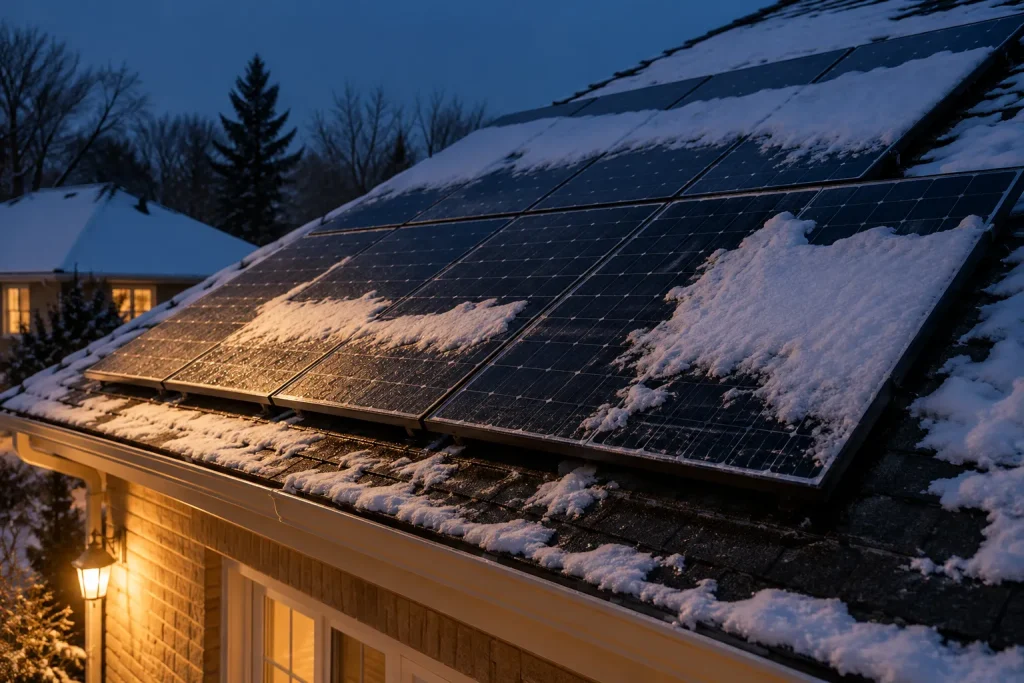
With the right winter solar panel care, your array keeps working through Ontario’s coldest months without unsafe roof work. Below, you will learn when to leave snow alone, how to clear it safely, how to protect battery backup, how to read winter output and when a technician should step in.
Should you clear snow from solar panels?
Usually, no. Most rooftop systems from Toronto to Whitby handle ordinary snowfall on their own. The useful question is whether clearing them is safe, permitted by the manufacturer and worth the effort.
When leaving the panels alone is safer
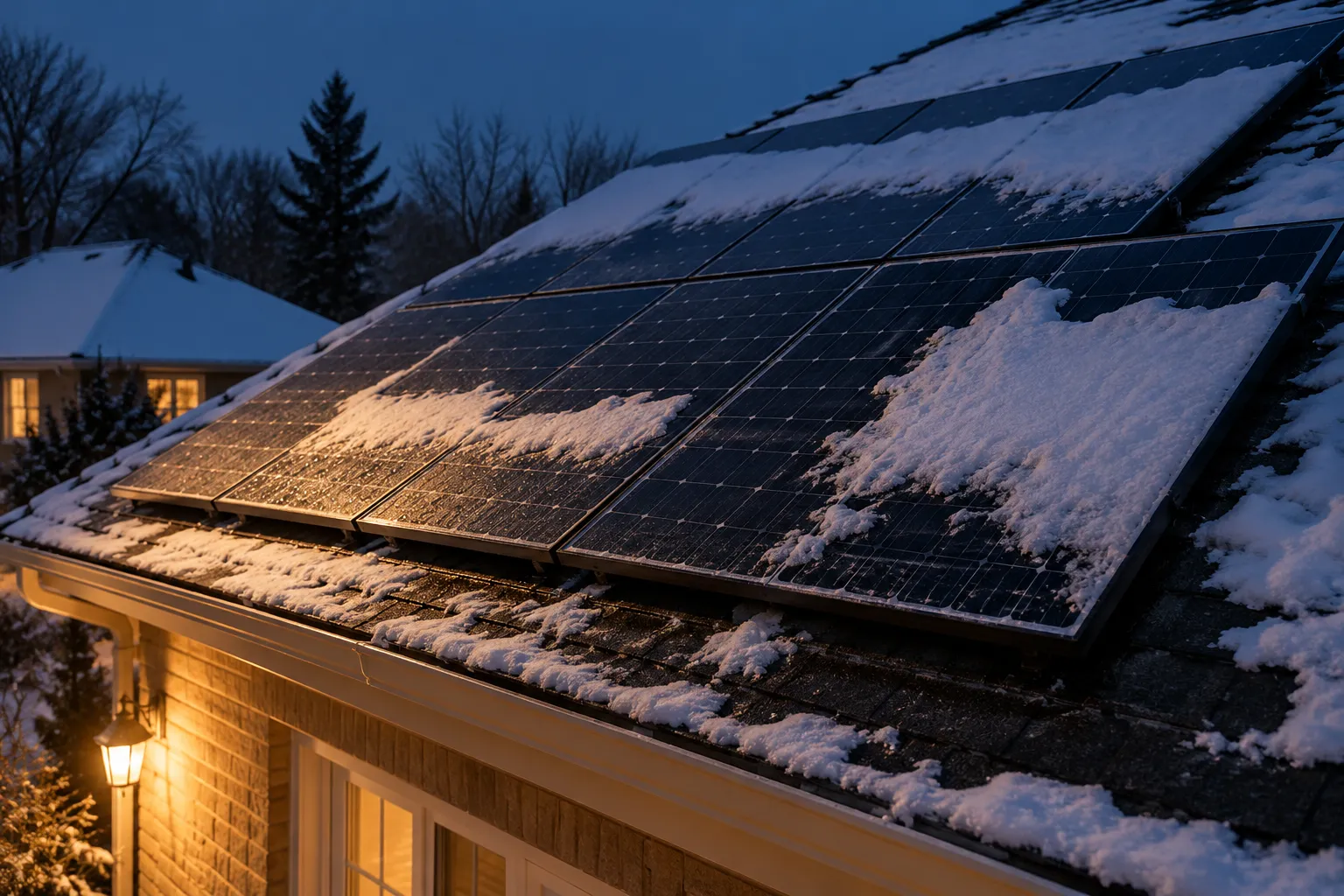
For an ordinary snowfall, winter care means watching your monitoring rather than reaching for a tool. This applies to a sound, grid-connected array with no fault alert and no urgent need for power. Snow sheds or melts naturally, but the timing depends on tilt, sunlight, temperature, weather conditions, array layout and roof features. No fixed clearing deadline applies.
A ground-mounted or very low-pitch array in Caledon or Uxbridge may hold snow for longer. Persistent coverage there can justify assessing removal. Weigh the solar output you could recover against the effort and the risk of damaging equipment. Our residential solar installation service in Ontario also answers common questions about upkeep and snowy-season production.
How to remove loose snow safely
Before you touch anything, read the module maker’s instructions, your installer’s recommendations and the warranty conditions. Being able to reach the array safely does not authorise a method. Where the manufacturer permits manual work, you can clear rooftop panels with a soft brush or a soft-foam solar roof rake used from ground level. Even soft tools can damage modules when misused.
- Stay off the roof: never climb onto a snowy or icy roof or walk on the modules.
- Skip hard tools: metal rakes, shovels, sharp scrapers and abrasive brushes can damage the glass.
- Use gentle pressure: excessive force stresses modules and mounting hardware.
Sliding snow can injure people and damage property below. Keep the drop zone clear, particularly near entrances, walkways, parking areas and roof edges.
Why ice needs a different response
Ice changes the decision. Stop if snow is bonded to ice or if your tool could strike wiring or mounting hardware. Do not chip at it, pour hot water on frozen glass or pressure-wash the panels. Salt, de-icer, solvents and unapproved chemicals are also off the table.
Covering an operating array with an opaque tarp or plastic does not protect solar panels in winter: it blocks light, traps moisture and catches wind. Improvised heaters or electrical snow melters create thermal, electrical and warranty risks. Automatic snow-removal systems exist for some installations, but they are not standard residential equipment. Have their compatibility, power use and maintenance needs assessed first.
How to keep winter backup power reliable
A battery helps you through a winter outage only when its limits and settings match the season. Cold weather affects storage differently from panels, so it needs its own checks.
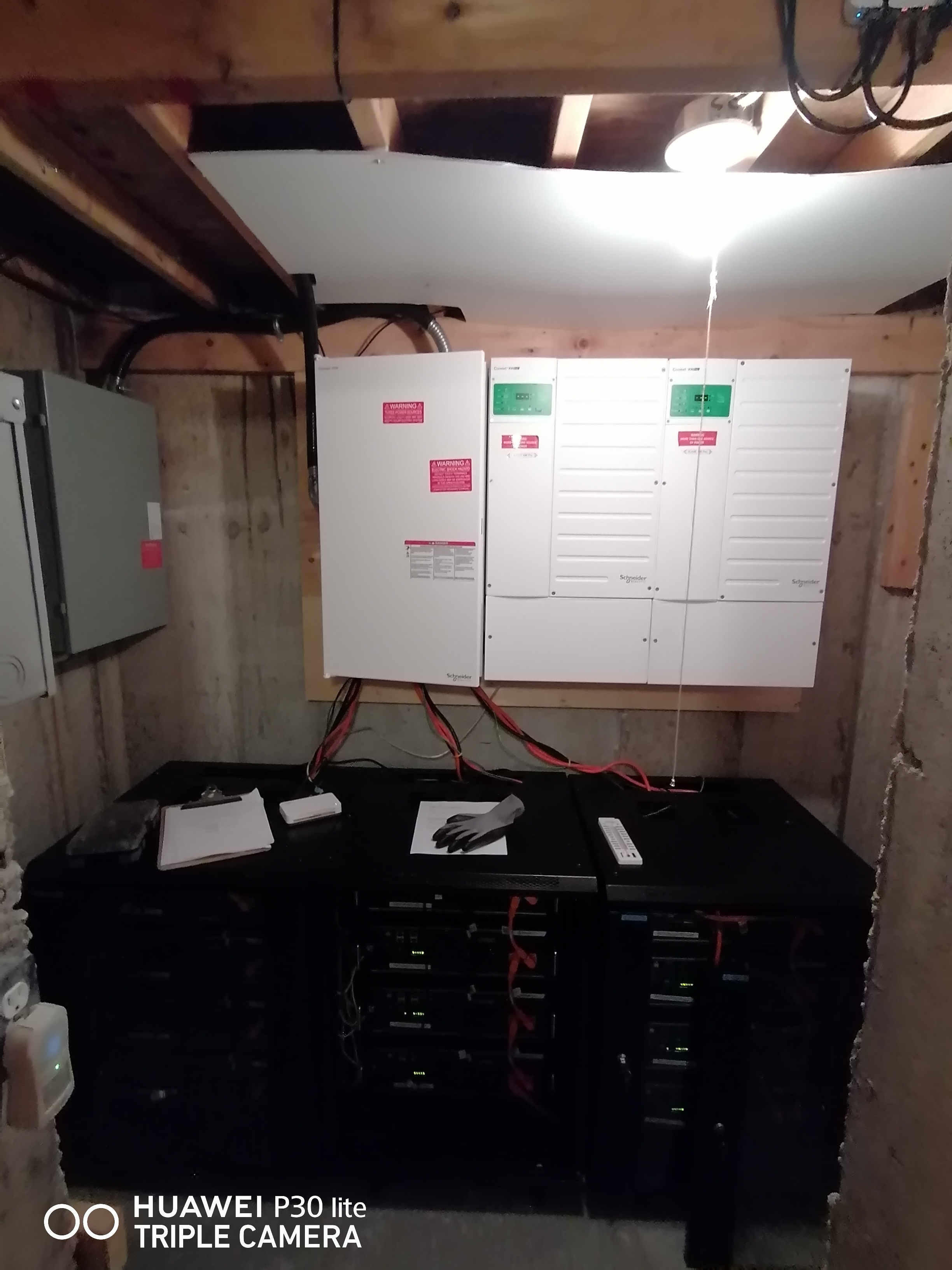
Respect the battery’s cold-weather limits
Cold can reduce usable capacity. How much it does depends on the chemistry, the design and where the unit is installed.
- Lead-acid: colder electrolyte can impair both discharge and recharge.
- Lithium: the battery management system may limit charging in extreme cold to protect the cells.
- Protection: insulation, approved heating or a temperature-controlled enclosure must follow the installed unit’s instructions, never a universal temperature rule.
Storage shifts available solar electricity to later hours. It cannot create energy when panels stay covered or sunlight is too weak. Our battery energy storage systems store power from the panels or the grid.
Check the backup plan before a storm
Before you rely on a battery-backed solar energy system, confirm what it can deliver.
- Usable capacity: the energy available in kWh.
- Power ratings: continuous and surge output.
- Charging temperature: the minimum the manufacturer allows.
- Supported loads: which circuits the inverter can actually run.
When severe weather is forecast, review the state of charge, the configured backup reserve, expected critical loads and any active warnings. Run only the manufacturer-approved backup test procedure.
Off-grid properties need a stricter order. If essential loads face inadequate reserves, start the planned backup-power procedure before considering snow removal. Arrange a safe assessment if the shortfall continues.
Use storage monitoring without bypassing safeguards
We design customised solar battery storage for Ontario homes and businesses around energy use, backup needs and budget. Newdawn-es whole-home systems switch automatically during an outage. Smart monitoring shows production, battery charge, consumption and grid power, so track temperature-related warnings and event history alongside generation during the winter months.
Keep ventilation openings, required clearances and access routes clear, and never bypass temperature protections. A swollen, leaking, smoking, unusually hot or abnormally noisy unit is an emergency. Keep away and follow the installed system’s emergency instructions.
How to interpret winter solar output
Low winter numbers are expected. What matters is knowing which numbers are normal for your system and which point to a fault.
Know what normal winter production looks like
Panels generate in cold or cloudy weather, but shorter daylight, a lower sun angle, clouds and covered modules cut total energy production. Cold can improve solar panel efficiency when sunlight reaches the cells. November, December and January are generally Ontario’s weakest months, and February usually starts a seasonal recovery. According to Canada Energy Regulator modelling, spring and summer supply approximately 55–75% of annual provincial generation. Fall and winter account for 25–45%, a regional range rather than a forecast for one home.
Compare readings before assuming a fault
One low day proves nothing. Compare daily solar output with similarly bright recent days and your system’s own history, allowing for snow, daylight and weather.
The best angle for solar panels depends on the site and the annual production goal. The City of Toronto identifies a tilt of approximately 10–45 degrees as useful for many installations. Winter shading from trees, chimneys and roof features can still affect solar panel performance, so a neighbour’s figures in Vaughan or Oakville are not your benchmark.
A missing monitoring update is not necessarily zero generation, since lost internet connectivity can make a working system appear offline. Useful records include daily generation in kWh, comparable clear days and the same month in earlier years. Add inverter error history and module- or string-level data where available.
Check alerts after the panels clear
If production stays absent once the snow is gone, check the inverter’s external status, the last successful update and any fault notifications before arranging service. For an alert, record its exact wording and timestamp, then compare available light with production. Follow only the manufacturer-approved user recovery steps. Recurring faults call for service, not repeated resets.
We provide monitoring support after commissioning a solar battery storage system.
When to book professional winter maintenance
Some winter problems cannot be judged from the driveway. Knowing which signs call for a qualified technician helps you decide when to step back.
Inspection after storms and suspected damage
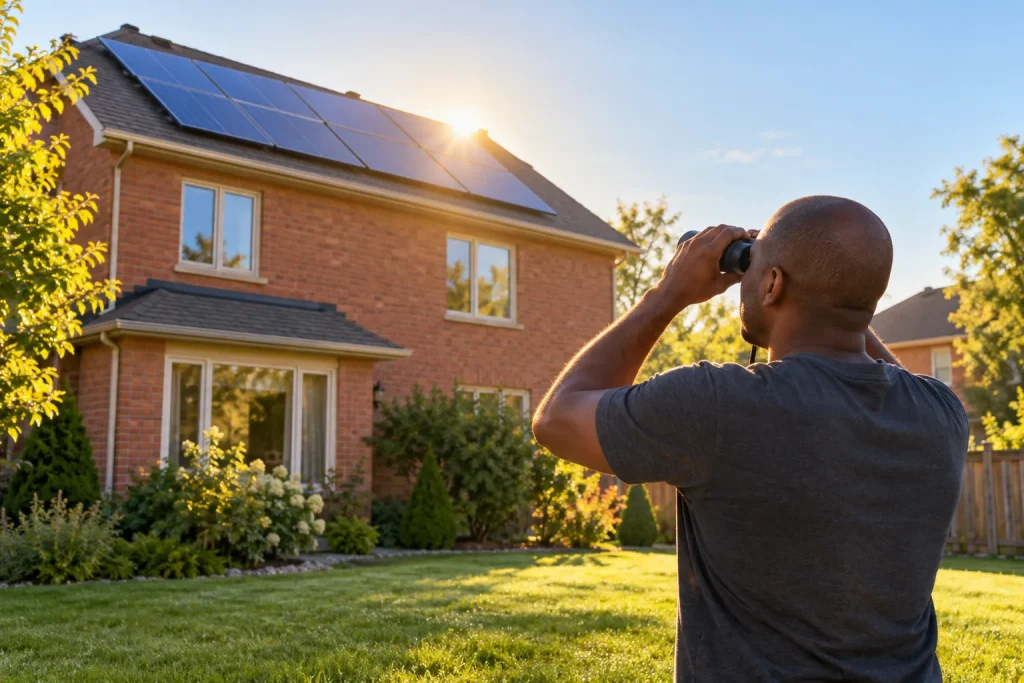
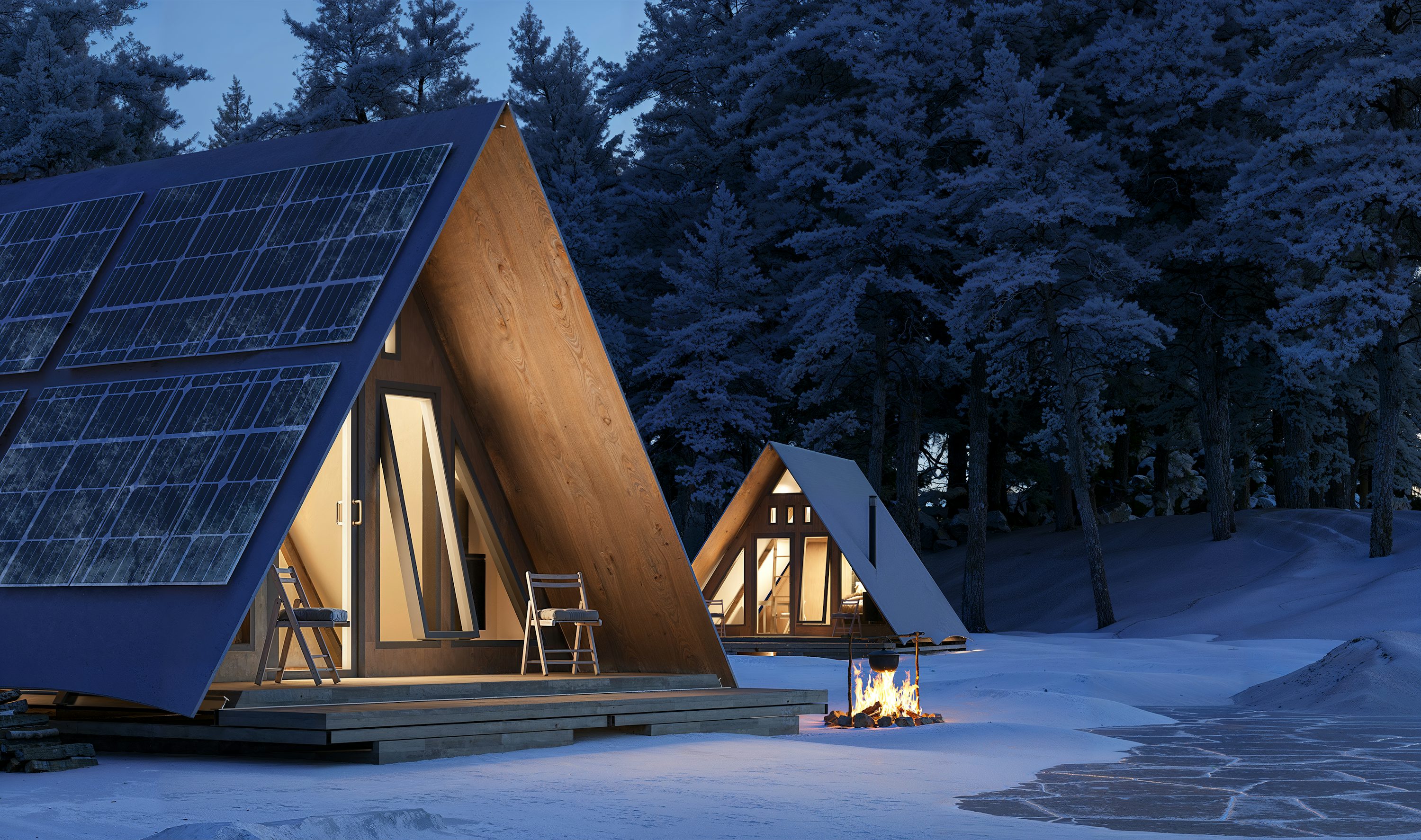
After heavy snow or an ice storm, inspect the array from a safe location and do not climb up to confirm a problem.
- Array condition: cracked glass, displaced modules, bent rails or loose-looking mounting.
- Electrical hazards: smoke, arcing, a burning smell, exposed damaged wiring or water entering equipment. Stop all routine maintenance, keep people away and call emergency services for any immediate fire or life-safety threat.
- Structural signs: roof sagging or unusual noises. Leave the area and get an urgent professional assessment.
Roof leaks need attention too. Natural Resources Canada warns that roof snow can refreeze at cold eaves into ice dams, which are not always safe to remove.
Who should assess faults and roof risks
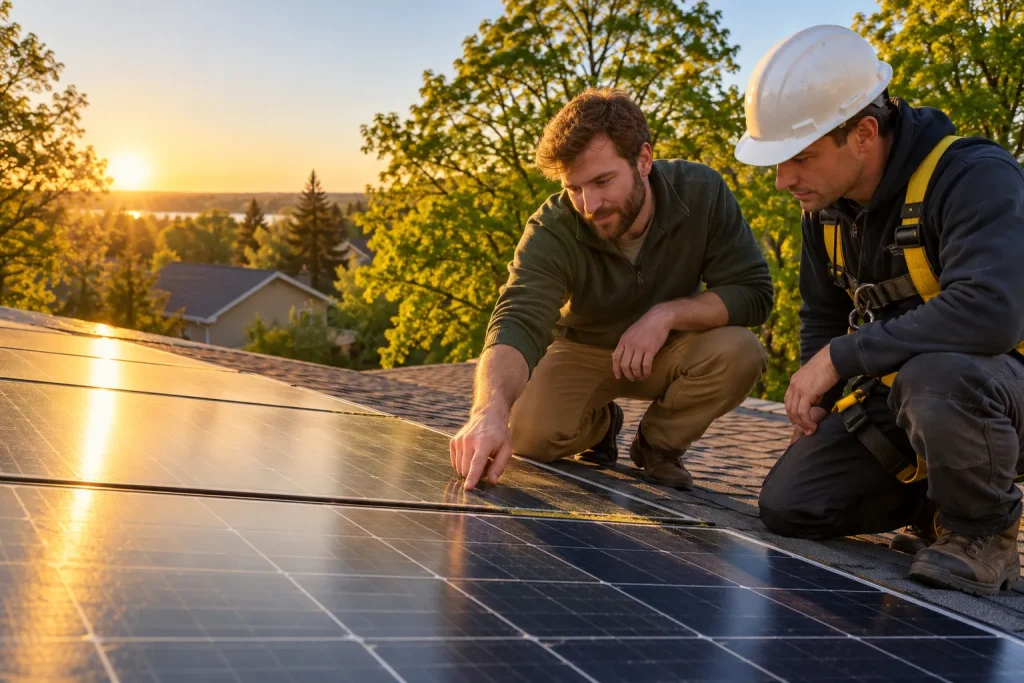
A qualified solar technician should assess cracked modules, loose connections, displaced hardware, repeated inverter faults or sustained unexplained output loss. Electrical repairs may require a licensed electrical contractor, and leaks call for a qualified roofer. Ontario’s photovoltaic safety alert cautions untrained or unauthorised people against maintaining PV components. The Electrical Safety Authority administers the Ontario Electrical Safety Code, whose 29th edition took effect May 1, 2025.
If you hire a snow-clearing contractor, the work plan should cover fall protection, the drop zone, permitted tools and access. It should also state whether an inspection is included. Check monitoring afterward for restored output or new alerts.
Plan seasonal upkeep and keep records
Solar panel maintenance tips follow the seasons. Before winter, check for leaf debris and questionable connections from a safe spot. In spring, look from ground level for damage and soiling.
Washing follows the module manual. No household dish soap is universally approved for panel cleaning, so check the manual before using any solution.
Keep manuals, warranty terms, safe-location photographs, error logs and service reports in one place. Ontario’s 2024 Building Code took effect January 1, 2025. For applicable new or permitted work, its solar roof-load rules do not allow planned snow removal to reduce the design snow load.
Frequently Asked Questions
Can net-metering credits earned in summer offset winter electricity bills in Ontario?
Yes. Ontario Energy Board guidance says surplus generation earns bill credits that offset eligible electricity-consumption charges, including in winter. Those credits expire after 12 months, and exported electricity is not automatically a cash payment.
Should you change the tilt of an existing solar array for winter?
No. The City of Toronto’s range of approximately 10–45 degrees is design guidance, not a reason to adjust a roof array each season. Changing tilt alters wind loading, snow distribution, anchoring forces and structural requirements. Substantial changes may need building permits and structural review, so check your local municipal rules.
Can you add snow guards to stop snow from sliding off solar panels?
Not as an improvised fix. Have the roof and mounting design checked first. Ontario’s rural-building guidance notes that shedding depends on module layout and roof features, including ice or snow guards, and describes some tightly arranged rows with approximately 19 mm between them.