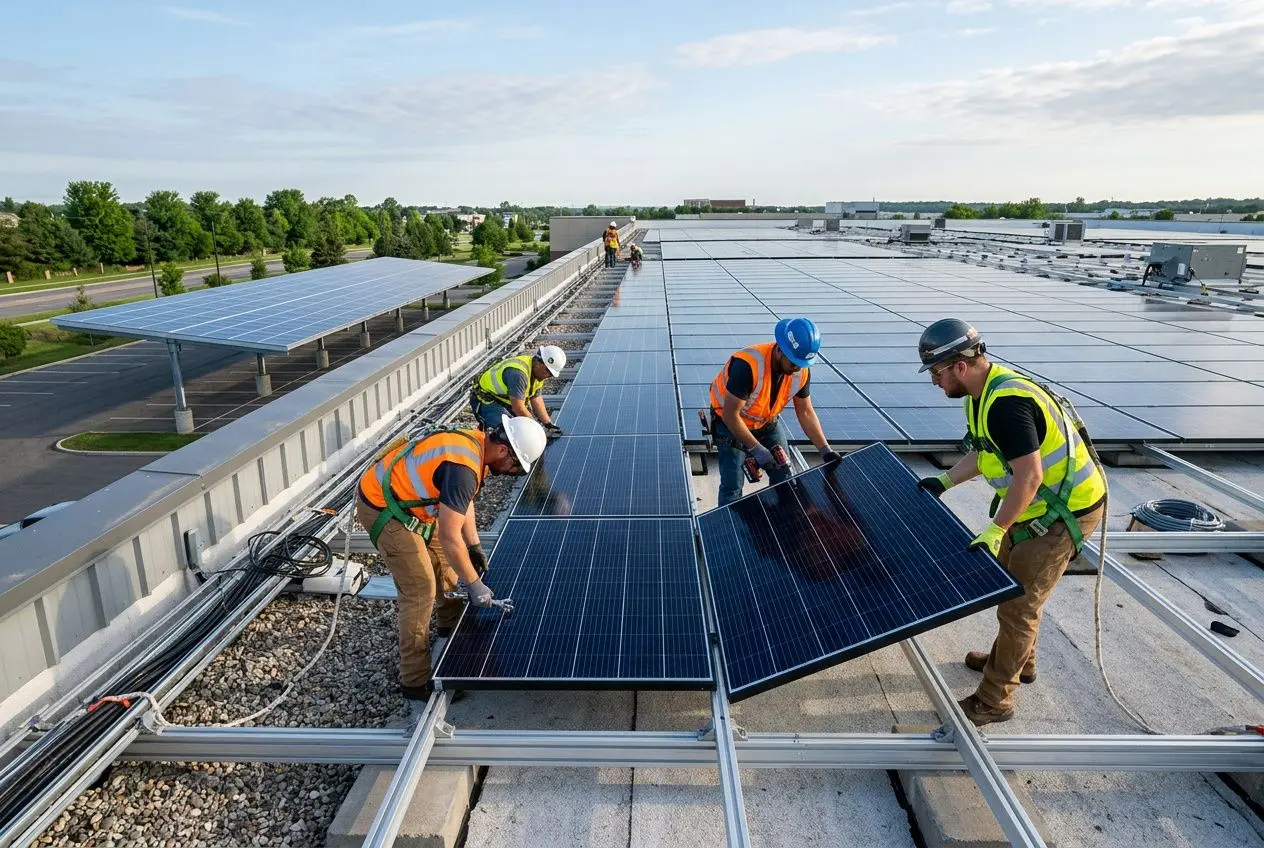
Whether you are exploring your first solar installation or expanding an existing system, understanding how a solar panel works after sunset is essential to making a confident energy decision. This article explains why panels stop generating after dark, how net metering keeps your home powered overnight, and how battery storage supports greater energy independence, with practical guidance for Ontario homeowners.
Do solar panels work at night?
Do solar panels work at night? The answer is no: solar panels do not generate electricity at night. Once sunlight fades, photovoltaic cells stop producing direct current, so your home must draw power from another source: the grid or an on-site battery. Explore how solar plus storage works to see the full picture.
Why daylight creates solar electricity
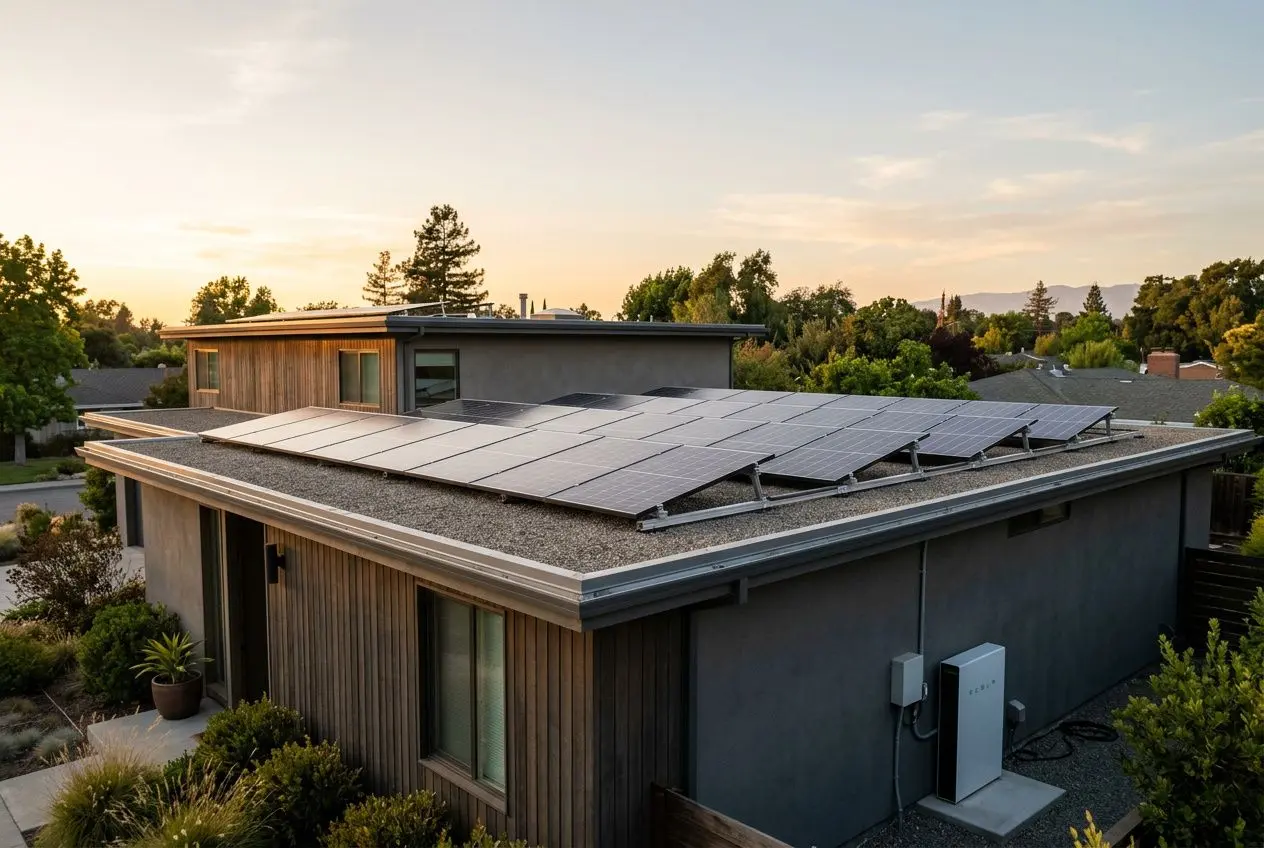
A solar panel works by capturing photons from sunlight and using them to displace electrons within a photovoltaic cell’s semiconductor material. This movement generates direct current, which an inverter converts into the alternating current that powers your appliances. Production typically peaks from late morning to early afternoon, when the sun is highest. Whether solar panels can do work at night depends entirely on photon availability; after sunset, there are too few photons for practical generation. Homeowners planning a battery-ready solar system can bridge that gap effectively.
- Photon-driven process Photovoltaic cells require sunlight photons to initiate electron movement. Without that trigger, no direct current is produced.
- DC-to-AC conversion The inverter converts solar-generated direct current into household alternating current, but it cannot operate without an upstream DC signal.
- Peak production window Output is highest between late morning and early afternoon, when solar irradiance is most intense on the panel surface.
- Rapid post-sunset drop Generation falls sharply after dusk and reaches zero once ambient natural light falls below the inverter’s minimum startup threshold.
This photon-dependent process ties output closely to the quality and duration of daylight at your location. In Ontario, summer days provide strong, extended production windows, while shorter winter days reduce total daily generation. Pairing an array with battery storage or a net-metering arrangement allows electricity produced during daylight to support your household well into the night.
Can a solar panel work under moonlight?
Moonlight is reflected sunlight, but its intensity reaches only about 0.0002% of direct solar irradiance. That fraction is far too low to generate meaningful household power. Homeowners who ask whether solar panels can do work at night under a full moon can be reassured: the physics do not support it at any practical scale. The tiny DC signal produced is usually below an inverter’s startup voltage and cannot be converted into usable alternating current.
Any current generated under moonlight is effectively lost before it reaches your home’s electrical circuits. No panel quality, technology, brand, or efficiency rating changes this fundamental photovoltaic behaviour.
Researchers have developed experimental thermoradiative, or “anti-solar,” cells that generate small amounts of electricity at night by emitting infrared radiation toward the cold of space. This laboratory-phase technology is not a viable replacement for residential PV panels.
Clouds, shade and temperature effects
Solar panels need sunlight to operate at full capacity, but they can continue generating electricity on overcast days. Cloud cover typically reduces output to between 10% and 25% of normal production, depending on the thickness of the cloud layer. Ontario homeowners should include seasonal cloud variability in system sizing, particularly during late autumn and winter, when extended grey periods can limit daily generation.
- Cloud thickness Dense cloud cover can suppress output to as low as 10% of rated capacity, while thin overcast conditions allow up to 25% of normal generation.
- Shade from trees or structures Even partial shading of one panel can disproportionately reduce overall array output. Keeping panels unobstructed is essential for maximising yield.
- High surface temperature Panel efficiency declines when surface temperature exceeds 25°C, which matters during Ontario’s warm summer afternoons.
Solar panels need light and consistent, unobstructed daylight to deliver the production levels that make a system financially worthwhile. Regular trimming of overhanging branches, combined with professional system inspections at least every two years, helps maintain generation close to design expectations.
These variables help you set realistic expectations for daily and seasonal performance. A well-designed installation accounts for local cloud patterns, roof orientation and potential shading from the outset, keeping energy savings projections accurate over the system’s lifetime and supporting a sound system payback period.
How net metering keeps your home powered
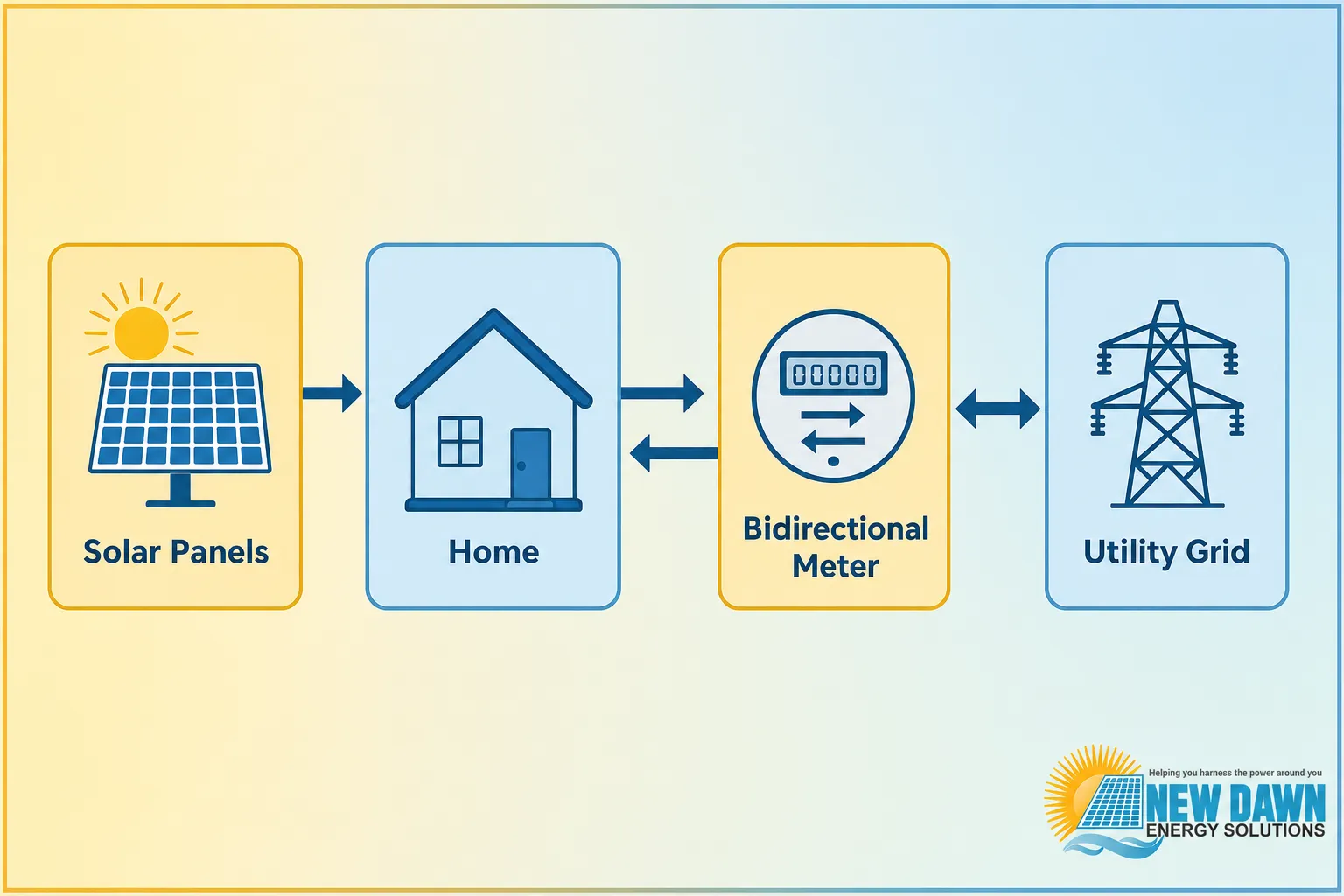
Net metering lets a grid-connected solar home use daytime surplus as a credit against nighttime electricity consumption. When your solar panels produce more electricity than your household needs, the excess flows to the utility grid through a bidirectional meter. Those net metering credits offset the power you draw after dark, helping manage energy use around the clock without on-site battery storage. Learn more about solar battery storage solutions that complement this approach.
Using daytime credits after dark
During sunny periods, the array exports surplus electricity to the grid, and the utility records those kilowatt-hours as credits. After sunset, power flows back into your home from the grid, while credits earned during the day offset that consumption on your bill. In a properly sized system, net metering credits can reduce or eliminate the cost of overnight grid use.
- Bidirectional flow Electricity moves in both directions: onto the grid when your system overproduces and back into your home when generation stops.
- Credit offsetting Credits accumulated during daylight hours apply against grid electricity consumed at night, reducing or eliminating that portion of your bill.
- Annual balancing A properly sized net-metered system can balance sunny-day exports against evening and winter imports to meet a family’s annual electricity needs.
- Utility program variations Credit treatment, eligibility, and carryover rules differ by utility. Confirming the terms with your local provider is essential before installation.
The grid effectively acts as a large-scale repository for surplus solar production, with storage capacity far exceeding that of a residential battery. However, net metering credit rates may not match the retail cost of grid electricity, so the financial value depends on your utility’s program. Review those terms with your installer to size the system for the strongest return under your local arrangement.
Why grid-tied systems stop in outages
Grid-tied solar systems must shut down automatically during a blackout, even when the sun is shining. Anti-islanding protection safeguards utility workers who may be working on the lines. As a result, solar panels alone cannot power your home during an outage. Whether solar panels work in cloudy weather is a separate issue; the shutdown applies regardless of generation conditions.
This limitation highlights the difference between net-metering convenience and true grid resilience. A grid-tied system without battery backup leaves your home without power during a blackout, just like any property that relies solely on the utility. For Ontario households facing ice storms, severe wind events, or summer grid stress, on-site battery storage closes that gap and keeps essential loads running when the grid goes down.
Getting more value from each solar day
Shift energy-intensive tasks such as laundry, dishwashing, and electric vehicle charging into daylight hours. This boosts direct use of your solar output during sunlight hours and trims the grid electricity you draw at any time. The method increases on-site consumption of the power you generate, improves your bill’s bottom line, and can shorten the system payback period without added equipment.
Battery storage for power at night
Battery storage turns a daytime energy asset into an around-the-clock power source. During the day, your solar panels charge an on-site battery with surplus production. After sunset, that stored electricity powers your home, reducing grid dependence and strengthening outage protection. For Ontario homeowners seeking energy savings and grid resilience, solar energy storage offers a complete solution. The right battery size and configuration are the starting points for a sound system payback period.
Store surplus from the day
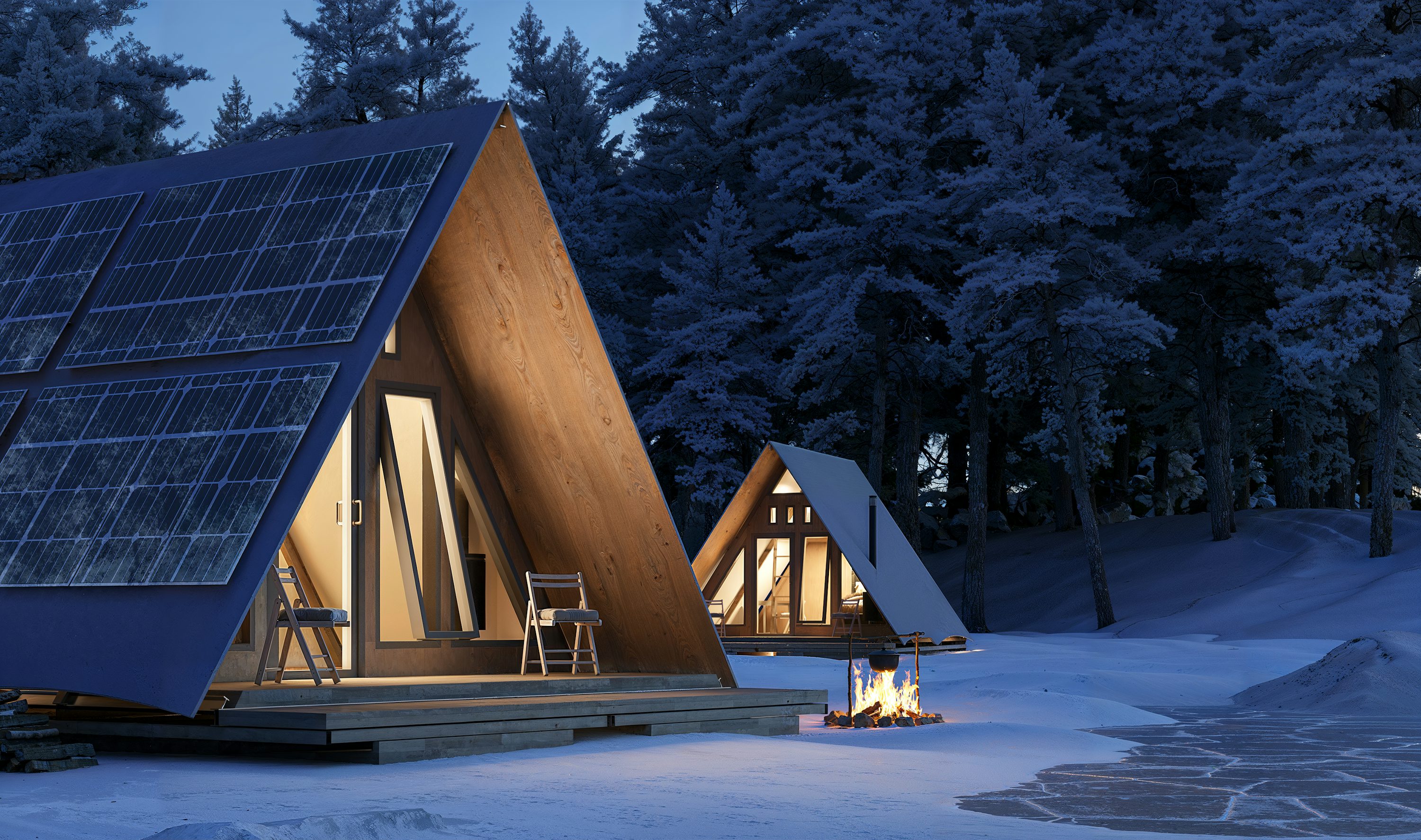
Battery systems usually charge before surplus electricity is exported to the grid, giving homeowners priority access to their own solar energy during the evening, nighttime and cloudy weather. The answer to whether solar panels work at night is straightforward: the panels generate electricity when sunlight is available, while batteries store the excess for later use. Solar energy at night therefore comes from the reserve created during the day.
This approach also provides a buffer through Ontario’s overcast stretches. Rather than drawing immediately from the grid on a cloudy afternoon, your home can use solar power stored from previous sunny days. Net metering remains available as a backstop during extended low-generation periods, but a properly sized battery reduces how often you need to buy electricity from the grid. That control is one of the clearest benefits of solar energy storage.
Sizing backup for your home
A common residential battery capacity is around 10 kWh, although the correct size depends on your daily consumption, backup priorities and local solar production. Batteries have a depth-of-discharge limit, typically 80% to 90%, so a 10 kWh unit delivers roughly 9 kWh of usable energy per cycle. The average Canadian home uses approximately 30 kWh per day, with about 40%, or roughly 12 kWh, consumed after sunset. One battery can cover a substantial share of typical night-time demand, but not necessarily all of it.
Most systems support essential circuits during an outage rather than every load in the home. Refrigeration, lighting and selected outlets should be identified during design so stored electricity lasts as long as possible. A qualified solar PV designer can align battery capacity and backup circuits with your household priorities during the initial turnkey installation.
| Metric | Typical value | Practical implication |
| Battery capacity | 10 kWh | Common residential starting point for nighttime coverage |
| Usable energy (at 90% DoD) | ~9 kWh | Actual energy available per charge cycle |
| Average daily home use | ~30 kWh/day | Benchmark for sizing total solar-plus-storage system |
| Evening energy use | ~12 kWh (40%) | Volume the battery needs to cover after sunset |
| Recommended battery type | LiFePO₄ | Stable, eco-friendly chemistry for residential use |
| Typical warranty | Up to 10 years | Long-term reliability assurance for homeowners |
Automatic power during outages
Modern battery systems switch from grid power to stored electricity as soon as they detect an outage. Essential appliances can continue operating without manual intervention. Unlike a conventional generator, a home battery runs quietly, produces no emissions and requires no fuel, which is valuable during severe Ontario weather events.
- Automatic switchover The system detects grid failure and transfers to battery power instantly, maintaining continuity for connected essential circuits.
- Essential load coverage Refrigeration, lighting, selected outlets and, depending on system size, EV charging can all remain operational during an outage.
- Clean and quiet operation Unlike a gas generator, a home battery produces no noise or exhaust, making it suitable for dense residential neighbourhoods in the GTA.
Solar panels produce energy at night only when storage is part of the system. In other words, solar panels do not work at night by generating electricity; the solar battery supplies the stored energy that makes solar power at night possible. That battery storage keeps your home operating quietly and cleanly when the grid fails.
Lithium Iron Phosphate (LiFePO₄) batteries are recommended for residential applications because of their thermal stability and environmental profile. They require no additional ventilation and occupy roughly one-third of the space of equivalent lead-acid batteries, allowing flexible placement on your property. Choose a qualified installer to confirm the design, safety requirements and expected system payback period.
Planning solar panels at night for Canadian homes
Powering your home after dark with solar requires deliberate planning from the outset. Whether you rely on net metering, battery storage, or both, early design decisions determine how well the installation performs through every season. Canadian solar capacity reached 6,452 MW in 2022, producing enough electricity to power more than 470,000 typical homes. That capacity shows how well-designed solar systems deliver measurable results across the country.
Choose net metering or battery storage
The answer is consistent: solar panels generate electricity at night only when batteries are part of the system. Without storage, nighttime power comes from the grid, while net-metering credits earned during the day offset that use. Your choice depends on your budget, utility terms, and need for outage resilience.
Net metering suits homeowners focused on reducing electricity costs while remaining comfortable with the grid as overnight backup. Battery storage is better suited to those seeking outage protection, greater independence from utility rates, or access to stored energy during peak-pricing periods. Many Ontario households combine both options: metering balances annual energy use, while batteries cover outages and evening demand.
- Net metering only Lower upfront cost; credits offset nighttime grid use; no outage protection without batteries.
- Battery storage only Maximum outage resilience and self-consumption; higher initial investment; less dependence on utility credit programs.
- Combined approach Balances cost savings through net metering with outage security from storage; the most comprehensive solution for Ontario homes.
If adding batteries immediately falls outside your budget, planning for them still pays dividends. Designing for future storage integration protects your investment and extends energy independence. Choosing an inverter with built-in battery capability during the initial installation lets you add batteries later without replacing major equipment, protecting your investment and extending energy independence.
Prepare your system to work at night
Installation choices determine how easily the system can be upgraded to deliver power around the clock. An experienced renewable energy contractor can coordinate those present and future requirements.
- Battery-compatible inverter Select an inverter with built-in battery capability at installation to avoid costly equipment swaps when storage is added.
- Essential-load planning Identify which circuits require backup during an outage so the installer can wire them correctly from the beginning.
- System monitoring Install monitoring that tracks real-time production and consumption, helping optimise self-consumption and identify performance issues early.
- Professional inspection schedule Schedule inspections at least every two years to confirm that output matches projected performance and that connections remain secure.
New Dawn Energy Systems pairs its solar installations with industry-leading battery storage providers, giving Ontario homeowners flexibility when selecting a home battery product. A turnkey installation that accounts for net metering, backup power, and future expansion provides durable value while avoiding the cost of retrofitting a system that was not designed for storage.
Seasonal solar output in Canada
Canadian solar potential varies by region and season. Central regions, including much of Ontario, generally have stronger solar resources than coastal areas with more persistent cloud cover. Many Canadian cities offer solar potential comparable to major international cities, helping explain the growth in installed photovoltaic capacity from 26 MW in 2007 to 6,452 MW in 2022. In summer, long days and strong irradiance can allow a properly sized solar-and-battery system to meet household demand from the evening through the night and into dawn without drawing from the grid.
Winter follows a different pattern. Shorter days and lower sun angles reduce daily generation, and even substantial batteries may not cover every overnight need during the darkest months.
Frequently Asked Questions
What time of day do solar panels stop generating electricity?
A solar panel works while sufficient photons reach its cells. Output begins to decline in the late afternoon as the sun drops lower in the sky, then falls to zero shortly after sunset when natural light drops below the inverter’s minimum startup threshold. In Ontario, the cutoff changes with the season. Summer evenings may support limited production until 8 p.m. or later, while winter generation can stop well before 5 p.m. Afterward, your home draws power from batteries or the grid, depending on the system design. Reviewing your daily production curve shows when your solar panels stop producing throughout the year.
Can solar panels generate electricity at night without any storage or grid connection?
Solar panels generate electricity at night only in negligible, non-functional quantities. Without batteries or a grid connection, a standalone solar home has no usable power source after dark. Solar panels need sunlight, meaning photons with sufficient intensity, to start the electron movement that produces direct current. Moonlight reaches roughly 0.0002% of direct solar intensity, far below the level required to push useful current through an inverter. Solar panels need light of meaningful intensity to generate electricity, so solar panels cannot generate electricity at night in a practical sense. Battery storage and net metering extend daytime production into the nighttime and evening hours.
Is a solar battery worth the cost for a typical Ontario home?
Whether a solar battery provides enough value depends on your priorities. For outage resilience, battery storage supplies automatic backup power during blackouts. It offers a quiet, clean alternative to a gas generator, without fuel costs. If reducing electricity bills is the priority, stored solar energy can cover peak-pricing periods and limit purchases from the grid. Lithium-ion battery costs have declined considerably since 2010, although the technology remains a significant investment for many homeowners.
A battery-ready system keeps future storage available without requiring an immediate purchase. Many residential batteries also carry warranties of up to 10 years, strengthening the long-term value case. Assess expected energy savings, backup needs, and the system payback period before choosing a turnkey installation.