Understanding the real financial and environmental returns of solar energy helps you make a confident, well-informed decision about your property. This article examines the concrete solutions a residential solar PV system can deliver, including lower electricity bills, government incentives, home value gains, and environmental benefits. You will also see what to expect at each stage of the investment.
Solar cost savings for Canadian households
Generating electricity on-site immediately reduces the amount you buy from the grid. For most Canadian homeowners, the monthly utility bill is the clearest benefit of a properly designed solar array. Those savings can compound over decades as electricity rates rise.
Lower electricity bills over time
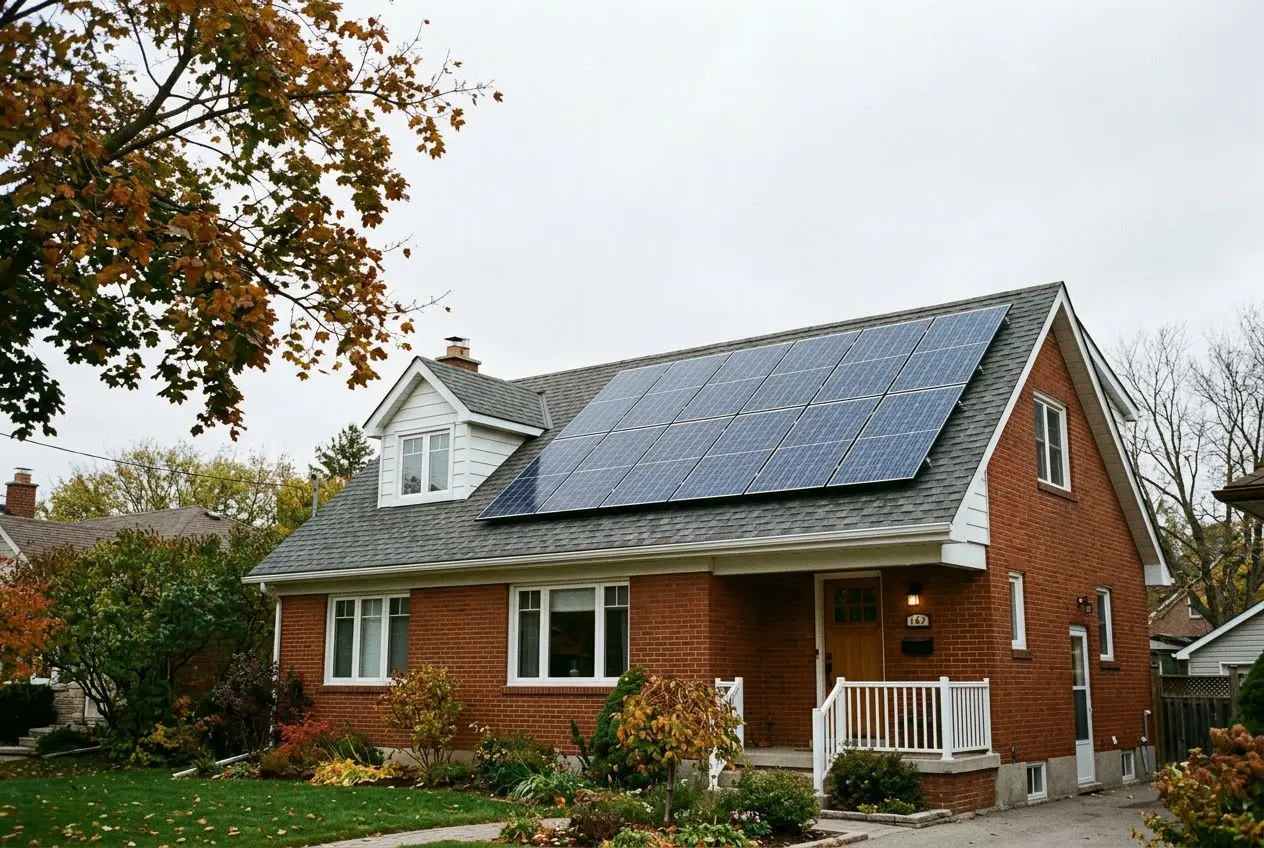
Every kilowatt-hour your solar array produces is one less kilowatt-hour purchased from your utility. Homeowners evaluating solar can expect cumulative savings reaching tens of thousands of dollars over the system’s life. Results depend on system size, local electricity rates, and household consumption.
- Long-term savings potential Over 20 to 25 years, reduced utility purchases can fund other household priorities. Rising electricity rates may also shorten the system payback period.
- Rate-increase protection This output replaces electricity that would otherwise be bought at future, higher rates. This gives homeowners a hedge against future utility-rate increases and improves long-term financial predictability.
- Economies of scale Larger solar installations often have a lower installed cost per watt, making a bigger array more financially efficient than a minimal one at current market pricing of roughly CAD 2,500 per kW DC.
A typical 10 kW residential system in British Columbia can produce approximately 10,000 to 12,000 kWh of electricity per year. Actual output depends on roof orientation, shading, and local weather patterns. Even so, that production can cover a significant share of a household’s annual demand and reduce the energy budget allocated to utility purchases.
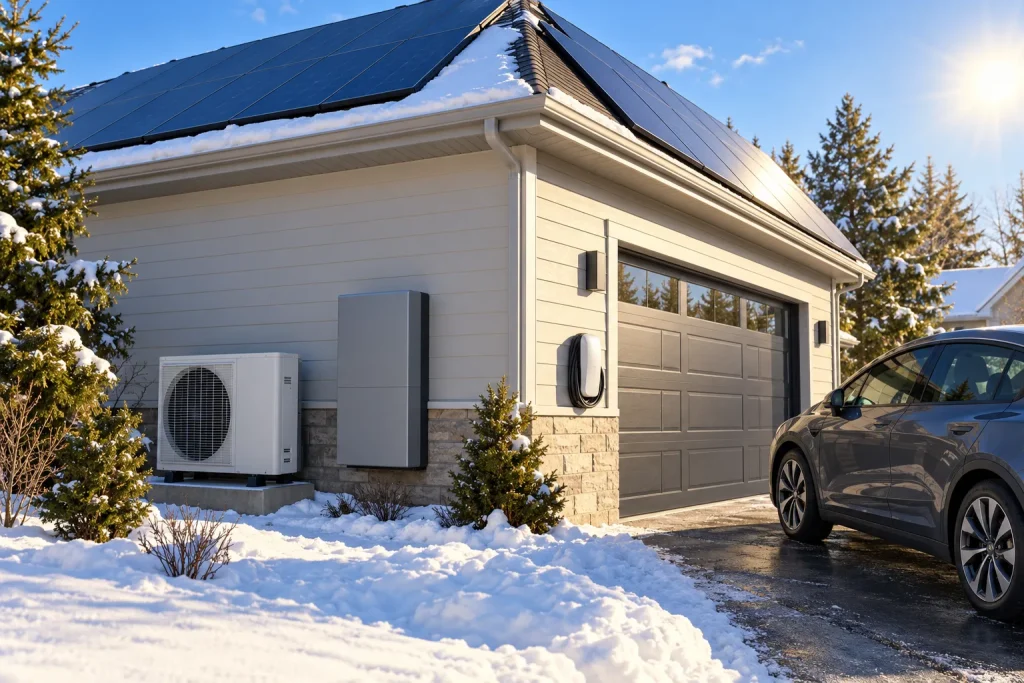
Cold Canadian winters do not inherently reduce panel productivity. Panels operate on light rather than heat, and snow on nearby surfaces can reflect additional light onto the array. Annual production still varies by season, so proper modelling accounts for these changes while supporting reliable year-round energy savings across every province.
Sizing a solar system correctly
Correct array sizing is essential for maximizing financial returns. An undersized installation leaves more utility electricity purchases on the table, while an oversized one may produce surplus energy that local net metering rules do not fully credit. To capture the benefits of installing solar panels in Canada, match system capacity to actual consumption and applicable program rules from the outset.
Residential solar PV installations in Alberta typically cost from CAD 10,000 to CAD 16,000 before rebates, while the broader Canadian market averages roughly CAD 2,500 per kW DC. A qualified solar contractor can manage system design, permits, and commissioning through a turnkey installation. This approach aligns array size, inverter capacity, and roof orientation with your site’s conditions and usage profile, while helping you assess available incentives and the environmental benefits of installing solar.
Solar incentives and grid credits
Federal and provincial programs have made the clean energy transition more accessible for Canadian homeowners. Government incentives reduce the capital required to install a solar PV system, improving affordability and shortening the system payback period—an important consideration when assessing a renewable energy investment for your home.
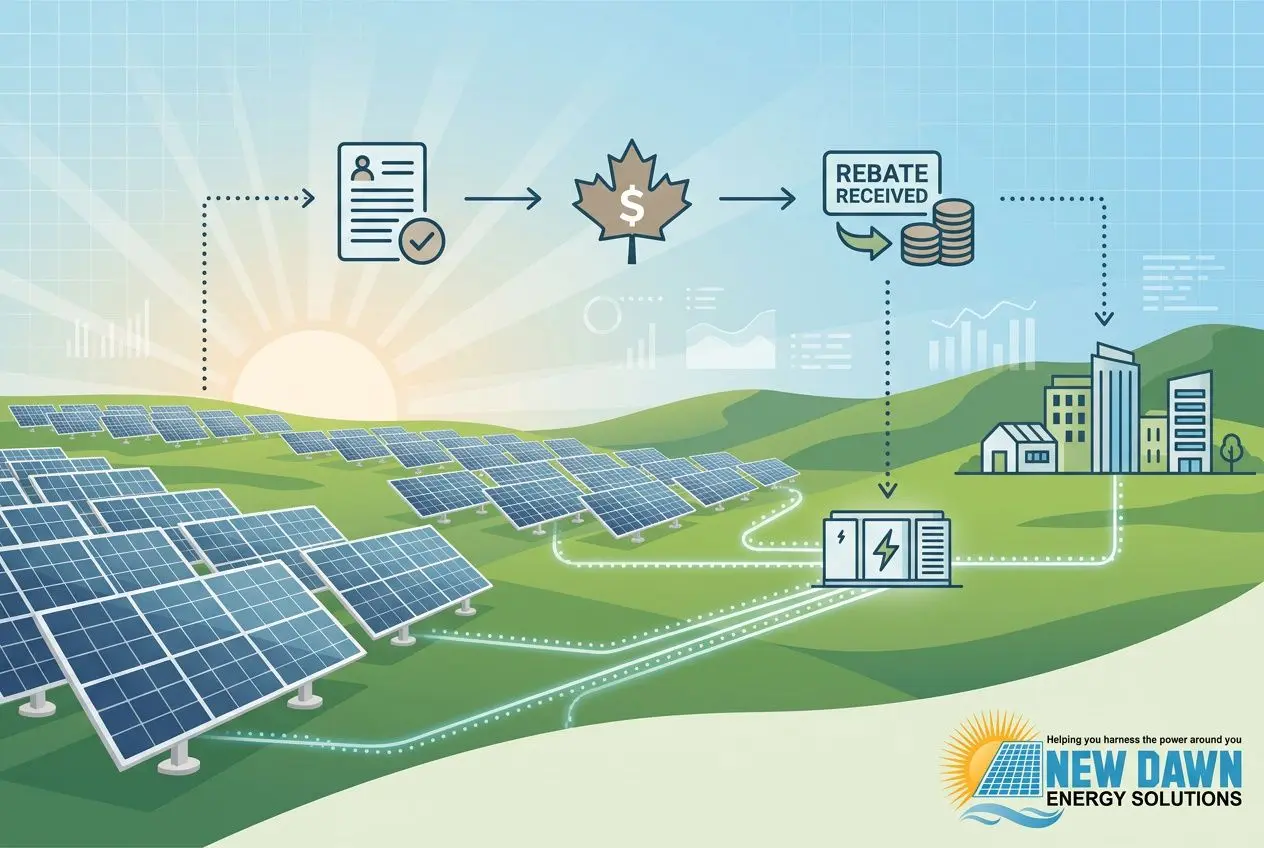
Incentive programs change regularly. Before finalizing the system size, verify current eligibility rules, credit rates, and application deadlines with your provincial energy authority. A qualified contractor with experience in Ontario and other Canadian markets can help with a turnkey installation plan and ensure that no available program is missed.
How net metering supports savings
When homeowners ask what are the 10 advantages of solar energy, net metering usually ranks near the top. Many Canadian provinces allow owners of solar systems to send surplus electricity to the grid in exchange for bill credits. This arrangement turns sunny-day overproduction into a financial buffer for cloudy weather, winter months, or evening consumption when the panel system is not producing.
Program terms vary significantly by province. In Nova Scotia and New Brunswick, surplus power earns credits rather than cash, and those credits can expire; New Brunswick credits typically lapse on March 31 each year. Confirm the credit rate, expiry rules, and any cap on eligible system size before you choose a solar array capacity. That step protects your financial return and limits uncompensated overproduction.
The benefits of installing solar panels extend beyond bill credits. A properly sized system can improve household grid resilience and make greater use of the sun as a clean, renewable energy resource. Review available incentives before you install, then choose solar equipment and a panel layout that match your home’s consumption and local program rules.
Solar system advantages and disadvantages
Every energy investment involves trade-offs. Solar PV systems can deliver strong long-term returns, but you need to understand their operational advantages and genuine cost considerations before committing. Reviewing system performance, maintenance requirements, and design factors such as inverter clipping provides a clearer basis for planning.
Reliable energy and backup options
Energy independence is the advantage installers cite most often. A grid-tied photovoltaic array reduces your reliance on utility supply while keeping the grid available when household demand exceeds panel output. For example, a 6 kW array in Ontario can offset enough annual consumption to reduce a typical household’s electricity bill by $800 to $1,200, depending on net metering terms.
Battery storage extends that advantage. It captures surplus daytime production and supplies energy during outages or peak-demand periods, when utility rates may be higher. Solar panels alone, however, generally cannot keep a grid-connected home powered during a utility outage without battery backup.
Maintenance, roof and inverter considerations
Upfront roof condition is a common planning constraint. Panels need a structurally sound roof, so an older or compromised surface may require replacement first.
Inverter replacement is another predictable lifetime cost. Most homeowners will replace this component at least once during the panel’s operating life because the inverter ages faster than the modules. A replacement inverter typically costs $1,500 to $3,000 installed in Canada, so adding that amount to your planning removes a common surprise.
- Low routine maintenance Solar panels have no moving parts, so day-to-day upkeep remains limited. Over a 25-year operational life, maintenance costs are generally low compared with mechanical energy systems.
- Panel performance warranties High-efficiency solar panels typically include performance warranties of 20 to 25 years and product warranties of 10 to 15 years. Longer coverage periods indicate manufacturer confidence in panel durability.
- Roof protection benefit A 2024 Ontario study found that roof sections under solar panels aged 20% slower than exposed areas, reducing maintenance costs over the panel’s 25-year life. They do not remove the need for periodic roof inspections or standard maintenance.
- Inverter replacement planning A high-quality solar inverter lasts roughly 10 to 15 years. Budgeting for one replacement during the panel’s lifetime helps protect projected energy savings from an unexpected expense.
These considerations help you install a system designed for its full 25-year horizon, rather than only its first few years. A properly scoped turnkey installation addresses roof condition, inverter sizing, and warranty terms from the outset. The result is lower financial risk and a system payback period that remains aligned with expectations.
Why panel output can be clipped
Solar panels produce direct current electricity, which an inverter converts into alternating current for home use. Each inverter has a maximum rated output that it cannot exceed. When the DC array generates more power than that limit, usually around midday under peak sun, the excess is clipped at the inverter’s nameplate rating. This process is known as inverter clipping. You can learn more about inverter clipping in solar systems and its influence on system design.
Clipping is not always a pure loss. Strategic DC oversizing can increase total annual energy production because a larger array generates more electricity during morning and afternoon shoulder hours, when output remains below the inverter ceiling. Panels also operate at higher temperatures than the 25°C standard test condition during peak sun hours, so real-world midday output is naturally lower than rated capacity.
Home value and the benefit of renewable energy
A solar PV system is more than an energy asset; it is also a property asset. Buyers across the country are starting to treat solar equipment as a measurable property asset. A well-designed system can therefore serve as a dual-purpose investment, generating monthly electricity savings while supporting resale value later.
How a solar panel array can strengthen resale appeal
Homes equipped with a solar panel array offer prospective buyers an immediate, measurable advantage: lower anticipated electricity costs from day one. This advantage is especially visible in competitive markets, where the number of days a listing sits unsold has a direct effect on the seller’s final price.
- Higher resale value Solar-equipped homes can achieve resale values up to CAD 15,000 above comparable non-solar properties, enhancing the return on the original system investment for the selling homeowner.
- Faster time on market Properties with solar systems tend to attract energy-conscious buyers more quickly. Fewer days on market can give sellers a competitive edge among comparable neighbourhood listings.
- Energy independence and grid resilience Buyers seeking lower operating costs and greater grid resilience may favour homes with private electricity generation. Solar can distinguish a property and support premium pricing in today’s Canadian housing market.
- Integrated home energy systems Solar installations that include battery backup, heat pumps, or EV chargers present a comprehensive sustainable energy platform. For households already considering an EV or heat pump, bundling these upgrades with solar can simplify budgeting and installation logistics.
For homeowners who plan to sell within the panel lifespan, the resale premium can meaningfully shorten the effective system payback period. If provincial or federal incentives lowered the upfront cost, the combined effect can move the break-even point several years earlier.
Reducing emissions with solar electricity
Solar electricity produces roughly five to ten times fewer carbon emissions per unit of energy than coal or natural gas generation. The environmental benefit of switching to solar is especially pronounced in Alberta and Saskatchewan, where grid electricity has historically relied heavily on fossil fuels. That means the annual emissions you avoid can rival the reduction from giving up a gasoline-powered vehicle.
The energy embodied in manufacturing and installing a residential panel system is typically recovered within approximately two years of operation. After that point, the array is effectively carbon neutral for the remainder of its operational life, commonly 25 years or more. That operating window means a household avoiding high-emission grid electricity for decades can prevent the equivalent of several cars’ worth of annual tailpipe emissions over the system’s life.
Planning the right installation season
Spring is widely regarded as an optimal window to install a solar array. Moderate temperatures support efficient on-site work, while commissioning the system before summer peaks means your panels are already producing energy when household air-conditioning and cooling loads, along with electricity demand, are highest. Solar installation contractors also tend to face heavier booking schedules through summer, so scheduling in spring improves your chances of securing a preferred installation date and a well-resourced project team. Explore the range of featured solar installation projects completed across the Ontario region to see how different system configurations perform in real Canadian conditions.
Frequently asked questions
What are the main financial benefits of installing solar panels in Canada?
The primary financial advantage of installing solar panels is a sustained reduction in monthly electricity purchases from the grid. Over a 20- to 25-year panel lifespan, cumulative energy savings can reach tens of thousands of dollars. Government incentives, including up to CAD 5,000 from the Canada Greener Homes Grant and up to CAD 10,000 from Alberta’s provincial solar program, can significantly reduce the initial investment. In most provinces, net metering credits also improve cash flow by offsetting electricity consumption during low-production periods. A solar-equipped home may have a resale value up to CAD 15,000 higher than a comparable property without panels.
Does cold Canadian weather reduce solar panel performance?
Cold temperatures do not inherently reduce solar panel output. These modules respond to light rather than heat and can operate slightly more efficiently in cool conditions than during intense summer heat. Snow on nearby surfaces may reflect additional light onto the array, creating a minor production boost.
The main seasonal variable is the number of daylight hours, which is shorter in winter across most Canadian provinces. A properly designed system accounts for this variation and can still deliver meaningful annual energy savings across climate zones where residential solar is viable.
What is inverter clipping, and should it concern me when designing a solar system?
Inverter clipping occurs when a solar array generates more DC power than the inverter’s maximum AC output rating. The excess is capped at the inverter’s nameplate limit, most often around midday under strong sun.
Clipping limits instantaneous output, but strategic DC oversizing—using a larger panel array relative to the inverter—can increase total annual energy harvest. It captures more electricity during morning and afternoon hours, when production remains below the inverter ceiling. Real operating temperatures also reduce peak output compared with standard test conditions, naturally limiting clipping losses. A qualified solar contractor can model the optimal DC-to-AC ratio for your roof and location before you install the system.