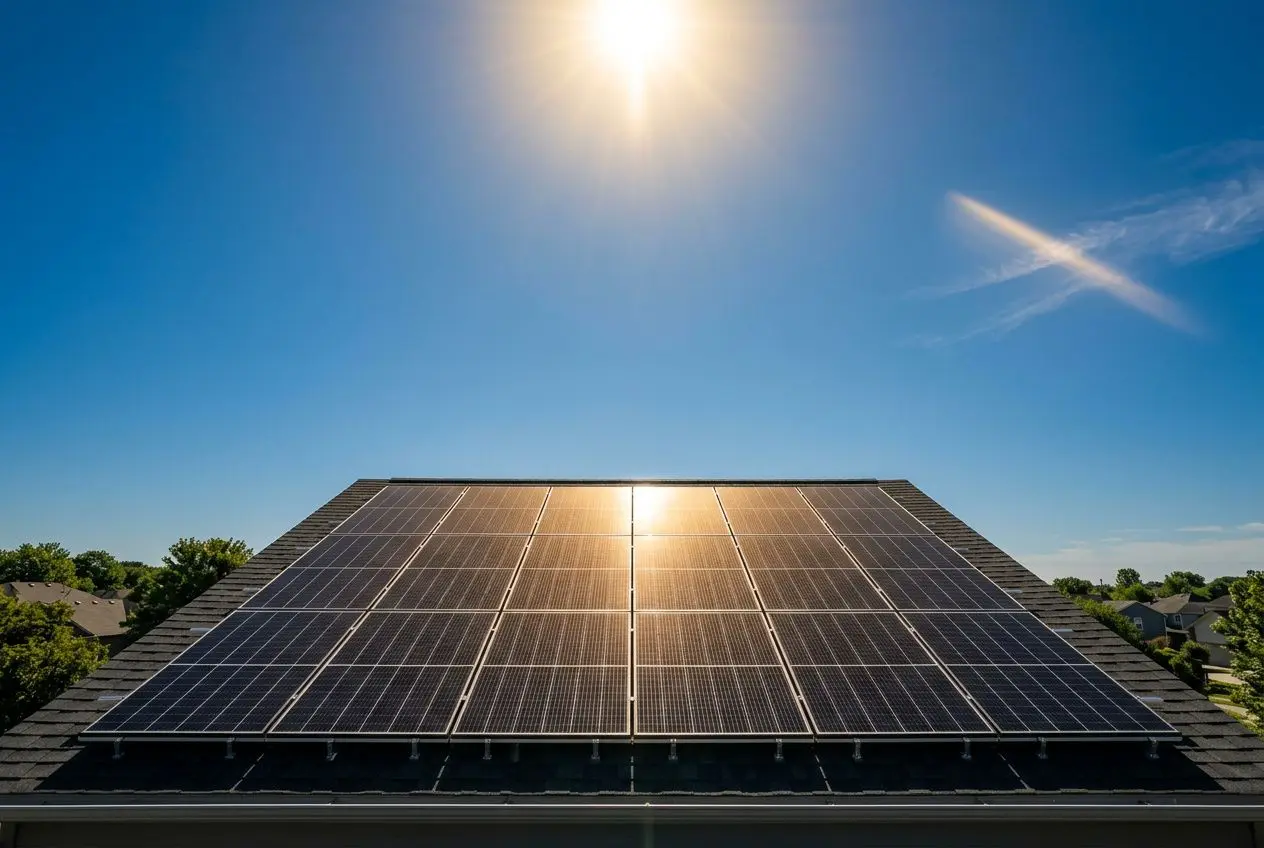
Understanding when solar panels operate most efficiently helps you make better energy decisions. This article covers peak-production windows, hourly efficiency ranges, seasonal changes in Ontario, and the factors that shape daily output.
When solar panels work best each day
Solar power generation follows the sun’s path. Output rises in the morning, reaches its highest level around noon, then declines through the afternoon. To understand the optimum solar panel direction, consider orientation and time of day together.
The peak solar production window
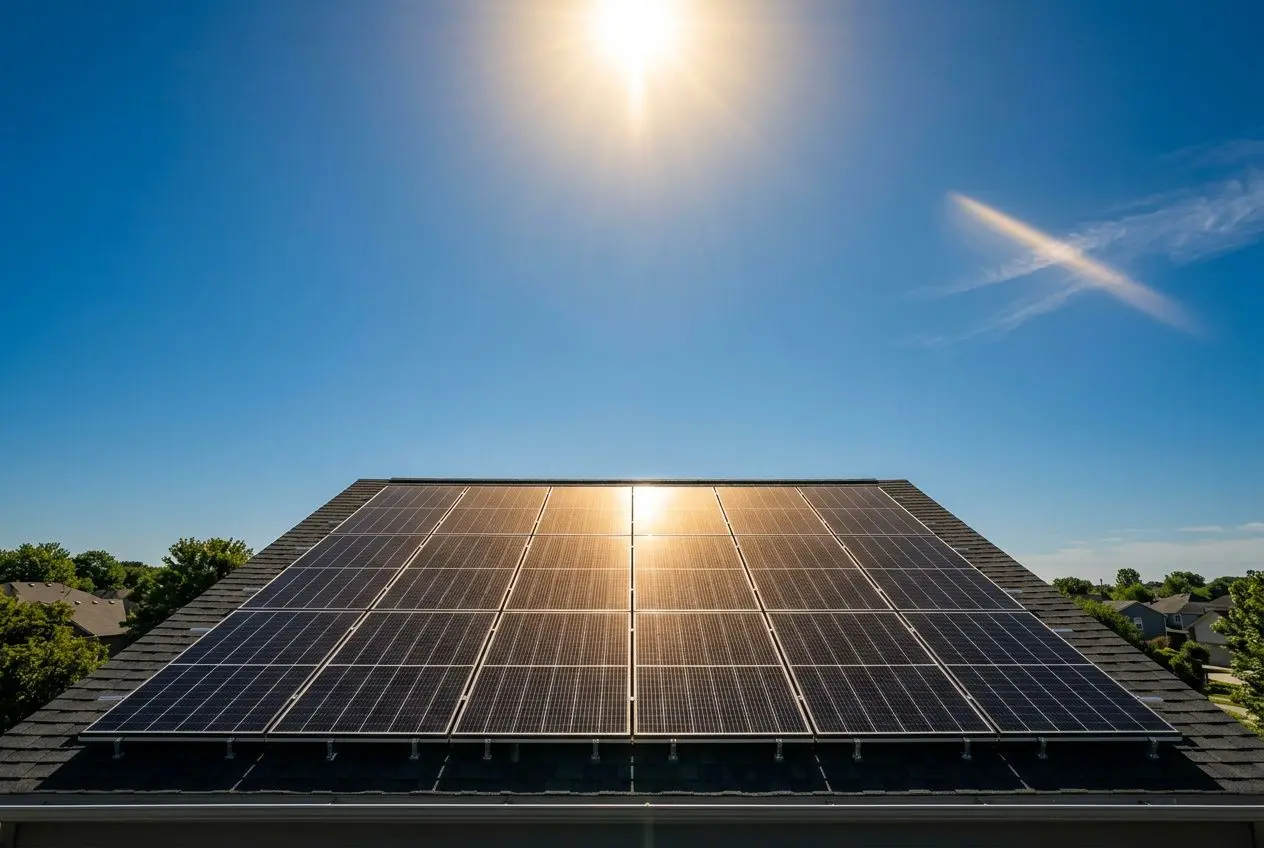
Optimal solar generation occurs between 10 a.m. and 2 p.m. in summer and 9 a.m. to 3 p.m. in winter, when solar irradiance is strongest and the sun travels closest to its highest arc. More direct rays during this period reduce angle-of-incidence losses that limit morning and late-afternoon performance. For most Canadian installations, this is when a solar panel produces its strongest power output.
- Solar noon advantage The sun reaches its highest point near noon, striking panels most directly and delivering the strongest energy output of the day.
- Controlled-test evidence A real-world phone-charging experiment showed a 39% charge in 30 minutes at 1 p.m., compared with 23% at 10 a.m. and 27% at 4 p.m. The result was consistent across three separate test days, with early afternoon outperforming the other times of the day.
- Peak sun hours defined One peak sun hour represents solar energy equivalent to 1,000 watts per square metre for one hour. Peak sunlight hours are not the same as daylight hours; location, season, and panel placement determine how many a site receives.
- Tracking systems Solar-tracking mounts follow the sun’s movement, extending near-peak irradiance beyond the period captured by a fixed array. This can lengthen the productive window meaningfully.
Using solar monitoring for maximum efficiency is the most reliable way to identify when your system reaches its peak. Real-time data and historical logs show whether high production matches the expected window or shifts because of local shading, roof geometry, or orientation. That information turns projected energy savings into measurable results.
When a panel starts and stops
Ontario homeowners often ask when solar panels start working. Photovoltaic cells begin responding to usable daylight, typically around 6 a.m. in summer. Output remains low to moderate at that point because the sun is low and its rays strike the array at an oblique angle, limiting energy capture.
From roughly 4 p.m. to 6 p.m., production falls from moderate to low as the sun descends, shadows lengthen, and the solar panel angle becomes less favourable relative to incoming light. After sunset, the photovoltaic effect stops and the panels produce nothing without a light source. Battery storage can bridge this gap by supplying power in the evening from energy collected during the day.
Seasonal solar changes in Ontario
Season has a direct effect on the shape and length of the daily production curve. During the summer months, Ontario systems typically achieve optimal solar generation from roughly 10 a.m. to 2 p.m., while longer daylight hours increase total daily yield. During the winter months, the useful high-production period shifts to approximately 9 a.m. to 3 p.m.; however, lower sun angles and shorter days reduce total energy production significantly compared with summer. Account for this seasonal variation when estimating annual performance or sizing battery storage for overnight and low-light periods.
What shifts solar output
Several variables can move a panel’s efficiency curve throughout the day. Their effects can compound when several unfavourable conditions occur during the same afternoon or season.
- Temperature effect Standard panel efficiency ratings use 25°C as a reference. Crystalline-silicon panels typically lose 0.3% to 0.5% of efficiency for every 1°C above that threshold. If the panel surface reaches 60°C on a hot afternoon, output can fall 10–15% below the rated figure, even under bright sun.
- Weather conditions Cloud cover and overcast weather conditions sharply reduce solar irradiance, lowering output to a fraction of clear-sky potential. Wind can provide a partial benefit by cooling panels: airflow of just 1 m/s may lower panel temperature by 5–11°C, offsetting some heat-related efficiency losses on sunny days.
- Shading and obstructions Trees, neighbouring buildings, and roof structures can reduce panel performance at specific times of the day. Optimizing the layout during system design, or using microinverters to isolate shaded panels, prevents one obstructed unit from reducing the output of the entire array.
- Panel orientation South-facing arrays maximize total daily sun exposure in Ontario. Under time-of-use utility rates, a west-facing panel may deliver greater financial value by producing more power during high-rate evening hours, even when total energy output is lower. The best orientation therefore depends on the site and the customer’s electricity profile.
Monitoring tools with panel-level data make it easier to determine which factor is limiting performance on a given day. Trends across a day, month, and full season can show whether a decline in energy output reflects weather conditions, a maintenance requirement, or a configuration that should be reviewed with your installer.
Frequently asked questions
Do solar panels work on cloudy or overcast days in Ontario?
Yes. Solar panels continue to generate electricity under cloudy skies, although their output is lower than on a clear, sunny day. Cloud cover reduces solar irradiance, so the system operates below its rated power. Ontario’s variable weather conditions make it important to size an array for average annual irradiance across every season, rather than summer performance alone. Battery storage can smooth low-production periods by supplying energy collected during earlier, higher-output windows. This supports grid resilience when daylight is limited.
Can I run high-consumption appliances more efficiently by timing them to peak solar hours?
Yes. Optimizing energy-intensive loads, including dishwashers, laundry appliances, and EV chargers, for the 10 a.m. to 3 p.m. production window is an efficient way to maximize your solar investment. Running these appliances during peak hours allows them to use power directly from the array instead of the grid, reducing net consumption and improving the system payback period. Real-time monitoring shows when the system is producing surplus electricity, making demand easier to schedule. Under Ontario’s time-of-use rates, this strategy can also reduce peak-rate grid consumption in the evening, after solar production has declined.
How does panel angle affect efficiency at different times of day?
The solar panel angle relative to incoming sunlight strongly influences hourly performance. When the sun is low on the horizon—during the morning from 6 a.m. to 9 a.m. or in the afternoon from 4 p.m. onward—its rays strike the panel obliquely. This lengthens the optical path and reduces the energy captured across the panel surface.
At noon, the rays are closest to perpendicular, producing the highest solar irradiance and the strongest output of the day. A correctly specified tilt angle, established during a professional turnkey installation, helps the panel operate efficiently across changing sun positions throughout the year. The result is steadier performance and better energy savings over each season.